
MAOI & ADHD Stimulant Safety Calculator
Critical Safety Warning
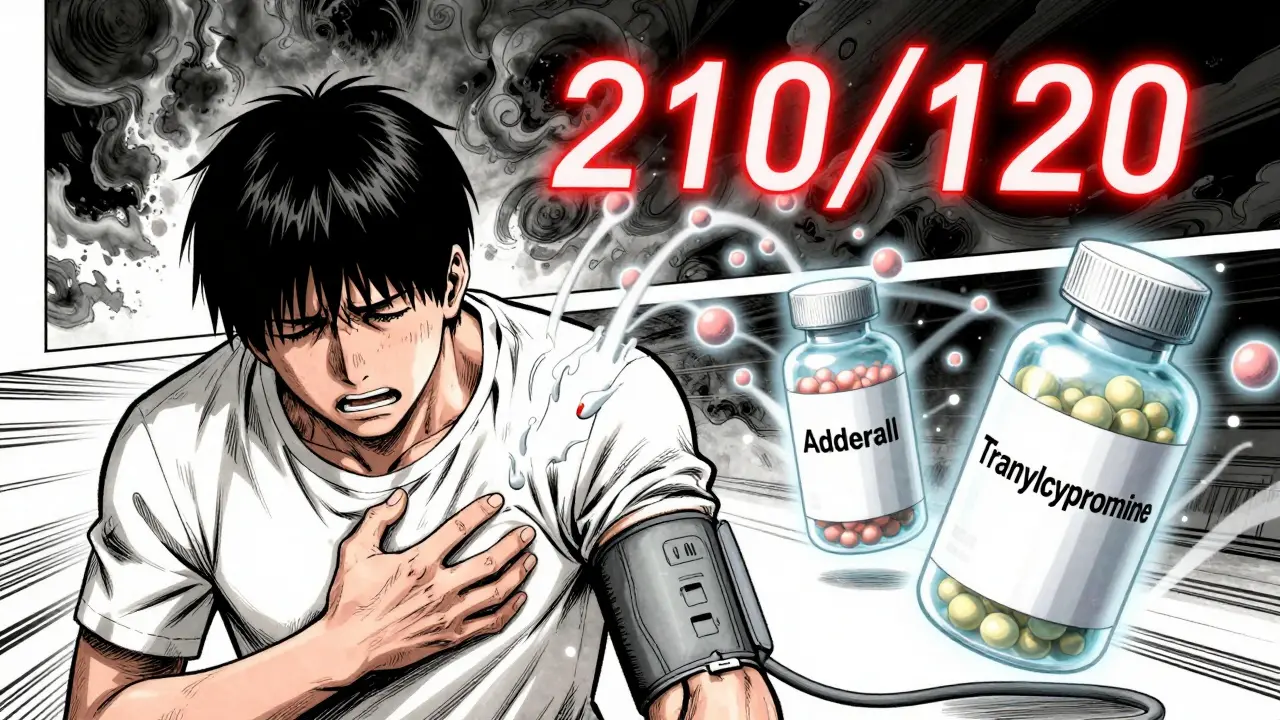
Combining ADHD stimulants with MAOIs can cause hypertensive crisis—a life-threatening medical emergency. Blood pressure spikes above 180/110 mmHg can cause stroke, heart attack, or death. There are no safe exceptions.
Your Medication Combination
Safety Assessment
Select medications to see your safety period
Critical Safety Information
Even with transdermal selegiline:
- Still requires 14 days after stopping MAOI before starting stimulants
- Not risk-free—FDA still warns against combination
- Avoid tyramine foods (aged cheeses, cured meats, soy sauce)
- Never use decongestants (pseudoephedrine, phenylephrine)
Why This Matters
When you take both:
- Stimulants increase norepinephrine
- MAOIs block norepinephrine breakdown
- Result: 20-30 mmHg BP spike
- Can lead to stroke, heart attack, or death
Combining ADHD stimulants with MAOIs isn’t just a bad idea-it’s a medical emergency waiting to happen. If you or someone you know is taking one of these medications, you need to understand exactly why mixing them can spike your blood pressure to life-threatening levels. This isn’t theoretical. It’s happened. And it can happen again.
What Happens When These Drugs Meet
ADHD stimulants like Adderall, Vyvanse, and Ritalin work by flooding your brain with dopamine and norepinephrine. That’s how they help focus and reduce impulsivity. But those same chemicals also tighten your blood vessels and force your heart to pump harder. Meanwhile, MAOIs-medications like tranylcypromine and phenelzine-are antidepressants that stop your body from breaking down those same chemicals. When you take both, your body can’t clear the excess. Norepinephrine builds up. Blood pressure climbs. Fast.That’s not a mild headache or a racing heart. That’s a hypertensive crisis. Systolic pressure can jump over 180 mmHg. Diastolic can hit 110 or higher. At that point, your brain, heart, and kidneys are under extreme stress. Stroke, heart attack, aortic tear, or brain bleeding can follow within minutes. The FDA’s warning isn’t a suggestion. It’s a red flag: concomitant use can cause death.
The Science Behind the Danger
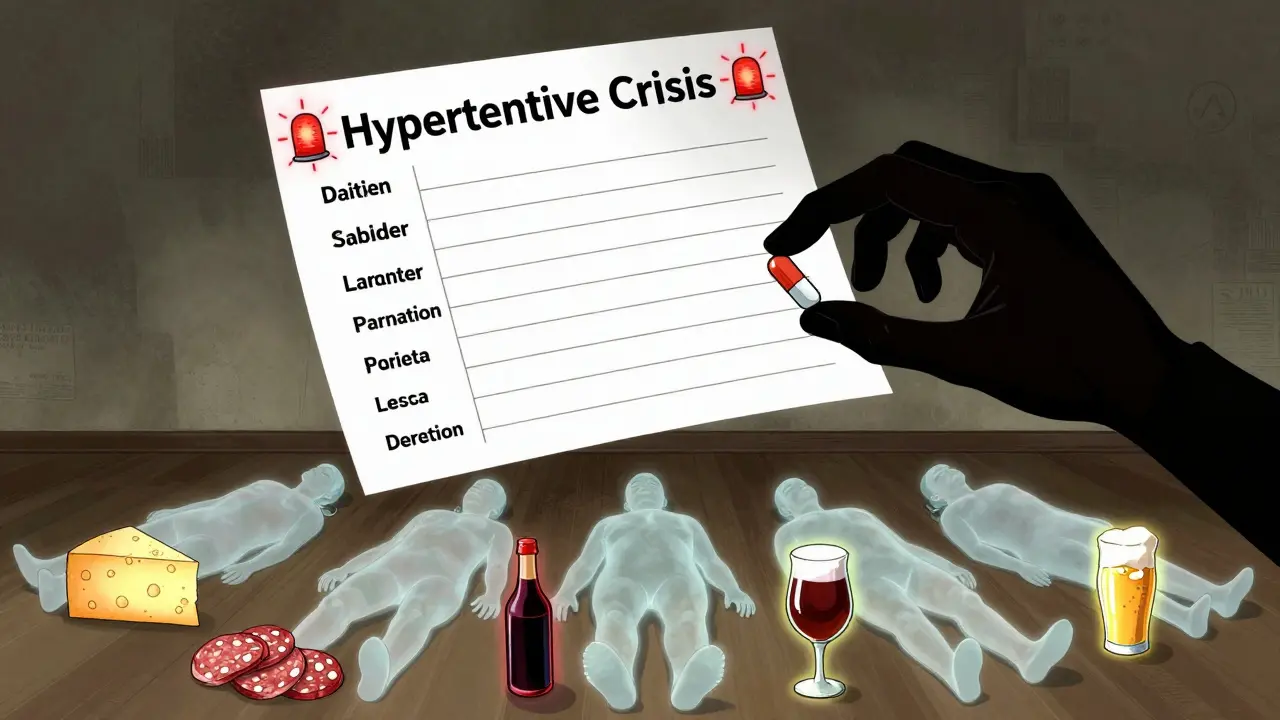
Your body has enzymes called monoamine oxidase (MAO) that naturally break down excess neurotransmitters. MAOIs block these enzymes-especially MAO-A, which handles norepinephrine and tyramine. Tyramine? That’s a chemical in aged cheese, cured meats, soy sauce, and tap beer. Normally, your body handles it fine. But when MAO is shut down, tyramine builds up and triggers a massive release of norepinephrine. Add a stimulant on top of that, and you’re lighting a fuse.It’s not just tyramine. Stimulants like amphetamines directly push more norepinephrine into your bloodstream. MAOIs prevent its removal. The result? A runaway feedback loop. A 2022 meta-analysis of 137 studies found that ADHD meds alone raise systolic blood pressure by 2-4 mmHg on average. But with an MAOI? That number can jump 20-30 mmHg in susceptible people. That’s enough to push someone with borderline hypertension into crisis.
Not All MAOIs Are Created Equal
You might hear that some MAOIs are "safer." That’s partly true-but not in the way most people think.Older MAOIs like tranylcypromine and phenelzine are irreversible. They shut down MAO enzymes for weeks. Even after you stop taking them, your body needs 14 days to rebuild the enzymes. That’s why you must wait two weeks before starting any stimulant. Skip this step, and you’re playing Russian roulette with your blood pressure.
Transdermal selegiline (the Emsam patch) is different. At low doses (6 mg/day or less), it mainly blocks MAO-B in the skin, not MAO-A in the gut. That means less tyramine buildup-and less risk. The FDA still warns against combining it with stimulants, but real-world reports show fewer incidents. Still, it’s not safe. Just less dangerous.
Then there’s moclobemide, a reversible MAOI used outside the U.S. It lets your body clear excess neurotransmitters more easily. Studies show it has minimal interaction with stimulants. But since it’s not available in the U.S., it doesn’t change the rules here.
Stimulant Differences Matter Too
Not all ADHD meds are the same when it comes to this risk.Amphetamines-like Adderall and Vyvanse-are strong norepinephrine releasers. They hit your blood vessels hard. Methylphenidate (Ritalin, Concerta) works more on dopamine. It still raises blood pressure, but less dramatically. A 2005 review found amphetamines cause significantly higher norepinephrine spikes than methylphenidate. If you’re on an MAOI, methylphenidate is the lesser evil. But even then, it’s not safe.
One case from Cleveland Clinic in 2023 involved a 42-year-old who took tranylcypromine with dextroamphetamine and psilocybin. His systolic pressure hit 210 mmHg. He didn’t die-but he came close. That’s not a rare outlier. It’s a predictable outcome.
Real Cases, Real Consequences
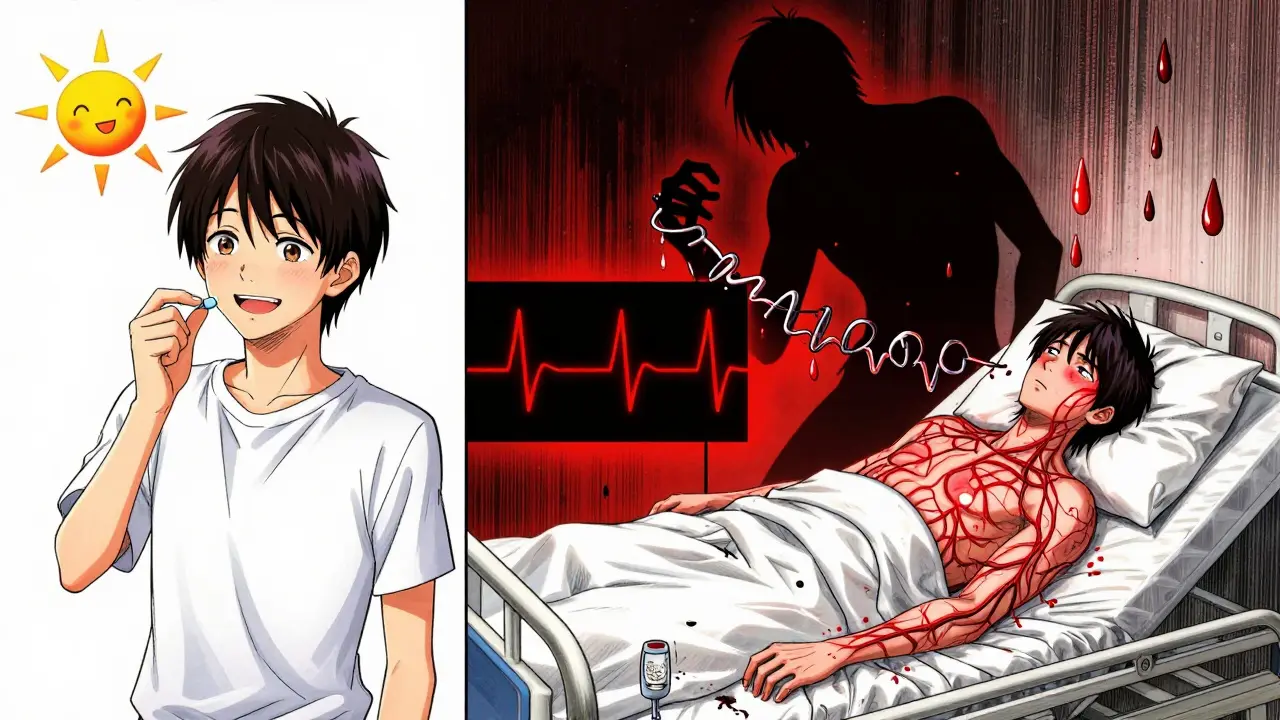
You might think, "That’s old-school stuff. It doesn’t happen anymore." But it does.Between 2015 and 2023, over 40 documented cases of hypertensive crisis linked to this combination were reported in medical journals. Some patients had no history of high blood pressure. Others were young, otherwise healthy, and following their prescriptions exactly. One 19-year-old took Vyvanse two days after stopping phenelzine. He developed a severe headache, blurred vision, and chest pain. By the time he got to the ER, his blood pressure was 205/120. He had a transient ischemic attack-essentially a mini-stroke.
These aren’t just anecdotes. They’re data points. A 2017 case series from Massachusetts General Hospital followed 12 patients who were carefully put on lisdexamfetamine while on transdermal selegiline. No crises occurred. But here’s the catch: every patient was monitored hourly for the first 72 hours. Their blood pressure was checked daily. They avoided all tyramine-rich foods. They had no other psychiatric meds. And even then, the doctors called it "high-risk, low-volume" therapy. Not a recommendation. A last resort.
Why Doctors Still Avoid This
MAOIs are rarely prescribed today. Less than 1% of antidepressant prescriptions in the U.S. are for them. Why? Because SSRIs and SNRIs work almost as well-with way fewer risks. Meanwhile, ADHD prescriptions have exploded. Over 92 million were filled in 2022.So why does this interaction still matter? Because some patients have treatment-resistant depression and ADHD. They’ve tried everything else. For them, the combination might be the only option left. But even then, most psychiatrists won’t touch it. The American Psychiatric Association’s 2022 guidelines say this combo should be avoided-with "high quality of evidence." That’s not a gray area. It’s black and white.
Some clinicians, like Dr. Richard Friedman at Weill Cornell, say they’ve seen hundreds of cases without incident. But he’s also quick to say: "I’ve been lucky." Luck isn’t a treatment plan.
What If You’re Already Taking Both?
If you’re currently on an MAOI and thinking about starting a stimulant-or vice versa-stop. Don’t wait. Call your doctor today.There’s no safe middle ground. Even if you’ve been on an MAOI for years, stopping it doesn’t make the risk disappear. The enzymes take 14 days to regenerate. Start a stimulant too soon? You’re at risk. Start it too late? You’re still at risk if you’ve had recent exposure.
If you’re switching from an MAOI to a stimulant:
- Wait at least 14 days after stopping the MAOI
- Start the stimulant at 10-25% of the usual dose
- Check your blood pressure daily for the first week
- Avoid aged cheeses, salami, soy sauce, red wine, and tap beer
- Never combine with other stimulants, decongestants, or serotonergic drugs (like tramadol or dextromethorphan)
If you’re on a stimulant and your doctor suggests an MAOI? Push back. Ask why. Demand alternatives. There are dozens of other antidepressants that don’t carry this risk.
The Bottom Line
This isn’t about being scared. It’s about being informed. The risk isn’t small. It’s catastrophic. And it’s avoidable.There are no exceptions for "I’ve been fine so far." There are no "just one time" loopholes. The science is clear. The warnings are loud. The consequences are permanent.
If you’re managing ADHD and depression together, there are safer paths. You don’t need to risk your life to feel better. Talk to your doctor. Ask about SNRIs. Ask about non-stimulant ADHD meds like atomoxetine. Ask about therapy. There are options. This isn’t one of them.
Can I take Adderall after stopping an MAOI?
No-not until at least 14 days after your last dose of the MAOI. Monoamine oxidase enzymes take that long to regenerate. Taking Adderall too soon can trigger a hypertensive crisis. Even if you feel fine, your body hasn’t recovered. Wait the full two weeks, start with a very low dose, and monitor your blood pressure closely.
Is the Emsam patch safer than oral MAOIs?
At low doses (6 mg/day or less), yes-slightly. The Emsam patch delivers selegiline through the skin, which mostly blocks MAO-B, not MAO-A. That means less impact on tyramine breakdown in the gut. But the FDA still warns against combining it with stimulants. It’s less risky, not risk-free. Never assume it’s safe without strict medical supervision.
What foods should I avoid if I’m on an MAOI?
Avoid aged cheeses (like blue cheese, cheddar, parmesan), cured meats (salami, pepperoni), tap beer, soy sauce, fermented foods, and overripe fruits. These contain tyramine, which can trigger dangerous blood pressure spikes when MAO is blocked. Even foods labeled "low-sodium" can be high in tyramine. When in doubt, skip it.
Can I use decongestants like pseudoephedrine if I’m on an MAOI?
Absolutely not. Decongestants like pseudoephedrine and phenylephrine are stimulants themselves. They raise blood pressure directly. Combined with an MAOI, they can cause a hypertensive crisis even without ADHD meds. Avoid all OTC cold and allergy meds unless cleared by your psychiatrist.
Are there any ADHD meds that are safe with MAOIs?
No. All FDA-approved ADHD stimulants-whether amphetamines, methylphenidate, or lisdexamfetamine-carry this risk. Even non-stimulant ADHD meds like atomoxetine (Strattera) can raise blood pressure. The only safe approach is to avoid combining MAOIs with any medication that affects norepinephrine or dopamine. Talk to your doctor about non-pharmacological options like behavioral therapy.





phyllis bourassa
March 5, 2026 AT 16:18