
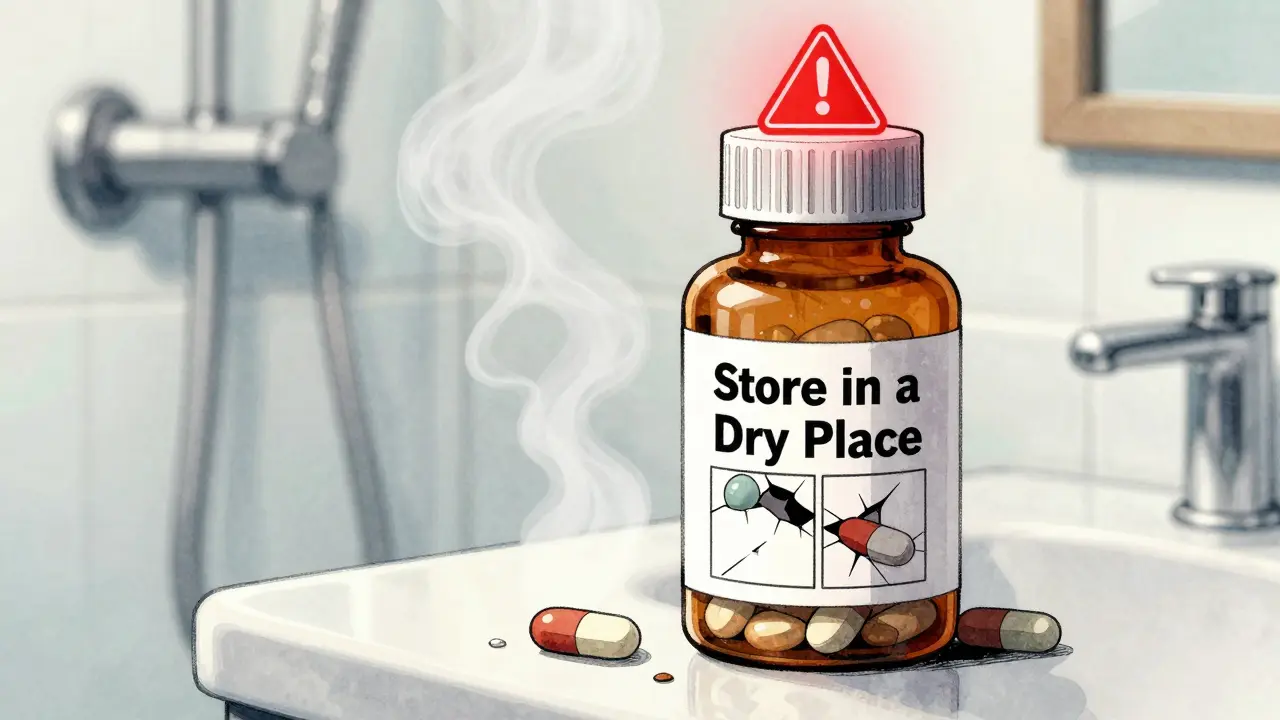
Ever opened a medicine bottle and wondered, "Do I need to keep this in the fridge?" You're not alone. Most people store their meds in the bathroom cabinet, the kitchen counter, or even the glove compartment of their car-places that are hot, damp, or full of light. But those spots could be killing your medicine before you even take it.
Medications aren't like cereal or shampoo. They're sensitive. Heat, moisture, and sunlight can break them down. Some lose their power. Others turn into something harmful. And if your insulin, antibiotic, or heart medication doesn't work because you stored it wrong, it's not just a waste-it's dangerous.
Where to Find Storage Info on the Label
Storage instructions don't hide. They're right there on the label, but you have to know where to look. For over-the-counter pills-like painkillers, antihistamines, or cough syrup-the info is in the "Other Information" section of the Drug Facts box. That’s the part after the active ingredients, uses, warnings, and directions. It’s usually the last bullet point or paragraph.
For prescription meds, look for a section titled "Storage Instructions," "How Supplied," or "Storage and Handling." It might be printed on the bottle label, inside the box, or on the paper insert. If you’re unsure, flip to the back of the prescription label-pharmacies often print it there in small text.
Don’t assume all meds are stored the same. One bottle might say "store at room temperature," while the next one right beside it says "refrigerate." That’s not a mistake. Each drug has its own chemistry. What works for one won’t work for another.
What the Words Actually Mean
Pharmaceutical labels use specific terms-and they’re not just fluff. Here’s what they really mean:
- Store at controlled room temperature = 20°C to 25°C (68°F to 77°F). This is the sweet spot for most pills. Your bedroom or a closet shelf is fine. Avoid the kitchen near the stove or next to the microwave.
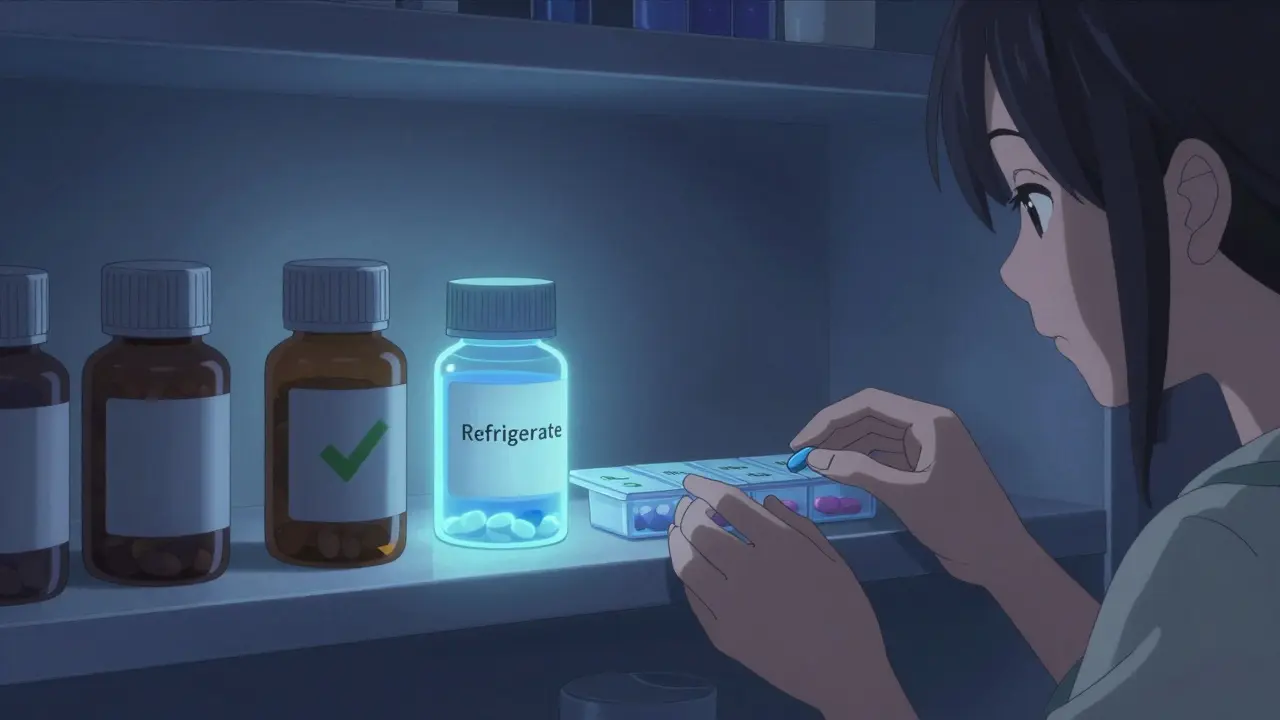
- Refrigerate = Keep between 2°C and 8°C (36°F to 46°F). This doesn’t mean the freezer. That’s too cold. Put it in the main part of the fridge, not the door. Door shelves swing in temperature every time you open it.
- Protect from light = Keep in the original bottle, which is usually dark plastic or opaque. Don’t transfer pills to a clear container. Sunlight breaks down active ingredients fast.
- Store in a dry place = Avoid bathrooms. Showers create humidity. That moisture turns pills soft, sticky, or powdery. Even the most stable meds can degrade in damp air.
- Avoid freezing = Some liquids, like insulin or certain antibiotics, can separate or become ineffective if frozen-even once.
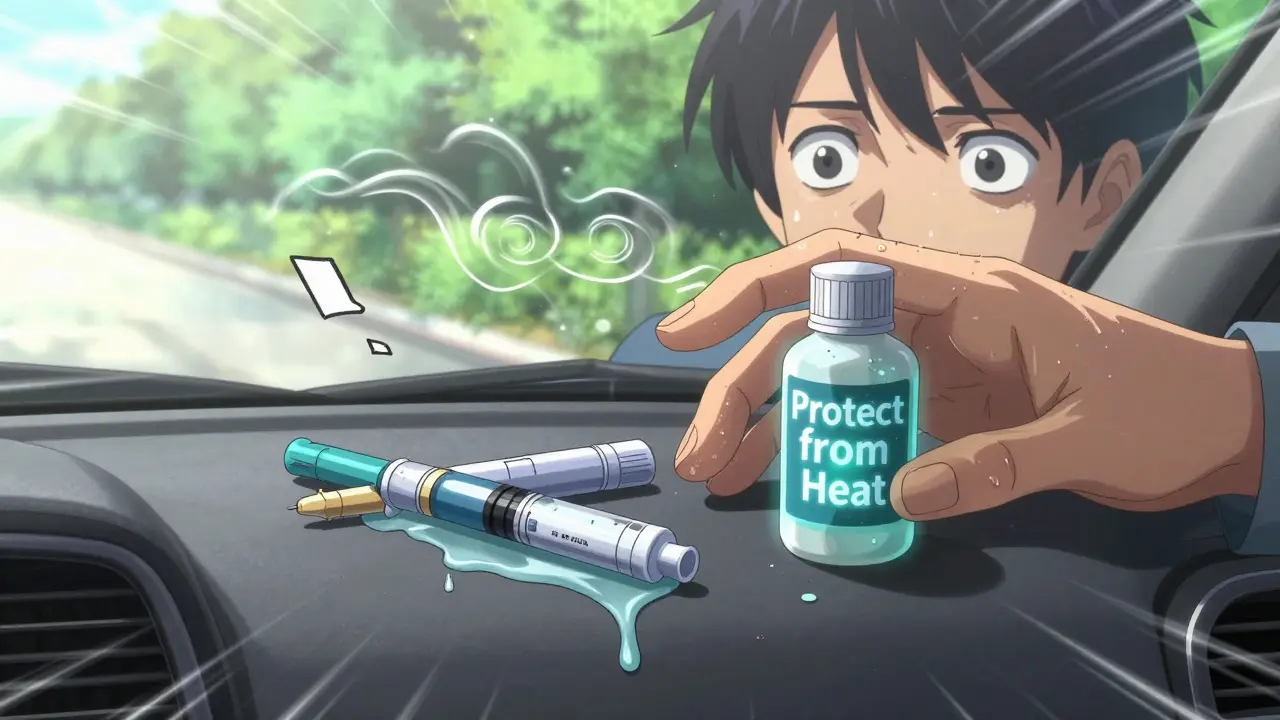
Temperature matters more than you think. A car parked in the sun on a 30°C day can hit 60°C inside in under 30 minutes. That’s hotter than an oven. If you leave your asthma inhaler or epinephrine auto-injector in the car, it could stop working when you need it most.
What Happens When You Ignore the Instructions
Storing medicine wrong isn’t just a bad habit-it’s a health risk.
Antibiotics like amoxicillin or cefdinir lose potency if not refrigerated after mixing. A 2022 study found that liquid antibiotics stored at room temperature for more than 7 days dropped to 60% effectiveness. That means you might think you’re treating an infection, but you’re actually letting it grow stronger.
Insulin is even more sensitive. Heat causes the protein structure to break down. Once that happens, it won’t lower your blood sugar. People with diabetes who store insulin in hot cars or sunny windows have ended up in the ER because their levels spiked.
Nitroglycerin, used for heart attacks, degrades in heat and humidity. If it’s not stored properly, it won’t work during an emergency. That’s not theoretical-it’s happened. The FDA received over 120 reports between 2020 and 2022 of patients who couldn’t use their nitroglycerin because of improper storage.
Even common painkillers like acetaminophen can break down into toxic byproducts if exposed to moisture over time. That’s not a myth. It’s documented in peer-reviewed toxicology journals.
And it’s not just about effectiveness. The FDA estimates that storage-related errors contributed to 1.2% of all reported medication errors between 2020 and 2022. That’s thousands of cases. Most never get reported because people don’t connect the dots between where they kept their meds and why they didn’t work.
Real Mistakes People Make (And How to Fix Them)
A 2023 survey of 2,500 medication users found that 68% admitted to storing meds in bad spots. Here are the top three mistakes-and how to avoid them:
- Storing meds in the bathroom - The humidity from showers and baths ruins pills and capsules. Solution? Move them to a bedroom drawer or a kitchen cabinet away from the sink.
- Leaving meds in the car - Even a 15-minute stop in the sun can cook your medicine. Solution? Keep a small insulated pouch in your bag for daily meds. If you’re traveling, use a cooler with a cold pack.
- Putting refrigerated meds in the fridge door - The door swings open and closed. Temperature changes. Solution? Put insulin, liquid antibiotics, or eye drops on a middle shelf, where it’s most stable.
And don’t transfer pills to pill organizers unless you’re sure they’re safe for long-term storage. Some plastics and metals react with drugs. Always check the label first.
Special Cases: Kids, Travel, and Seniors
Children’s medications often have different storage rules than adult versions. A liquid cough syrup for adults might be stable at room temperature, but the kids’ version needs refrigeration. Always read the label for the specific product you’re using.
If you’re traveling, especially across climates, plan ahead. If your medicine needs to stay cold, bring a small cooler with a reusable ice pack. Some pharmacies now sell portable, temperature-controlled pill cases-ideal for trips.
For seniors living in homes without air conditioning, extreme heat is a real problem. If your house regularly hits 32°C or higher, talk to your pharmacist. They can sometimes switch you to a tablet form instead of a liquid, or recommend a different brand with more stable storage requirements.
What to Do When You’re Not Sure
If the label says "refrigerate" but you don’t have a fridge, or if it says "protect from light" but the bottle is clear, don’t guess. Call your pharmacist. They’ve seen this before. They know what happens when meds are stored wrong. They can tell you if it’s safe to use, if you need a replacement, or if there’s an alternative.
Pharmacists aren’t just there to fill prescriptions. They’re your safety net. And most will answer a quick question for free-even if you didn’t buy the medicine there.
Future Changes Coming to Labels
Things are changing. Major pharmacies like CVS and Walgreens are testing QR codes on medication labels. Scan it, and your phone shows real-time storage advice based on your location and the current weather. If it’s 38°C outside, the app will warn you not to leave your meds in the car.
Some companies are also testing smart packaging with tiny temperature sensors. In five years, your insulin pen might glow red if it’s been exposed to heat. That’s not sci-fi-it’s already in pilot testing.
For now, though, you still have to read the label. And you have to take it seriously.
Proper storage isn’t about being perfect. It’s about being smart. One extra step-moving your meds from the bathroom to the bedroom-could mean the difference between your medicine working… and not working at all.
And if you’re ever unsure? Ask. It’s the easiest way to stay safe.
What happens if I store my medication in the bathroom?
Bathrooms are humid and warm from showers and hot water. Moisture can cause pills to break down, become sticky, or lose potency. Some medications, like insulin or antibiotics, can become unsafe. Always store meds in a cool, dry place like a bedroom drawer or kitchen cabinet away from sinks and showers.
Can I store pills in the fridge?
Only if the label says "refrigerate." Most pills are fine at room temperature. But if your medicine needs to be cold-like insulin, liquid antibiotics, or some eye drops-put it in the main part of the fridge, not the door. Never freeze it unless the label specifically says to.
Is it safe to leave medication in a hot car?
No. Inside a car on a 30°C day, temperatures can reach 60°C within 30 minutes. That heat can destroy insulin, epinephrine, nitroglycerin, and many antibiotics. If you must transport meds in a car, use a small insulated bag with a cold pack and keep it out of direct sunlight.
Do I need to keep my medication in the original bottle?
Yes, unless your pharmacist says otherwise. Original bottles protect against light and moisture. Many are made of dark plastic or have child-resistant caps. Transferring pills to a clear container or a plastic bag can reduce their shelf life and increase the risk of contamination or accidental ingestion.
How do I know if my medication has gone bad?
Look for changes: pills that are discolored, cracked, or sticky; liquids that are cloudy, separated, or have particles; or odors that smell unusual. If you’re unsure, don’t take it. Call your pharmacist. It’s better to be safe than sorry.
Can expired medication still be used if stored properly?
No. Expiration dates are based on stability testing under proper storage conditions. Even if your medicine looks fine, its potency can drop after the expiration date. Some, like antibiotics or heart meds, can become unsafe. Always dispose of expired medication properly-don’t take the risk.




Phil Hillson
January 18, 2026 AT 12:02