
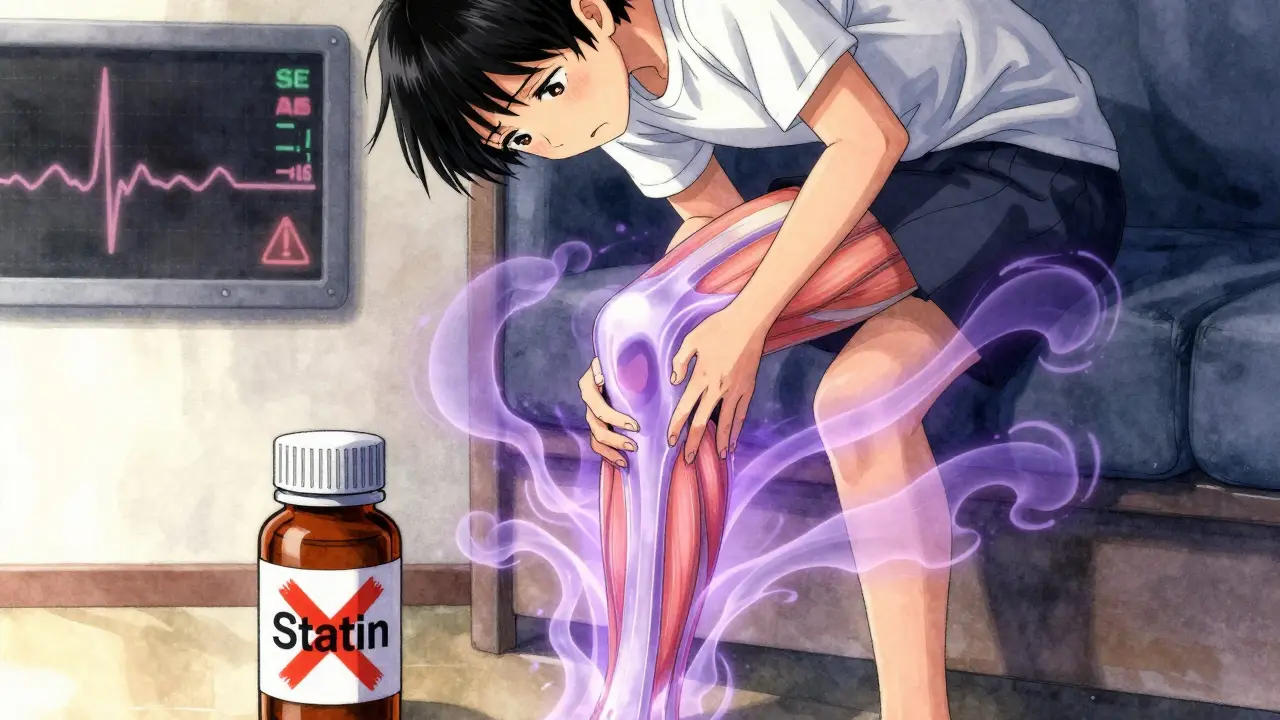
When you start taking a statin to lower your cholesterol, you expect to feel better - not worse. But for many people, muscle pain, stiffness, or weakness shows up shortly after starting the pill. Suddenly, the very drug meant to protect your heart feels like it’s hurting you. This isn’t just bad luck. It’s statin intolerance, and it’s more common than you think - but also more often misdiagnosed.
What Exactly Is Statin Intolerance?
Statin intolerance isn’t just any muscle ache after taking a cholesterol drug. It’s a specific medical diagnosis defined by the National Lipid Association (2022): you can’t tolerate at least two different statins. One must be tried at the lowest starting dose, and another at any dose. Symptoms must clearly start after taking the drug, go away when you stop it, and come back if you try it again. And here’s the key - if you had muscle pain before starting statins, that doesn’t count. Most cases - about 90% - involve muscle symptoms, called Statin-Associated Muscle Symptoms (SAMS). These aren’t sharp pains. They’re more like heaviness in the thighs, stiffness in the buttocks, or cramps in the back. The PRIMO study found 78% of people felt it in their thighs, 65% in their buttocks, and 52% in their lower back. You might struggle to stand up from a chair or lift your arms. But here’s what surprises most doctors: only 11% of these patients have elevated creatine kinase (CK) levels - the blood marker doctors often check for muscle damage. That means most cases aren’t severe muscle injury. They’re discomfort, not danger.The Nocebo Effect: Are You Really Reacting to the Drug?
This is where things get tricky. The SAMSON trial in 2021 gave people statins, placebos, and no pills - all in random order - without telling them which was which. Nearly 90% of the muscle symptoms people blamed on statins also happened during the placebo phase. That’s not coincidence. It’s the nocebo effect: when you expect a side effect, your brain makes you feel it. If you’ve heard stories about statins causing muscle pain, your body might start sending you signals to match that expectation. Studies show that up to 85% of patients labeled as statin-intolerant actually have other causes for their pain. Osteoarthritis? Common in 41%. Vitamin D deficiency? Present in 29%. Fibromyalgia? Found in 18%. Even viral infections or overtraining can mimic statin side effects. The Cleveland Clinic points out that most people stop statins after one bad experience - without ever trying another, without checking for other causes, and without a proper rechallenge.Why Most People Can Still Take Statins
Here’s the good news: if you think you’re intolerant, you’re probably not. The NLA says 65% of people who can’t handle one statin can take another. Why? Because statins aren’t all the same. Lipophilic statins - like simvastatin and atorvastatin - easily slip into muscle cells, which might explain why they cause more symptoms. Hydrophilic statins - like pravastatin and rosuvastatin - stay mostly in the liver. They’re less likely to cause muscle issues. In head-to-head trials, hydrophilic statins had 28% fewer reports of muscle symptoms. Even better: low doses work. A 10mg daily dose of atorvastatin lowers LDL by 32% and is tolerated by 89% of patients. You don’t need a high dose to get results. Many people start at 20mg or 40mg because they’re told to “go big,” but that’s not always necessary. A slower, gentler approach often works better.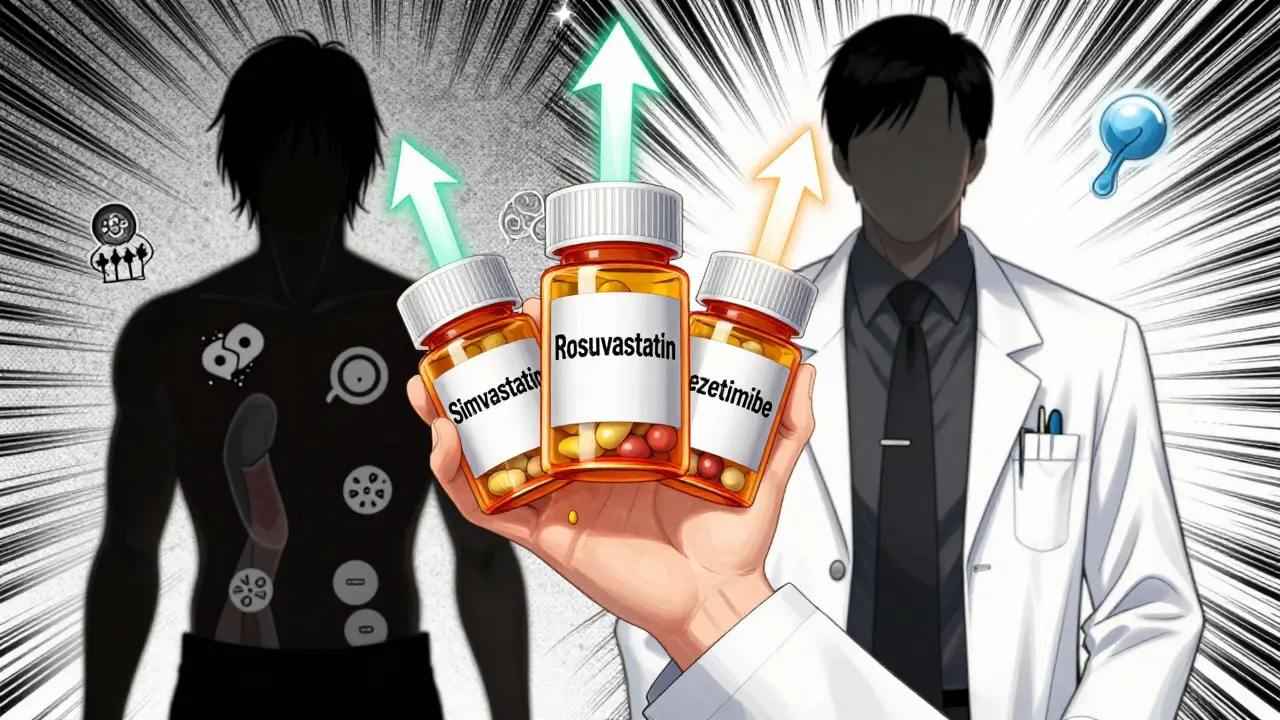
What to Do If You Can’t Tolerate Statins
If you’ve truly tried two statins and still have symptoms, it’s time to look at alternatives. But don’t jump straight to the most expensive option. Start with the simplest.- Ezetimibe: This pill blocks cholesterol absorption in the gut. Taken daily at 10mg, it lowers LDL by about 18%. It’s well tolerated - 94% of people stick with it after a year. It’s cheap, safe, and often used with statins. But even alone, it helps.
- Bempedoic acid: This newer drug works in the liver, similar to statins, but doesn’t enter muscle cells. It reduces LDL by 17% and has an 88% tolerability rate. It’s taken as a daily pill and is often combined with ezetimibe.
- Bile acid sequestrants: Drugs like colesevelam bind cholesterol in the gut and flush it out. They lower LDL by 15-18%, but can cause bloating or constipation in about 22% of users. They’re not first-line, but useful for some.
Injectables and Newer Options
For high-risk patients - those with heart disease, diabetes, or very high LDL - injectables offer powerful results.- PCSK9 inhibitors (evolocumab, alirocumab): These are injectables given every two weeks. They slash LDL by nearly 60%. In the SPIRE-1 trial, 91% of patients stayed on them after a year. The catch? Cost. At $5,800 a year, they’re expensive. Insurance often requires prior authorization, and nearly 40% of requests get denied.
- Inclisiran: This is the future. A twice-yearly injection that silences a gene involved in cholesterol production. In the ORION-10 trial, it lowered LDL by 50% with 93% adherence. No daily pills. No weekly shots. Just two injections a year. It’s already approved in the U.S. and Europe.
What Doesn’t Work - And Why
Coenzyme Q10 is often recommended for statin muscle pain. But here’s the truth: double-blind trials show only 34% of people report feeling better. That’s barely better than placebo. There’s no strong evidence it helps. Same with red yeast rice - it contains a natural statin and carries the same risks. If you’re intolerant to prescription statins, you’re likely intolerant to this too. And while some people try intermittent dosing - like taking 600mg of rosuvastatin once a week - it’s not for everyone. It works for about 68% of those who try it, lowering LDL by 48%. But it requires careful monitoring. Don’t try this without your doctor’s guidance.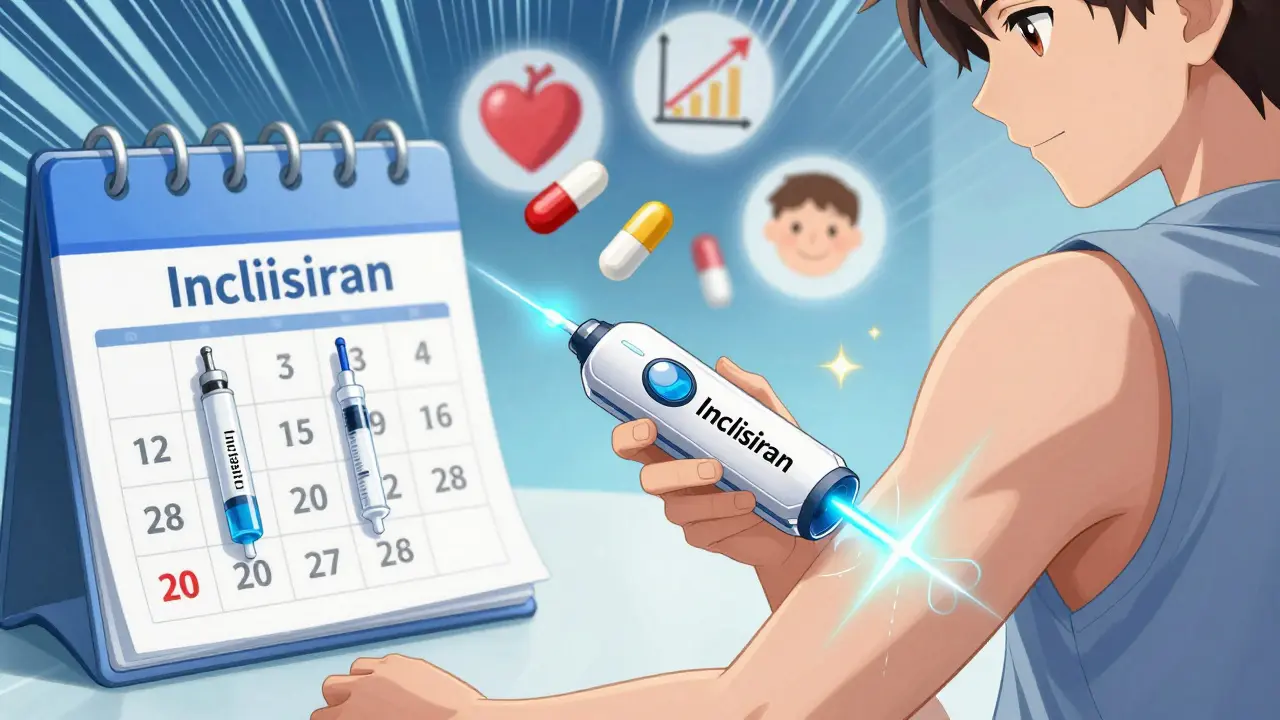
How Doctors Are Getting Better at Diagnosis
The old way: patient says, “Statins hurt my muscles.” Doctor says, “Stop them.” The new way: a structured algorithm. First, rule out other causes - thyroid issues, vitamin D, arthritis. Second, try a different statin - preferably a hydrophilic one at low dose. Third, if symptoms return, do a rechallenge: stop the drug, wait a few weeks, then restart. Only 34% of suspected cases actually get symptoms back on rechallenge. That means two out of three people were misdiagnosed. New tools are helping too. Genetic testing for the SLCO1B1 gene variant can identify people at 4.5 times higher risk of muscle problems. By 2025, this testing may guide statin choices for 30% of new patients.What Happens If You Just Stop Statins?
This is the biggest risk. If you stop statins because of muscle pain - without confirming it’s truly intolerance - your heart risk doesn’t disappear. In fact, inappropriate discontinuation increases your chance of a heart attack or stroke by 25%. The JAMA Cardiology study found this adds $1,800 per person in annual healthcare costs due to preventable events. Patients on Reddit and PatientsLikeMe often say they feel anxious after stopping statins. They know their cholesterol is high. They know their heart is at risk. But they’re scared to try again. That fear is real. But so is the danger of doing nothing.Your Next Steps
If you think you’re statin-intolerant:- Don’t stop your medication without talking to your doctor.
- Ask if your symptoms started within 30 days of starting or increasing the dose.
- Request a check for vitamin D, thyroid function, and CK levels.
- Ask if you’ve tried a hydrophilic statin like rosuvastatin or pravastatin at a low dose.
- Ask about a rechallenge - stopping and restarting - to confirm the link.
- If you’re still having issues, ask about ezetimibe or bempedoic acid before jumping to injectables.
Can statin intolerance go away on its own?
Yes - but only if the symptoms were not truly caused by the statin. Many muscle aches blamed on statins are from aging, arthritis, or low vitamin D. Once those are treated, the pain fades - even if you restart the statin. If you had true statin-induced symptoms, they usually disappear within weeks of stopping the drug. But don’t assume it’s gone without testing. A rechallenge under medical supervision is the only way to be sure.
Is it safe to take statins again after stopping?
It depends. If you stopped because of muscle pain and didn’t get tested, you might be at risk of repeating the issue. But if you’ve ruled out other causes and tried a different statin - like rosuvastatin or pravastatin - at a low dose, many people tolerate it fine. The key is to restart slowly, under medical supervision. Never restart without discussing it with your doctor.
Do I need to take a statin if I have high cholesterol?
Not always. If your risk is low - no heart disease, no diabetes, normal blood pressure - lifestyle changes and non-statin drugs like ezetimibe may be enough. But if you’ve had a heart attack, stroke, or have familial hypercholesterolemia, statins are still the gold standard. If you can’t take them, your doctor will use alternatives like PCSK9 inhibitors or inclisiran to get your LDL below 70 mg/dL - the target for high-risk patients.
How long does it take to see results from non-statin therapies?
Ezetimibe and bempedoic acid start working in 1-2 weeks, with full effect in 4-6 weeks. PCSK9 inhibitors lower LDL by 50-60% within 2-4 weeks. Inclisiran takes about 3 months to reach full effect after the second dose, but then lasts for six months. The goal isn’t speed - it’s sustainability. Find what you can stick with long-term.
Are there any natural alternatives to statins?
There’s no proven natural substitute that matches statins’ ability to reduce heart attacks. Red yeast rice contains a natural statin and carries the same risks. Garlic, plant sterols, and omega-3s have minor effects - maybe 5-10% LDL reduction - but not enough for high-risk patients. Lifestyle changes - diet, exercise, weight loss - are essential, but they rarely lower LDL enough on their own. Don’t replace science with supplements without medical advice.


Jasneet Minhas
January 29, 2026 AT 07:36