

Many people turn to turmeric for its anti-inflammatory properties, using it in cooking or as a supplement to manage joint pain, digestion, or general wellness. But if you're on a blood thinner-whether it's warfarin, aspirin, clopidogrel, or one of the newer DOACs like rivaroxaban-you need to pause before adding turmeric to your routine. The interaction isn't theoretical. It's documented, dangerous, and has led to real cases of life-threatening bleeding.
How Turmeric Acts Like a Blood Thinner
Turmeric gets its color and much of its power from curcumin, a compound that makes up only 2-8% of raw turmeric root but can be up to 95% in concentrated supplements. Curcumin doesn’t just give food flavor-it directly interferes with how your blood clots.
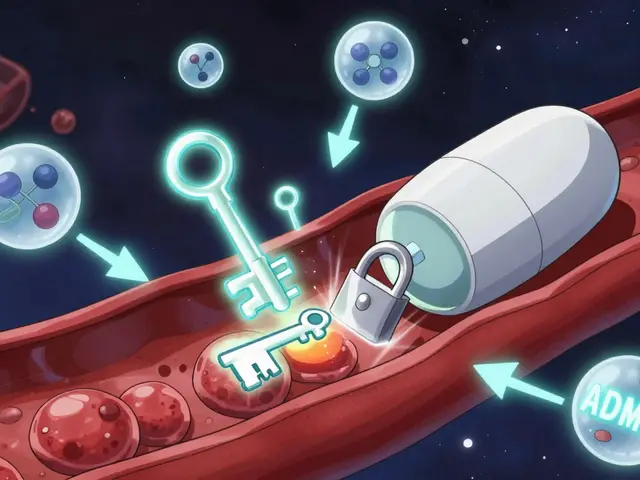
Research shows curcumin slows down clotting by targeting multiple points in the process. It inhibits thrombin and factor Xa, two key proteins your body uses to form clots. It also reduces platelet aggregation, meaning your blood platelets don’t stick together as easily. This dual action makes it behave similarly to prescription anticoagulants, but without the precision.
Unlike warfarin, which blocks vitamin K to reduce clotting, or rivaroxaban, which directly blocks factor Xa, curcumin hits several targets at once. That’s why even small amounts can add up when combined with medication. A 2012 study published in PubMed (PMID: 22531131) found that both curcumin and its derivative BDMC significantly prolonged aPTT and PT-two standard lab tests used to measure how long your blood takes to clot. The higher the dose, the greater the effect.
Real Cases of Dangerous Bleeding
This isn’t just lab data. Real people have been hospitalized because of turmeric.
In 2018, Medsafe in New Zealand reported a case where a patient on stable warfarin therapy had an INR (International Normalized Ratio) of over 10 after starting a turmeric supplement. The therapeutic range for warfarin is 2-3.5. An INR above 10 means your blood is taking far too long to clot-this isn’t just a risk of bruising. It’s a risk of internal bleeding, stroke, or death. That patient didn’t have a history of bleeding issues. The only change? A daily turmeric capsule.
Another case, documented by the Welsh Medicines Information Centre (WMIC) in 2021, involved a transplant patient taking tacrolimus. After consuming 15 or more spoonfuls of turmeric powder daily for ten days, his tacrolimus levels spiked to 29 nanograms/mL-a toxic level that caused acute kidney injury. Turmeric didn’t just affect clotting; it interfered with how his liver processed another critical drug.
These aren’t outliers. They’re red flags. And they’re why healthcare authorities in New Zealand, the UK, the US, and Australia have issued formal warnings.
Which Blood Thinners Are Affected?
Turmeric and curcumin don’t just interact with one type of blood thinner. They interfere with nearly all of them:
- Warfarin (Coumadin): The biggest concern. Warfarin has a narrow therapeutic window-too little, and clots form; too much, and you bleed. Curcumin can push levels into the danger zone.
- Aspirin, clopidogrel (Plavix): These are antiplatelet drugs. Turmeric adds to their effect, increasing the chance of uncontrolled bleeding.
- NSAIDs like ibuprofen or naproxen: Even over-the-counter painkillers can raise bleeding risk when combined with turmeric.
- DOACs (rivaroxaban, apixaban, dabigatran): While less studied than warfarin, the British Heart Foundation confirmed in 2023 that turmeric may interact with these newer drugs too.
- Heparin, enoxaparin (Lovenox), dalteparin (Fragmin): These injectable anticoagulants also carry documented interaction risks.
There’s no safe category here. If your doctor prescribed you something to thin your blood, turmeric isn’t a harmless add-on. It’s a multiplier.

Why Supplements Are Riskier Than Spices
Using turmeric as a spice in curry? Probably fine. A teaspoon of ground turmeric contains roughly 20-40 milligrams of curcumin. That’s not enough to trigger a reaction in most people.
But supplements? They’re a different story.
Standard capsules often contain 500-1,000 milligrams of turmeric extract. If it’s standardized to 95% curcumin, that’s nearly 1 gram of pure curcumin per pill. That’s 25 to 50 times more than what you’d get from food. And because supplements aren’t regulated like drugs, there’s no guarantee what’s actually in the bottle.
One brand might contain 3% curcumin. Another might contain 90%. There’s no labeling standard. So even if you think you’re taking "a little," you could be taking enough to push your INR into the red zone.
What Doctors Say
The consensus is clear: avoid combining turmeric supplements with blood thinners.
Medsafe’s 2018 advisory states bluntly: "Concurrent use of turmeric/curcumin containing natural health products with these medicines may result in prolonged bleeding times and should be avoided."
The Welsh Medicines Information Centre updated its guidance in October 2024, reinforcing that curcumin "might decrease the clearance of warfarin from the body," leading to dangerously high levels. They also warn that monitoring INR isn’t enough-because the interaction is unpredictable.
Mayo Clinic Health System advises stopping turmeric supplements at least two weeks before any surgery. That’s not because it’s a "natural" remedy-it’s because the bleeding risk is real and measurable.
Dr. Oracle’s 2023 analysis put it simply: "The evidence clearly indicates that the anticoagulant properties of turmeric/curcumin create a significant risk when combined with warfarin."
Healthline and MedicineNet both list turmeric as a known interaction on their drug interaction checkers. They don’t sugarcoat it.

What Should You Do?
If you’re on a blood thinner:
- Stop taking turmeric supplements immediately. Even if you’ve been taking them for months without issues, that doesn’t mean it’s safe. The interaction can build up slowly.
- Don’t assume "natural" means safe. Just because something comes from a plant doesn’t mean it won’t interfere with your medication. Willow bark contains salicin-nature’s aspirin. Turmeric is nature’s anticoagulant.
- Talk to your doctor or pharmacist. Bring your supplement bottle with you. Many don’t realize how potent these extracts are.
- If you’re considering turmeric for inflammation or pain, ask your doctor about safer alternatives. Omega-3s, ginger (in moderation), or prescription anti-inflammatories might be better options.
- Keep your INR checked regularly. If you’ve taken turmeric in the past, your doctor may want to test your clotting time even after you’ve stopped.
And if you’re not on a blood thinner but take other medications-especially for diabetes, epilepsy, or transplant rejection-talk to your provider. Turmeric can interfere with liver enzymes (CYP3A4), altering how your body processes many drugs.
Bottom Line
Turmeric is not the villain. Used in cooking, it’s a safe, flavorful spice with a long history. But when you take it as a supplement while on blood thinners, you’re not adding a health boost-you’re adding a hidden risk.
The data is consistent. The cases are real. The warnings are official. And the consequences can be fatal.
If you’re on warfarin, clopidogrel, rivaroxaban, or any other anticoagulant, skip the turmeric capsules. Your body doesn’t need extra help thinning your blood. It’s already doing enough.






John Sonnenberg
February 10, 2026 AT 17:47