
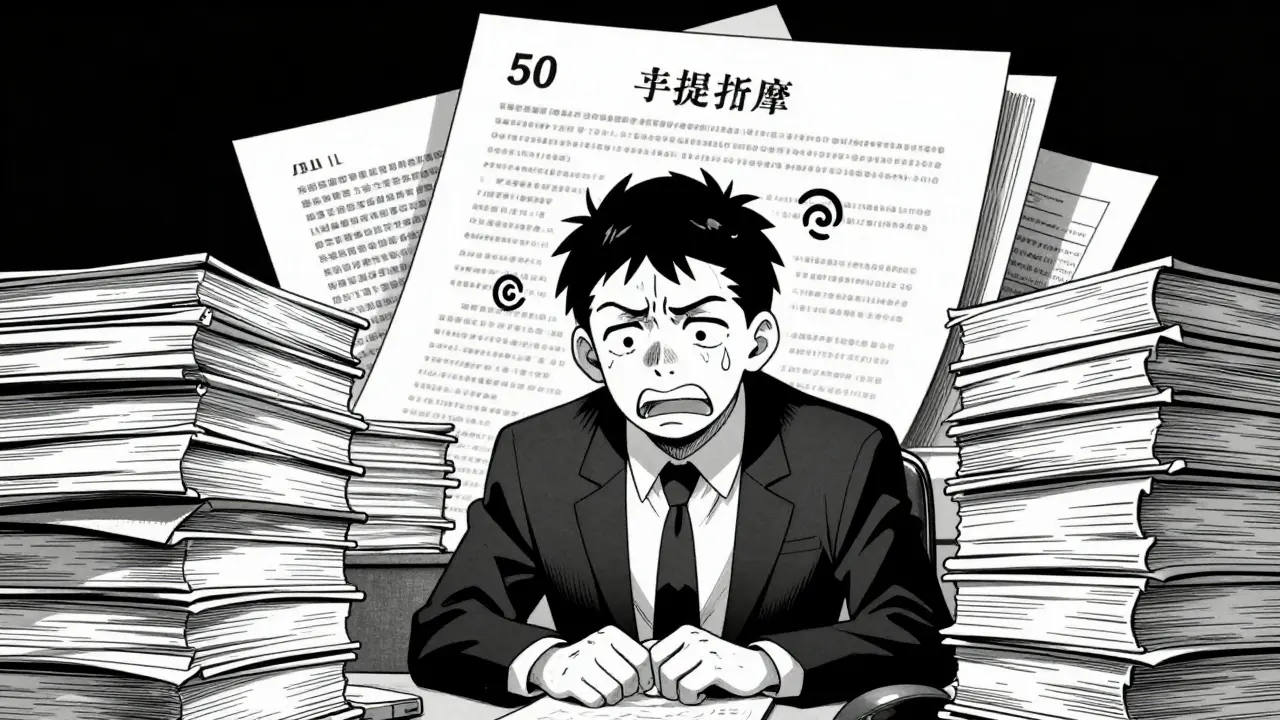
Imagine spending 117 hours on a single application only to be told you missed one technicality in a 50-page document. For many companies trying to sell generic products or services to the European public sector, this isn't a nightmare-it's Tuesday. The stakes are massive; we're talking about a market where roughly €2.1 trillion is spent annually. If you're looking to get your products into the hands of EU government entities, you aren't just fighting a product battle; you're fighting a regulatory one.
To win in this environment, you have to stop thinking about "selling" and start thinking about "compliance." The European approach to tendering systems isn't designed to be a quick transaction. It's a rigid, transparent framework meant to prevent corruption and ensure that every cent of public money is used efficiently. Whether you're providing medical generics, IT infrastructure, or transport services, the rules are surprisingly similar across the bloc.
The Rules of the Game: How EU Procurement Works
At its core, the system is built on a few non-negotiable principles: fairness, transparency, and non-discrimination. You can't have a government official writing a technical specification that only one specific company can meet. That's illegal under EU law. Everything is governed by a series of directives, most notably Directive 2014/25/EU, which regulates procurement for entities in water, energy, transport, and postal services. This ensures that a company from Spain has the same shot at a contract in Belgium as a local firm does.
Most of this action happens on the Tenders Electronic Daily (TED), which is the central electronic publication system for all high-value EU tenders. If it's not on TED or the Official Journal of the European Union (OJEU), it's likely a smaller, local contract with different rules. For those in the generics space, the "proportionality principle" is your best friend. This rule prevents authorities from asking for ridiculous requirements-like demanding €10 million in annual revenue for a contract that's only worth €1 million.
Choosing Your Path: Tendering Procedures Explained
Depending on what you're selling and how complex the project is, the buyer will choose one of several paths. You need to know which one you're dealing with because the amount of work required varies wildly.
- Open Procedure: The "wild west" of tendering. Anyone can submit a bid. It's the most common method (about 45% of tenders), but it's an administrative headache for the buyer.
- Restricted Procedure: A two-stage process. First, you apply to be "qualified." If you make the cut, you're invited to submit a full tender. This filters out the noise but can feel like a closed club to new players.
- Competitive Negotiated Procedure: Used for complex needs where the buyer needs to talk through the requirements. Common in defense and security.
- Competitive Dialogue: The most flexible and complex. The buyer engages in a dialogue with a group of suppliers to develop a solution before the final bids are submitted.
| Procedure | Accessibility | Complexity | Best For... |
|---|---|---|---|
| Open | Very High | Low/Medium | Standard generic products |
| Restricted | Medium | Medium | Specialized equipment |
| Negotiated | Low | High | Defense & Critical Infra |
| Dialogue | Low | Very High | Innovation/Smart Cities |
Moving Beyond the Lowest Price: The MEAT Method
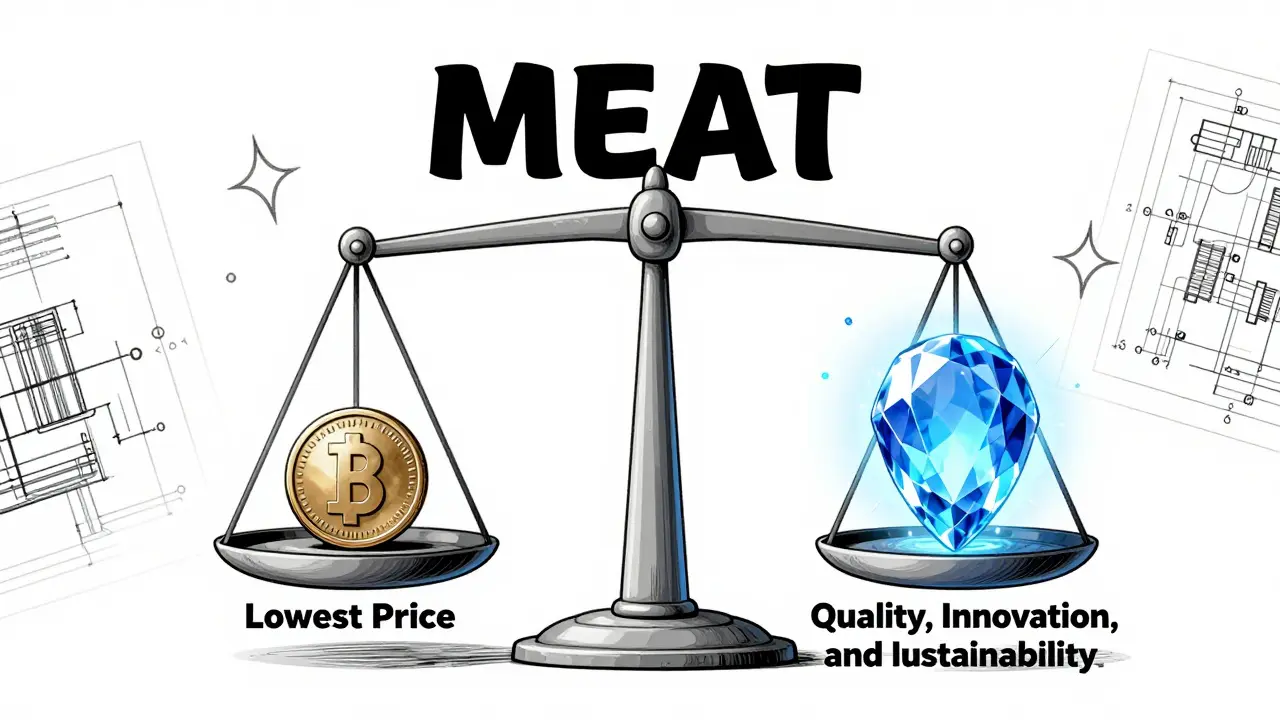
For years, public buying was a "race to the bottom" where the cheapest bid always won. That's changing. The EU is moving toward MEAT (Most Economically Advantageous Tender), which is an evaluation method that balances price with quality, technical merit, and sustainability.
Why does this matter for you? Because if you provide a generic product that is slightly more expensive but lasts twice as long or has a lower carbon footprint, you can actually win. Experts like Dr. Anna De Lillo have noted that MEAT evaluations can generate 12-18% better value outcomes than lowest-price-only models. In fact, for tenders over €1 million, there's a strong push to give at least 50% of the weight to quality criteria. If you're bidding, don't just slash your price-highlight your innovation and reliability.

The Efficiency Hacks: Frameworks and Dynamic Systems
Not every purchase is a one-off event. For recurring needs, buyers use Framework Agreements. Think of this as becoming a "preferred vendor." Once you're on a multi-supplier framework, you don't have to go through the full qualification nightmare every time. You just compete in "mini-tenders" against a small group of other pre-approved companies.
Then there are Dynamic Purchasing Systems (DPS). These are electronic systems that allow new suppliers to join at any time. It's much more fluid than a traditional framework and is great for fast-moving markets like ICT or medical supplies. However, be warned: qualifying for these can be grueling. Some suppliers report needing to submit nearly 90 separate documents just to get a foot in the door.
How to Actually Win: A Step-by-Step Guide
If you're new to this, don't just jump into a bid. You'll likely fail. Follow this sequence to increase your odds:
- Set up TED alerts: Use specific CPV (Common Procurement Vocabulary) codes. If you get these wrong, you'll miss the right tenders or waste time on irrelevant ones.
- Request a consultation: Before the tender is even published, try to engage the market. Authorities that do this usually have clearer requirements, which reduces the chance of legal disputes later.
- Audit your documentation: Ensure your financial records and certifications are up to date. Use the European Single Procurement Document (ESPD), which is a self-declaration form that replaces the need to provide bulky certificates at the initial stage.
- Focus on the "Quality" section: In a MEAT evaluation, the technical writing is as important as the price. Be concrete. Use data, not adjectives.
- Review the proportionality: If the buyer asks for a certification that costs €50,000 for a €10,000 contract, they are violating EU rules. You can challenge this.
Common Pitfalls and Reality Checks
Even the pros mess up. One of the biggest killers is ambiguous technical specifications. In Spain, a rail signaling contract worth €180 million was canceled because the requirements were too vague. If you see a tender with blurry specifications, ask questions during the clarification period. If you don't, you're bidding on a guess.
There's also a massive digital divide. While Nordic countries are almost entirely electronic in their tendering, Southern Europe is still catching up. This means the "user experience" of applying for a contract in Denmark will be vastly different from one in Italy. Be prepared for varying levels of platform stability and clarity.
What is the difference between an Open and a Restricted procedure?
In an Open procedure, any supplier can submit a final bid immediately. In a Restricted procedure, there is a pre-qualification phase where the buyer selects a shortlist of capable companies who are then invited to bid. Restricted procedures are typically used for more complex or specialized requirements.
What does MEAT stand for in EU tendering?
MEAT stands for Most Economically Advantageous Tender. Instead of just picking the cheapest option, the buyer evaluates a combination of price, quality, technical capability, and environmental impact to find the best overall value.
What is the ESPD and why is it useful?
The European Single Procurement Document (ESPD) is a standardized electronic form that allows companies to self-certify their eligibility. It means you don't have to provide a mountain of official certificates and tax documents unless you are actually selected for the final award, saving hours of paperwork.
How do CPV codes affect my bidding process?
Common Procurement Vocabulary (CPV) codes are a standardized coding system used to categorize all public contracts in the EU. Using the correct codes in your search alerts ensures you find relevant opportunities; conversely, if a buyer uses the wrong code, they might miss a huge chunk of qualified suppliers.
Can I challenge a tender if the requirements seem unfair?
Yes. Under the proportionality principle, requirements must be relevant and reasonable relative to the contract's value. If a requirement creates an unfair barrier to entry or favors one specific brand without justification, you can file a complaint or seek a ruling from the European Court of Justice.
Next Steps for Bidders
If you're a small business, the first step is to simplify. Don't try to bid on everything. Focus on a specific niche and master the CPV codes for that area. If you have the budget, consider getting a Certified Procurement Professional (CPP) on your team; data shows they have significantly higher success rates because they know how to navigate the bureaucracy.
For larger enterprises, the goal should be getting onto multi-supplier framework agreements. The initial effort is high, but once you're "in," your bidding costs drop and your revenue becomes far more predictable. Keep an eye on the emerging AI-assisted evaluation pilots in France and Finland-the way these contracts are scored is about to get a lot faster and more consistent.