
Acetaminophen Safety Calculator
Check Your Acetaminophen Intake
The FDA recommends no more than 4,000 mg of acetaminophen in 24 hours. Exceeding this amount can cause serious liver damage.
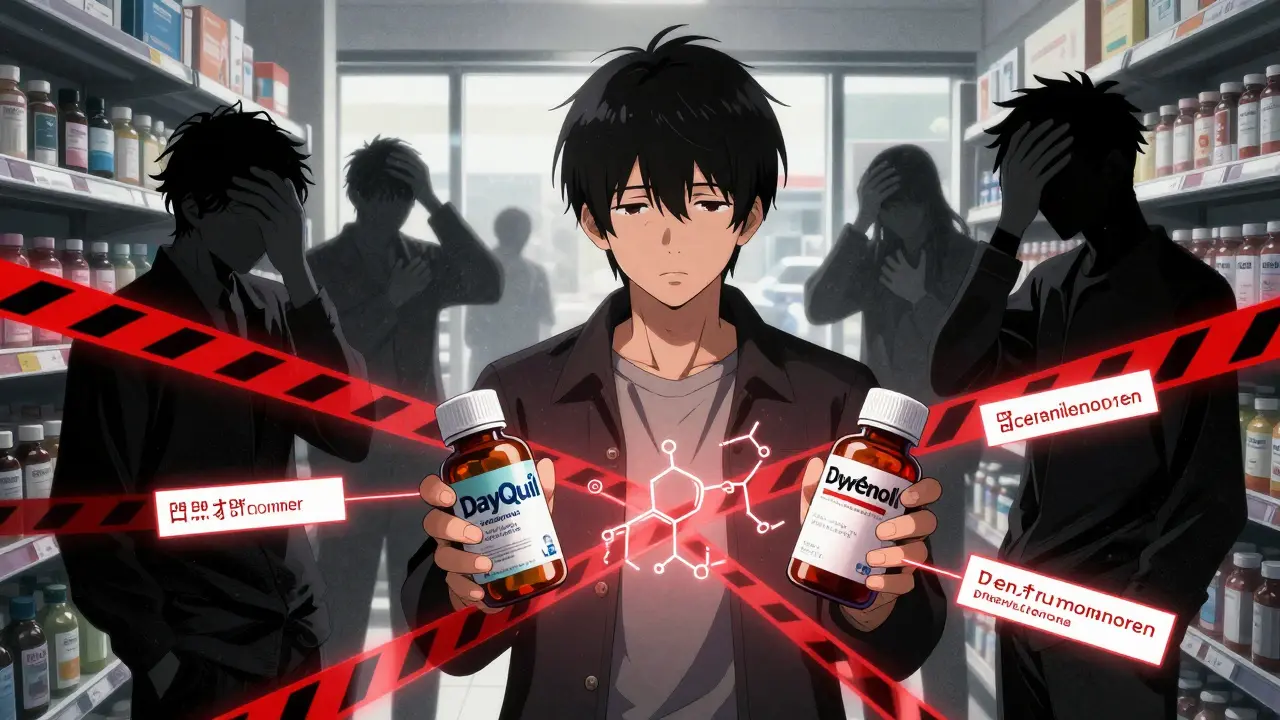
Every winter, millions of people grab a bottle of cold medicine without reading the label. They think, It’s just an OTC pill. But what if that one pill is actually three pills in disguise? That’s the hidden risk with combination allergy and cold medications-products that bundle antihistamines, decongestants, painkillers, and cough suppressants into one tablet or liquid. They’re convenient, sure. But they’re also one of the most common causes of accidental overdose and dangerous drug interactions in homes across the U.S. and Australia.
What’s Really in Your Cold Medicine?
Most combination cold and allergy meds contain 2 to 4 active ingredients. Let’s break down the usual suspects:- Acetaminophen (APAP): A pain reliever and fever reducer. Found in Tylenol, DayQuil, NyQuil, and dozens of others.
- Pseudoephedrine: A strong decongestant. Found in Sudafed. Raises blood pressure and heart rate.
- Phenylephrine: A weaker decongestant. Now in most store-brand cold meds after pseudoephedrine was moved behind the pharmacy counter.
- Dextromethorphan (DM): A cough suppressant. Can cause dizziness, confusion, and even hallucinations at high doses.
- Chlorpheniramine or Diphenhydramine: Antihistamines that cause drowsiness. Found in Benadryl and many nighttime cold formulas.
Here’s the catch: many of these ingredients are also in other medicines you might already be taking. Take acetaminophen, for example. It’s in painkillers like Tylenol, in cold meds like DayQuil, and even in some prescription opioids. If you take Tylenol for a headache and then grab a bottle of DayQuil for your stuffy nose, you’re doubling up. The FDA says you should never take more than 4,000 mg of acetaminophen in 24 hours. Too much? You can cause serious liver damage-even if you don’t feel sick right away.
A 2022 CDC study found that 6.7 million Americans accidentally take too much acetaminophen every year, mostly because they didn’t realize it was in more than one product. And it’s not just acetaminophen. Phenylephrine, the decongestant now used in most store brands, becomes much stronger when mixed with acetaminophen. Research published in the Journal of Clinical Pharmacology showed that combining 5 mg of phenylephrine with 500 mg of acetaminophen causes phenylephrine levels in the blood to spike to four times higher than if taken alone. That means you’re getting a much stronger decongestant effect than the label says-and with it, a much higher risk of high blood pressure, dizziness, and rapid heartbeat.
Why Some Decongestants Are Riskier Than Others
Not all decongestants are created equal. Pseudoephedrine works better than phenylephrine. Studies show pseudoephedrine reduces nasal congestion by about 65%, while phenylephrine only works about 45% of the time. But pseudoephedrine is harder to get because it’s used to make methamphetamine. So manufacturers switched to phenylephrine.Here’s the problem: phenylephrine isn’t just less effective-it’s more dangerous when mixed with other meds. A 2014 study from New Zealand found that phenylephrine-acetaminophen combos cause 4.1 times more hypertension-related side effects than acetaminophen alone. People end up in the ER with blood pressure spikes, chest tightness, and pounding headaches-all because they thought they were just taking a cold medicine.
And if you’re on blood pressure meds? That’s a recipe for trouble. The same combo can make your blood pressure meds less effective-or worse, cause your pressure to go too high. If you have heart disease, glaucoma, or an overactive thyroid, you should avoid these meds entirely.
The Silent Killer: Dextromethorphan and Antidepressants
Dextromethorphan (DM) is in almost every cough syrup and multi-symptom cold med. It’s fine on its own. But if you’re taking an SSRI like sertraline (Zoloft), fluoxetine (Prozac), or even SNRIs like venlafaxine (Effexor), you’re playing with fire.DM and SSRIs both affect serotonin in the brain. When combined, they can trigger serotonin syndrome-a rare but life-threatening condition. Symptoms include confusion, rapid heart rate, high fever, muscle rigidity, and seizures. A 2017 study in the Journal of Clinical Psychiatry found that combining DM with SSRIs increases serotonin syndrome risk by 300%. That’s not a small risk. That’s a red flag.
And it’s not just antidepressants. Some migraine meds, certain painkillers, and even herbal supplements like St. John’s Wort can cause the same reaction. If you’re on any prescription drug for mood, anxiety, or pain, check with your pharmacist before taking any cough or cold med with DM.
Why Labels Are Designed to Confuse You
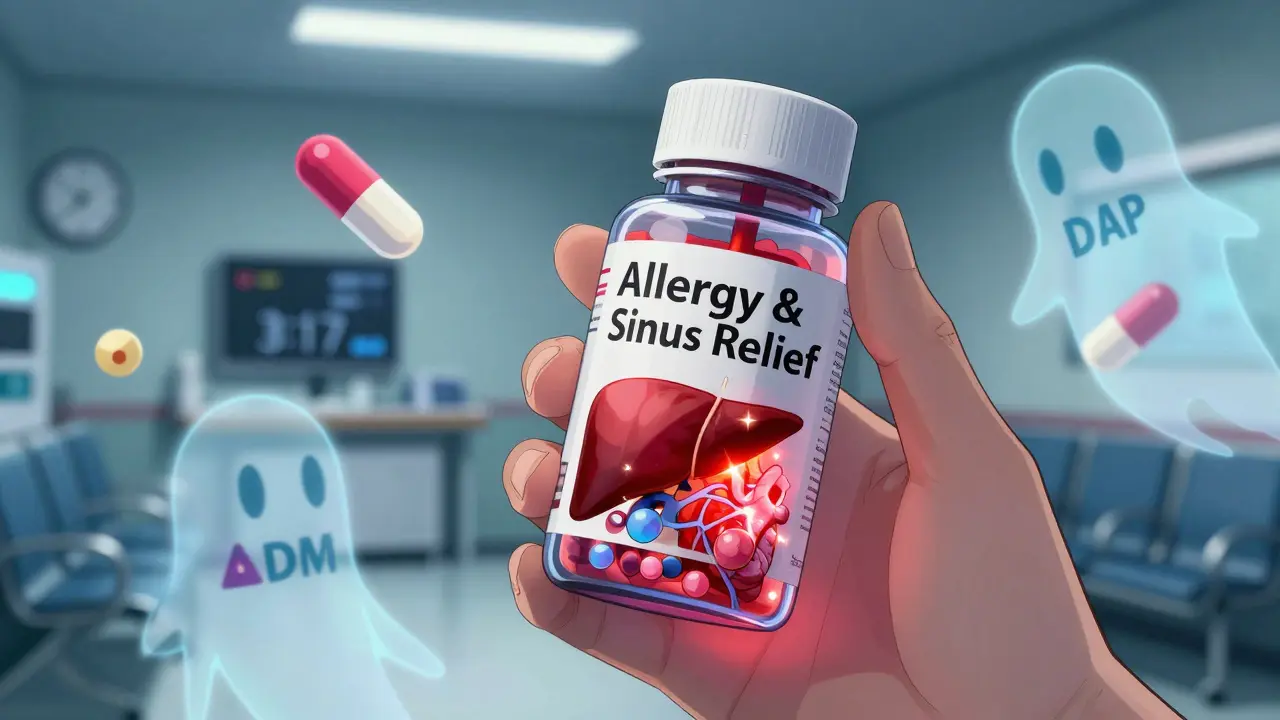
The FDA requires all OTC meds to list active ingredients. But they don’t make it easy. You’ll see “APAP” instead of acetaminophen. “DM” for dextromethorphan. “PE” for phenylephrine. “PSE” for pseudoephedrine. And if you’re not looking for them, you’ll miss them.A University of Arizona study found that 68% of people don’t recognize “APAP” as acetaminophen. That means nearly 7 out of 10 people are accidentally doubling their dose. And it’s not just about names. Some products list ingredients in tiny print, or bury them under fancy brand names like “Cold & Flu Relief” or “Allergy & Sinus.”
Consumer Reports found that 41% of people don’t check all ingredients when buying cold meds. They see “DayQuil” and think, “Oh, it’s for colds.” They don’t realize it’s got acetaminophen, DM, and phenylephrine-three ingredients they might already be taking in other pills.
What You Should Do Instead
Stop guessing. Start checking.- Read every label. Look for the “Active Ingredients” section. Don’t skip it because it’s small.
- Write down every medication you’re taking. Include prescriptions, supplements, and OTCs. Even that herbal tea you take for sleep.
- Match ingredients. If you’re taking Tylenol and then grab a DayQuil, you’re doubling acetaminophen. Don’t do it.
- Use single-ingredient meds. If you only have a cough, take dextromethorphan alone. If you only have a stuffy nose, take phenylephrine alone. It’s less convenient-but safer.
- Ask your pharmacist. Walk into any pharmacy and say, “I’m taking this list of meds. Is it safe to take this cold medicine?” They’re trained for this. And they won’t judge you.
There are tools to help. The WebMD Drug Interaction Checker gets over a million checks a day. Apps like Medisafe can scan your medicine bottle and warn you about duplicates. And if you’re unsure? Wait. Don’t take it until you know for sure.
What’s Changing in 2026?
The FDA is cracking down. Starting in December 2024, all combination cold and allergy meds must have high-contrast ingredient lists and prominent warnings about duplicate ingredients. That means bigger fonts, clearer labels, and bold warnings like “DO NOT TAKE WITH OTHER ACETAMINOPHEN PRODUCTS.”Also, the FDA is reviewing phenylephrine’s effectiveness. A 2022 study from the University of Florida and Rutgers found that 10 mg of oral phenylephrine is no better than a placebo at relieving congestion. If the FDA agrees, it could pull phenylephrine from the market. That means most of today’s store-brand cold meds could be reformulated-or disappear.
Some manufacturers are already preparing. McNeil (makers of Tylenol) has filed patents for new formulas using caffeine and guaifenesin as alternatives. The future of cold meds may not be about mixing more drugs-but about using fewer, better ones.

Real People, Real Mistakes
On Reddit, a user wrote: “Took two different cold meds thinking they were different-ended up in ER with high blood pressure.” That story isn’t rare. Emergency rooms see dozens of cases every winter from people who didn’t check their labels.A Walgreens review from October 2023 says: “I took DayQuil and then took Tylenol for a headache. I didn’t realize both had acetaminophen. I got sick, dizzy, and my liver enzymes were through the roof.”
And it’s not just adults. Parents often give kids cold meds without realizing they contain the same ingredients as their own. That’s how accidental overdoses start.
Bottom line: convenience isn’t worth a trip to the hospital.
When to Skip Combination Meds Altogether
You should avoid combination cold and allergy meds if you:- Have high blood pressure or heart disease
- Take antidepressants, anti-anxiety meds, or migraine drugs
- Have liver disease or drink alcohol regularly
- Are pregnant or breastfeeding
- Are over 65
- Have glaucoma, diabetes, or thyroid problems
In these cases, talk to your doctor. There are safer options. Sometimes, saline sprays, humidifiers, and rest are all you need. Other times, your doctor can prescribe a single-ingredient medication that won’t clash with your other meds.
Remember: just because a medicine is sold over the counter doesn’t mean it’s harmless. The most dangerous drugs are the ones you think you can’t hurt yourself with.
Can I take allergy medicine and cold medicine together?
Only if you check the ingredients. Many allergy meds contain antihistamines like diphenhydramine, and many cold meds contain the same. Taking both means you’re doubling your dose, which can cause extreme drowsiness, dry mouth, confusion, or even heart rhythm problems. Always compare the active ingredients before combining them.
Is phenylephrine safe to take with acetaminophen?
No, not really. Research shows that acetaminophen increases phenylephrine’s blood levels by up to 400%, making it much stronger than intended. This raises your risk of high blood pressure, dizziness, and rapid heartbeat. Even though manufacturers claim it’s safe, the science says otherwise. If you have any heart or blood pressure issues, avoid this combo completely.
What’s the safest cold medicine for someone on antidepressants?
Avoid any cold medicine with dextromethorphan (DM). Instead, use single-ingredient options like saline nasal spray for congestion, honey for cough, and acetaminophen (in moderation) for pain. If you need a decongestant, talk to your doctor about oxymetazoline nasal spray-it’s local, not systemic, so it’s less likely to interact.
How do I know if I’ve taken too much acetaminophen?
You might not feel anything at first. The first signs of overdose-nausea, vomiting, loss of appetite, sweating-can take 12 to 24 hours to appear. By then, liver damage may already be happening. If you’ve taken more than 4,000 mg in 24 hours, or if you’re unsure, go to the ER. Don’t wait. Acetaminophen overdose is treatable if caught early.
Are store-brand cold meds safer than name brands?
No. Store brands often use the same active ingredients as name brands-they just cost less. The risk isn’t in the brand, it’s in the combination. A generic “All-in-One Cold Relief” can have the same dangerous mix of acetaminophen, phenylephrine, and dextromethorphan as DayQuil. Always read the label, not the package.
Can I use natural remedies instead of cold meds?
Yes, and often they’re safer. For congestion, try a saline nasal rinse or steam inhalation. For cough, honey (1-2 teaspoons) works better than dextromethorphan for most adults. For sore throat, warm salt water gargles help. For fever or pain, acetaminophen alone (at the right dose) is still the safest choice. Natural doesn’t mean risk-free, but it cuts down on drug interactions.
What to Do Next
If you’re currently taking combination cold or allergy meds, pause. Look at the label. Write down every active ingredient. Compare it to anything else you’re taking-even that multivitamin or sleep aid. If you see duplicates, stop. Call your pharmacist. Or better yet, switch to single-ingredient options. It’s a little more work-but it’s the difference between feeling better and ending up in the hospital.Next time you reach for a cold med, ask yourself: Do I really need all these ingredients? Or am I just being sold convenience? The answer might save your liver-or your life.




Rob Sims
January 23, 2026 AT 04:57