
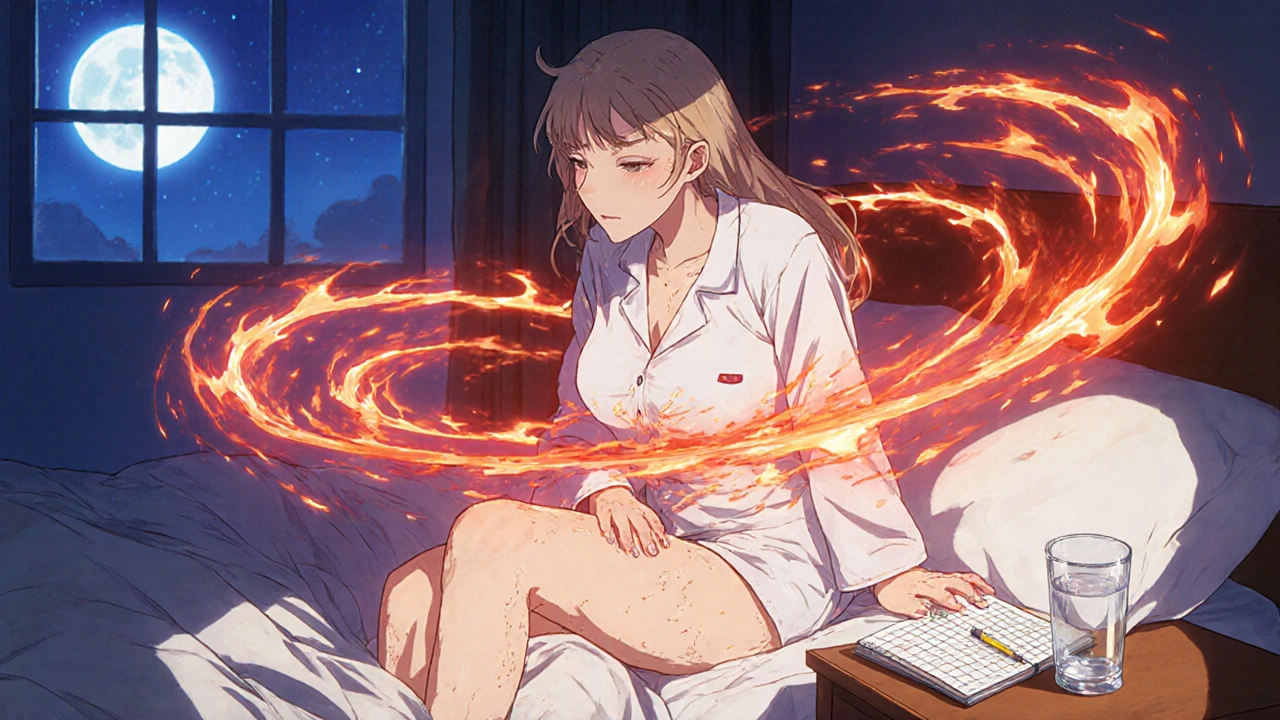
When hot flashes hit at 3 a.m. for the 15th time this week, and your sleep, mood, and energy are gone, it’s easy to wonder: is hormone therapy worth it? For millions of women, the answer isn’t black and white. Menopause isn’t a disease - but the symptoms can be debilitating. And for many, hormone therapy (MHT or HRT) is the most effective tool we have. But it’s not without risk. The key isn’t whether you should or shouldn’t take it - it’s whether it’s right for you, at this time, with your health history.
What Hormone Therapy Actually Does
Menopause hormone therapy replaces the estrogen (and sometimes progesterone) your body stops making after your last period. It’s not about slowing aging. It’s about managing symptoms that interfere with daily life: hot flashes, night sweats, vaginal dryness, sleep disruption, and brain fog. Estrogen therapy alone works for women who’ve had a hysterectomy. If you still have a uterus, you need progesterone too - otherwise, estrogen can cause the lining of the uterus to thicken, raising cancer risk.There are different ways to take it. Oral pills like conjugated equine estrogens (Premarin) or 17-beta estradiol are common. But transdermal patches, gels, or sprays deliver estrogen through the skin. This bypasses the liver, which means lower risk of blood clots and stroke. Vaginal creams or rings help local symptoms like dryness and pain during sex without affecting the whole body.
Low-dose is the new standard. You don’t need a high dose to feel better. Starting with 0.5 mg of estradiol daily or a 0.025 mg patch is often enough. Many women find relief at doses lower than what was prescribed 20 years ago.
The Big Benefits: More Than Just Hot Flashes
The clearest win for hormone therapy? Hot flashes. Studies show it reduces them by 75% or more - far better than SSRIs, gabapentin, or plant-based remedies like soy or black cohosh. In one 2021 JAMA study, women on HRT had 75-90% fewer hot flashes. Non-hormonal options? Maybe 50-60% reduction. And they come with their own side effects - dizziness, nausea, weight gain.Another major benefit? Bone protection. Estrogen slows bone loss. Women who take HRT for 5-7 years during early menopause reduce their risk of hip fractures by up to 30%. That’s huge. One woman in the Menopause Society forum shared: “My DEXA scan stayed stable after 8 years on HRT. My sister, who refused it, broke her hip at 62.”
For women under 60 or within 10 years of their last period, HRT also appears to lower heart disease risk - but only if started early. The “timing hypothesis” is now widely accepted: starting hormone therapy close to menopause may protect your heart. Starting it after 60, or more than 10 years after menopause, doesn’t offer the same benefit - and may even raise risk.
The Real Risks: What You Can’t Ignore
Yes, hormone therapy carries risks. But they’re not equal for everyone.Breast cancer: Estrogen-progestogen therapy increases risk slightly - about 29 extra cases per 10,000 women per year. That sounds scary, but it’s less than the risk from obesity or alcohol. Estrogen-only therapy (for women without a uterus) shows no significant increase. The risk rises with longer use - especially beyond 5 years. But for most women under 60, the absolute risk remains low.
Blood clots and stroke: Oral estrogen increases risk of venous thromboembolism (VTE) - blood clots in the legs or lungs. The rate jumps from 1.3 per 1,000 women per year on transdermal therapy to 3.0 per 1,000 on pills. Stroke risk also rises slightly with oral estrogen, but transdermal forms cut that risk by 30%.
Other concerns: Gallbladder disease, headaches, and breast tenderness are common but usually mild. Breakthrough bleeding happens in 15-20% of women in the first 6 months - often resolves with dose tweaks. Mood changes? Sometimes. But they’re often linked to sleep disruption from hot flashes, not the hormones themselves.
And here’s the hard truth: hormone therapy is NOT recommended for preventing heart disease, dementia, or diabetes. The Women’s Health Initiative found no long-term benefit - and in older women, some harm.

Who Should Avoid It
Hormone therapy isn’t for everyone. It’s strongly discouraged if you have:- A history of breast cancer
- Active blood clots or a history of deep vein thrombosis or pulmonary embolism
- Unexplained vaginal bleeding
- Severe liver disease
- History of stroke or heart attack
If you have a strong family history of breast cancer or clotting disorders, talk to your doctor about genetic testing and personalized risk. You might still be a candidate - but you’ll need a more careful plan.
Transdermal vs. Oral: The Smart Choice
If you’re considering HRT, ask: should it be a pill or a patch? The answer matters.Transdermal estrogen - patches, gels, sprays - avoids the liver. That means:
- 50% lower risk of blood clots than oral
- 30% lower stroke risk
- Less impact on triglycerides and liver proteins
For women with high blood pressure, obesity, or a family history of clots, transdermal is the safer first choice. It’s also easier to dose precisely. Patches come in 0.025 mg, 0.05 mg, and 0.1 mg strengths. You can start low and adjust.
Oral estrogen still has its place - especially if you have severe vaginal symptoms or can’t use patches. But it shouldn’t be the default.
What Real Women Say
On Reddit’s r/menopause, one woman wrote: “I went from 15-20 hot flashes a day to 2-3 in 10 days on a 0.05 mg estradiol patch. I slept through the night for the first time in years.”Another on HealthUnlocked shared: “I was on Prempro. Bloating, mood swings, weight gain - I felt worse than before. I quit after 3 months.”
A 2023 survey by NAMS found 72% of women who stopped HRT did so because of fear of breast cancer. Only 18% stopped because of side effects. That tells us something: fear often outweighs facts.
But for those who stayed on - especially with low-dose transdermal therapy - 68% reported “dramatic improvement” in symptoms. That’s not a placebo. That’s real life change.
How to Start - and When to Stop
There’s no one-size-fits-all plan. But here’s how to begin:- Track your symptoms. Use a simple journal or app. How many hot flashes? How bad is sleep? Any vaginal discomfort?
- See a doctor who knows menopause. Not every OB-GYN does. Look for a NAMS-certified practitioner - there are over 1,850 in the U.S. alone.
- Get checked. Blood pressure, liver and thyroid tests, mammogram, pelvic exam. Rule out other causes of symptoms.
- Start low. Try transdermal estradiol 0.025-0.05 mg/day. Add micronized progesterone if needed.
- Re-evaluate every 6 months. Can you lower the dose? Can you stop? Most women can taper off after 3-5 years.
There’s no rule that says you have to stay on forever. Many women stop after symptoms ease. Others keep it for bone protection. It’s a personal decision - not a life sentence.
The Future: Personalized Hormone Therapy
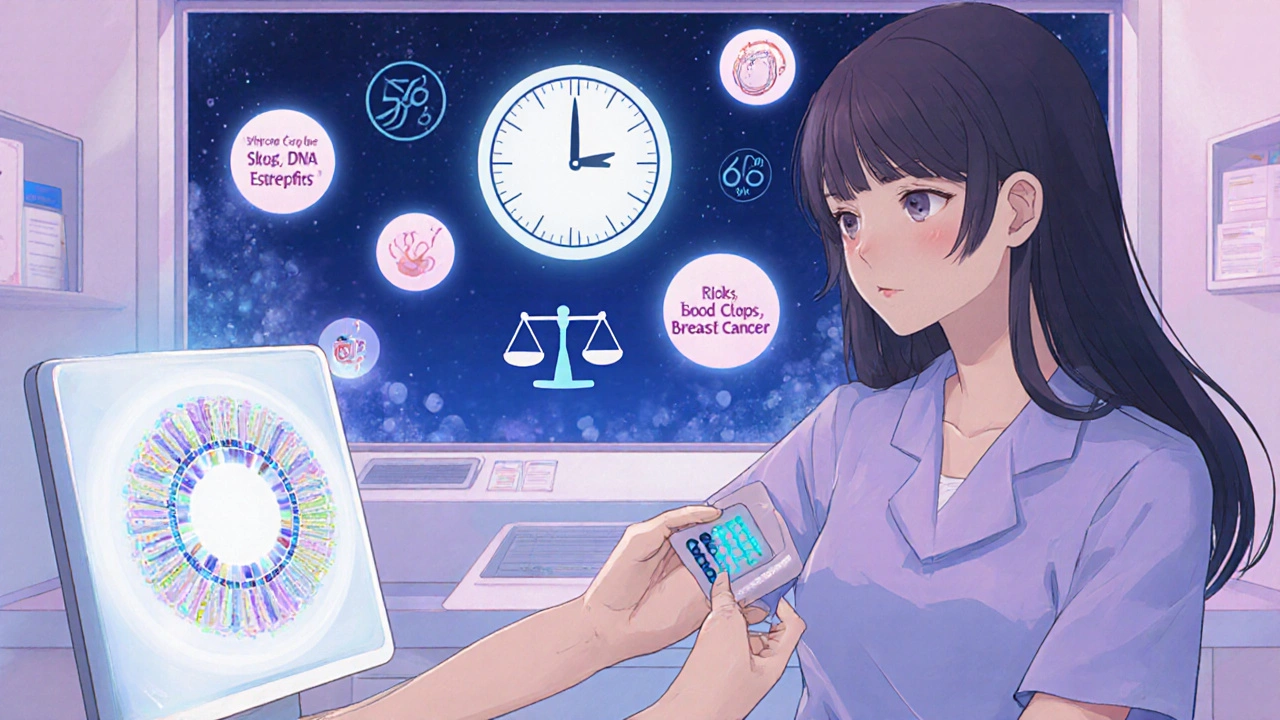
The field is changing fast. In 2025, a study of 120 million patient records showed that starting estrogen during perimenopause - before your last period - cut heart disease risk by 18% compared to starting after menopause.Experts now talk about a “window of opportunity”: the 10-year period after menopause begins. That’s when benefits outweigh risks. After that, the balance shifts.
Soon, genetic testing may guide therapy. Some women metabolize estrogen faster. Others have genes that make them more sensitive to its effects. Within five years, doctors may use DNA tests to pick the right type, dose, and delivery method for each woman.
For now, the best advice is simple: if you’re under 60 and having troubling menopause symptoms, hormone therapy is still the most effective treatment we have. But it must be tailored - low dose, transdermal if possible, and time-limited.
It’s not about fear. It’s about informed choice. You deserve to feel like yourself again - without risking your health.
Is hormone therapy safe for women over 60?
For women over 60, or more than 10 years past menopause, hormone therapy is generally not recommended for symptom relief or disease prevention. The risks - especially for blood clots, stroke, and breast cancer - begin to outweigh the benefits. If you’re over 60 and still having severe hot flashes, talk to your doctor about non-hormonal options or very low-dose vaginal estrogen, which has minimal systemic effects.
Can I take hormone therapy if I have a family history of breast cancer?
Having a family history doesn’t automatically rule you out, but it does require extra caution. If you have a BRCA mutation or strong family history, estrogen-only therapy (if you’ve had a hysterectomy) is often safer than combined therapy. Transdermal estrogen carries lower risk than pills. Some women opt for non-hormonal treatments first. Genetic counseling and personalized risk assessment are essential before starting.
Do natural remedies like soy or black cohosh work as well as HRT?
Not really. Studies show plant-based options like soy isoflavones or black cohosh reduce hot flashes by only 10-20% - far less than the 75-90% seen with hormone therapy. A Cochrane Review found phytoestrogens caused just 0.5 fewer hot flashes per day than placebo. They’re not harmful, but don’t expect them to replace HRT if your symptoms are severe.
How long should I stay on hormone therapy?
There’s no fixed timeline. Most women take it for 3-5 years to get through the worst of symptoms. If symptoms return after stopping, you can restart at the lowest effective dose. For bone protection, some women continue longer - but only if they’re under 60 and have no other risk factors. Regular check-ins with your doctor are key. You can always lower the dose or switch to a patch to reduce long-term risks.
Will hormone therapy make me gain weight?
Hormone therapy itself doesn’t cause weight gain. Weight gain during menopause is more about aging, reduced muscle mass, and slower metabolism. Some women report bloating or water retention early on - especially with oral pills. Switching to transdermal estrogen often helps. Focus on strength training and protein intake - those are far more effective for managing weight than avoiding HRT.
What’s the cheapest way to get hormone therapy?
Generic estradiol pills cost $15-$30 a month. Transdermal patches are more expensive - $80-$150 - but many insurance plans cover them. Some pharmacies offer $4 generic estradiol through discount programs. Vaginal creams are often the most affordable for local symptoms. Avoid branded products like Premarin or Duavee unless necessary - they’re significantly more expensive with no proven benefit over generics.





Ryan Airey
November 14, 2025 AT 22:03