

Running out of your blood pressure or cholesterol medicine shouldn’t feel like a race against time. Yet for millions of people taking daily generic drugs, remembering to call the pharmacy or log into an app before the last pill is gone is a constant stress. That’s where automated refills come in - a quiet, behind-the-scenes feature that’s quietly changing how people manage long-term health conditions.
How Automated Refills Actually Work
Automated refills aren’t magic. They’re smart systems built into online pharmacies and retail pharmacy apps that track your prescription and automatically start the refill process before you run out. Most systems trigger a refill request 5 to 7 days before your current supply runs out. If you’re on a 30-day supply of metformin, the pharmacy will start processing your next 30-day batch around day 23. No phone calls. No app reminders you ignore. No last-minute panic. It’s not just about timing. These systems connect to your electronic health record and pharmacy database. When your doctor changes your dose - say, from 500mg to 1000mg of metformin - the system should flag that change. But here’s the catch: it doesn’t always happen automatically. That’s why patients are told to double-check with the pharmacy after any dosage adjustment. Major chains like CVS, Walgreens, and Amazon Pharmacy all have automated refill programs. Even mail-order services tied to insurance plans use them. The technology isn’t new - CVS rolled theirs out by 2015 - but today’s versions are smarter. They use AI to learn your refill habits. If you usually pick up your medication on a Tuesday, the system might nudge you to pick it up that day instead of just shipping it out randomly.Why It Matters for Generic Medicines
Generic drugs make up over 90% of all prescriptions filled in the U.S. and Australia. They’re cheaper, just as effective, and often taken for life. Statins for cholesterol, metformin for diabetes, lisinopril for blood pressure - these aren’t occasional meds. They’re daily habits. And habits are hard to keep when life gets busy. Studies show automated refills boost adherence by 3.9% to 7.2% across common chronic conditions. That might sound small, but in real numbers, it means fewer hospital visits, fewer heart attacks, and lower long-term costs. One 2016 study found patients on automatic refills for statins were 7.2% more likely to stay on their meds than those who had to request refills manually. That’s not just convenience - it’s health savings. For people with memory issues, busy schedules, or no family nearby to remind them, automated refills aren’t a luxury. They’re a lifeline. One patient in Brisbane, 72, told a pharmacist she hadn’t missed a dose of her diabetes med in three years - thanks to automatic refills. She didn’t have to remember. The system did it for her.The Catch: When Automation Goes Wrong
It’s not all smooth sailing. The biggest risk? Dosage changes. If your doctor increases your dose from 240mg to 360mg of diltiazem, but the automated system doesn’t catch it, you’ll keep getting the old dose. That’s happened. More than once. Consumer Medication Safety reported cases where patients received outdated prescriptions because the pharmacy’s system didn’t sync with the doctor’s update. Another issue: some mail-order pharmacies and pharmacy benefit managers (PBMs) trigger refills early - like at day 60 of a 90-day supply - just to make more money. You think you’re getting a 90-day supply, but you’re being billed for two 60-day fills. That’s not just misleading - it’s wasteful and expensive. And then there’s the silence. Some patients don’t even know they’re enrolled. They get a box of pills delivered and wonder where it came from. That’s especially common with insurance-linked mail-order services. If you didn’t sign up for it, you might not realize you’re on automatic refill - and that can lead to confusion, duplicate meds, or even waste if you stopped taking the drug but the refills kept coming.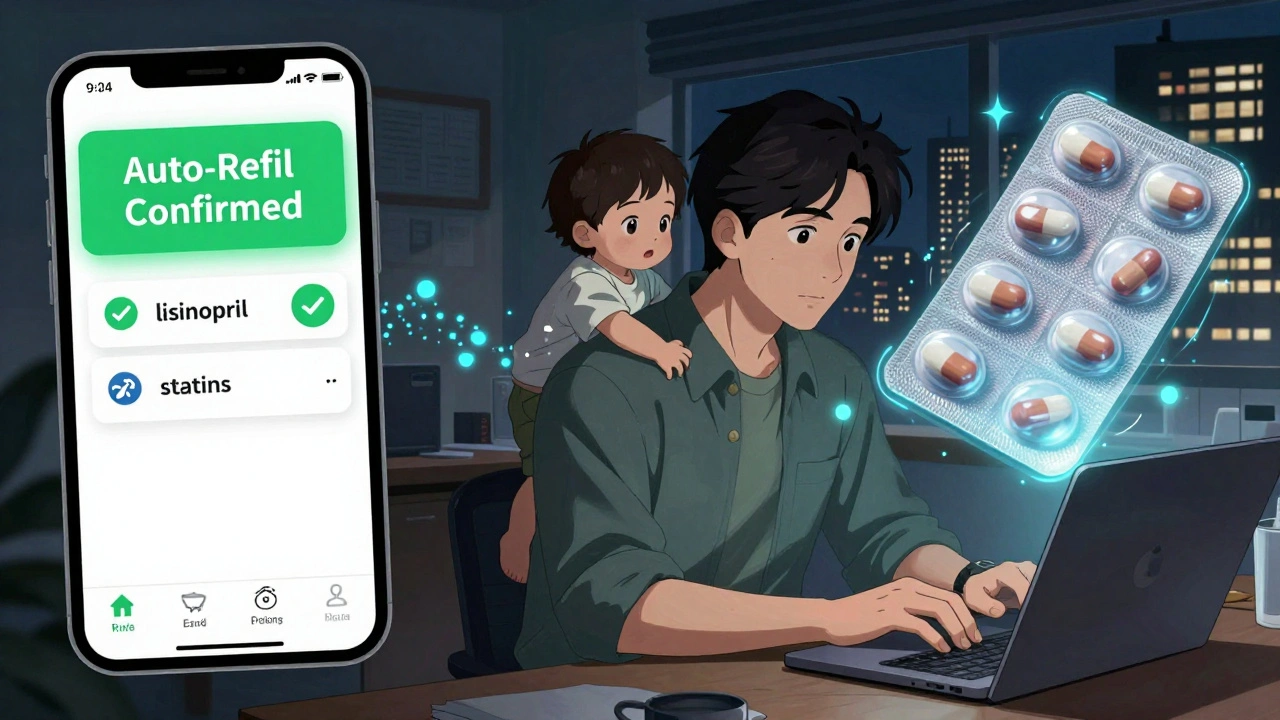
How to Use Automated Refills Safely
You don’t have to trust the system blindly. Here’s how to use it smartly:- Confirm enrollment. Log into your pharmacy’s app or website. Look for a setting labeled “Auto-Refill,” “Automatic Renewal,” or “Prescription Reminders.” Make sure it’s turned on - or off - the way you want.
- Check your dosage every time. When your refill arrives, open the bottle. Does the label match what your doctor prescribed? If not, call the pharmacy before you take it.
- Review your list quarterly. Every three months, sit down with your meds. Are you still taking everything on the list? Did you stop one? If so, tell your pharmacy to pause the refill.
- Ask for alerts. Most systems let you choose how you’re notified: SMS, email, or phone call. Pick the one you actually check. If you ignore emails, turn on text alerts.
- Know your rights. You can opt out anytime. If you’re getting meds you don’t need, call the pharmacy and say, “I want to cancel my auto-refill for this prescription.” They have to honor it.
Amazon’s RxPass and the New Subscription Model
In January 2023, Amazon Pharmacy launched RxPass - a $5 monthly fee for unlimited access to 60 common generic medications for Prime members in 45 U.S. states. It’s not just automated refills. It’s a flat-rate subscription. No copay. No insurance hassle. Just take what you need. It’s a game-changer. A 2025 study in JAMA Network Open found RxPass users refilled their meds 18% more often than before. Why? Because cost was no longer a barrier. People who skipped doses because they couldn’t afford the $15 copay started taking their pills regularly. It’s not available in Australia yet, but it’s a sign of where things are headed. The future isn’t just about automation - it’s about removing cost and friction entirely. If you’re on long-term meds, subscription models like this could save you hundreds a year.Who Benefits the Most?
Not everyone needs automated refills. But these groups see the biggest payoff:- People on daily chronic meds - hypertension, diabetes, high cholesterol, thyroid, depression.
- Older adults - especially those living alone or with memory issues.
- Working parents - who don’t have time to manage pharmacy calls during the workday.
- People with limited mobility - who rely on delivery and can’t easily pick up refills.







Charles Moore
December 3, 2025 AT 22:07