

When you walk into a doctor’s office, you might think your medication list is enough. But if you’re only relying on memory or a scribbled note, you’re leaving room for serious mistakes. Every year, tens of thousands of hospital admissions and emergency visits happen because of medication errors - and most of them happen during routine checkups. The fix isn’t complicated: bring your actual pill bottles to every appointment. It’s not just a good idea. It’s the most reliable way to make sure your doctor knows exactly what you’re taking - and what you’re not.
Why Pill Bottles Matter More Than Your Memory
Your brain isn’t designed to remember every pill you’ve taken in the last six months. You might forget a vitamin you started last winter. You might not realize you’re still taking a painkiller your doctor discontinued last year. You might even think your blood pressure med is called "the blue one" - until you open the bottle and see it’s actually called "Lisinopril 10mg." Studies show that when patients rely on memory alone, 60 to 70% of their medication lists are wrong. That’s not a small error. That’s the difference between safe care and a dangerous drug interaction. When patients bring their physical pill bottles, medication discrepancies drop by 67%. That means fewer side effects, fewer hospital trips, and more accurate prescriptions. The labels on your bottles aren’t just for show. They contain the drug name, strength, dosage instructions, expiration date, pharmacy info, and lot number - all things your doctor needs to cross-check with your records. Even if you think a bottle is empty or outdated, bring it. Those are often the ones that reveal the biggest gaps in your care.What to Bring: Everything, Even the "Extra" Stuff
This isn’t just about prescription meds. You need to bring:- All prescription bottles - even ones you haven’t opened in months
- All over-the-counter pills - pain relievers, sleep aids, antacids
- Vitamins and supplements - even the ones you think are "harmless"
- Herbal remedies and teas with active ingredients
- Pill organizers - but only if you also bring the original bottles they came from
How to Prepare: The 15-Minute Rule
Don’t wait until the morning of your appointment. Set aside 15 to 20 minutes the day before. Go through every drawer, bathroom cabinet, and purse where you keep meds. Gather everything - even if it’s expired, empty, or you haven’t used it in a year. If you’ve thrown away empty bottles, don’t panic. Take a photo of the label before you toss it. Many pharmacists recommend this. Apps like Medisafe or MyTherapy can sync with your pharmacy and generate a digital list, but they’re not foolproof. Nothing beats holding the real bottle in your hand. For people on 5+ medications - which is most adults over 65 - set aside 30 to 45 minutes. Sort your bottles by category: heart, diabetes, pain, mental health, etc. This helps your doctor spot patterns. If you’re using multiple pill organizers, lay them out side by side with their original bottles. Your provider will need to compare them.What Happens When You Don’t Bring Them
A 2023 study of 22 older adults found that only 23% kept their meds in original bottles. The rest used pill cases, plastic bags, or even old food containers. One woman brought a Ziploc bag with 20 loose pills. The doctor couldn’t identify half of them. She ended up getting a new prescription for something she was already taking - twice. Another common issue: patients stop taking a drug but keep the bottle. They think it’s harmless. But if your doctor sees the bottle and doesn’t know you stopped, they might restart the med - leading to overdose or dangerous interactions. That’s why experts say you should bring even discontinued meds. It’s not about guilt. It’s about clarity. And then there’s the "as needed" meds - the ones you only take when you feel bad. Antibiotics for infections, nausea pills, or anxiety meds. These are often forgotten in self-reports. Yet, 29% of adverse drug events come from these exact pills. If you’ve used them in the last six months, bring the bottle.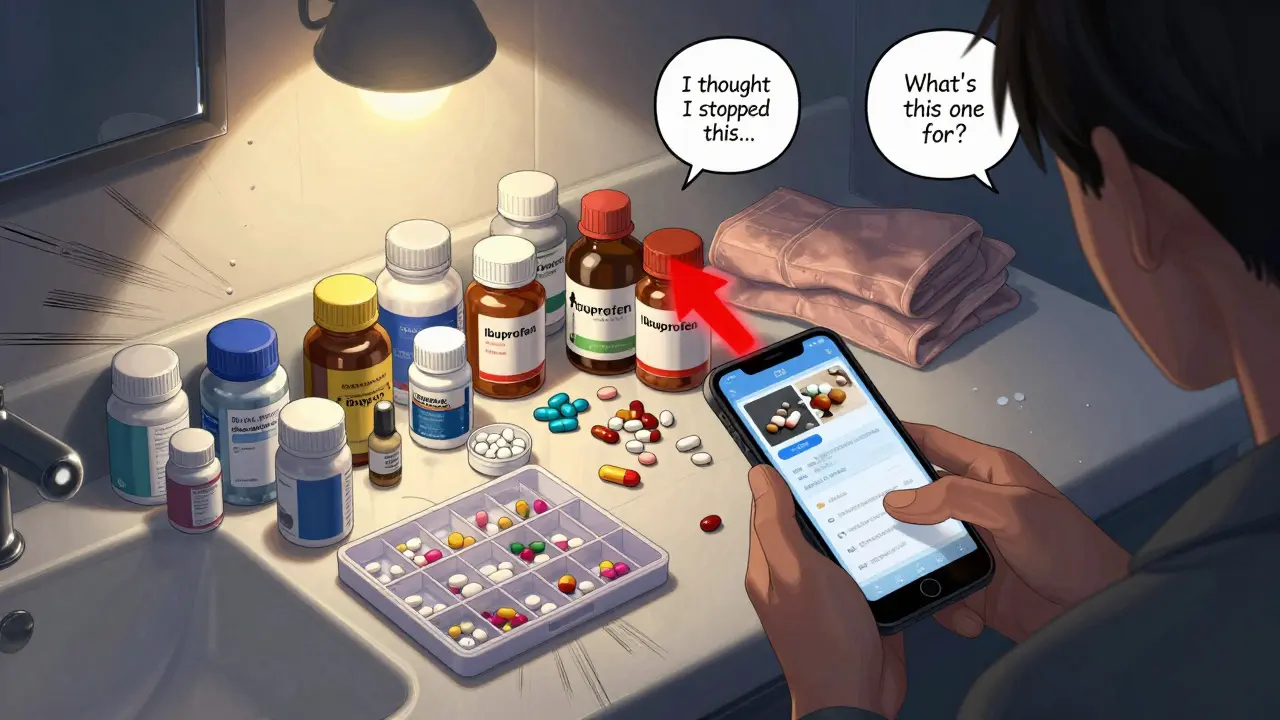
Telehealth and the Limits of Smartphone Photos
With telehealth, some people now hold up their pill bottles to the camera. It sounds convenient. But it misses key details. A photo can’t show if a bottle is half-empty or if pills are stuck together. It can’t reveal if you’ve taken the cap off and poured pills into a different container. It can’t show the expiration date clearly if the lighting is bad. A 2024 study found that virtual verification misses 22% of discrepancies that in-person checks catch. That includes unused meds hidden in the bottom of a drawer, pills in unlabeled containers, or supplements you didn’t think were "medications." If you’re doing a video visit, take a photo of each bottle and send it ahead of time. But still bring the physical bottles to your next in-person appointment. The digital version is a backup - not a replacement.What Your Doctor Does With the Bottles
When you hand over your bag of bottles, your doctor or nurse will compare each one to your electronic health record. They’ll check:- Does the name on the bottle match what’s in the system?
- Is the dose the same?
- Is the frequency correct?
- Is the expiration date still valid?
- Are there any duplicates - two different prescriptions for the same drug?
- Are there interactions between meds you didn’t know about?
Why This Is Especially Important for Older Adults
Nearly half of adults over 65 take five or more medications daily. That’s called polypharmacy. And it’s where the biggest risks live. The American Geriatrics Society says 56% of potentially harmful drugs in older adults are only found through physical bottle checks - not through charts or patient recall. One 78-year-old man in Brisbane was taking three blood pressure pills. He thought they were all the same. His doctor found two were different strengths. He’d been taking too much - and nearly had a stroke. The bottle labels made the difference. Another woman was taking a supplement that blocked her thyroid med. She didn’t know they interacted. Her doctor only found out because she brought the bottle. They stopped the supplement. Her energy returned in two weeks.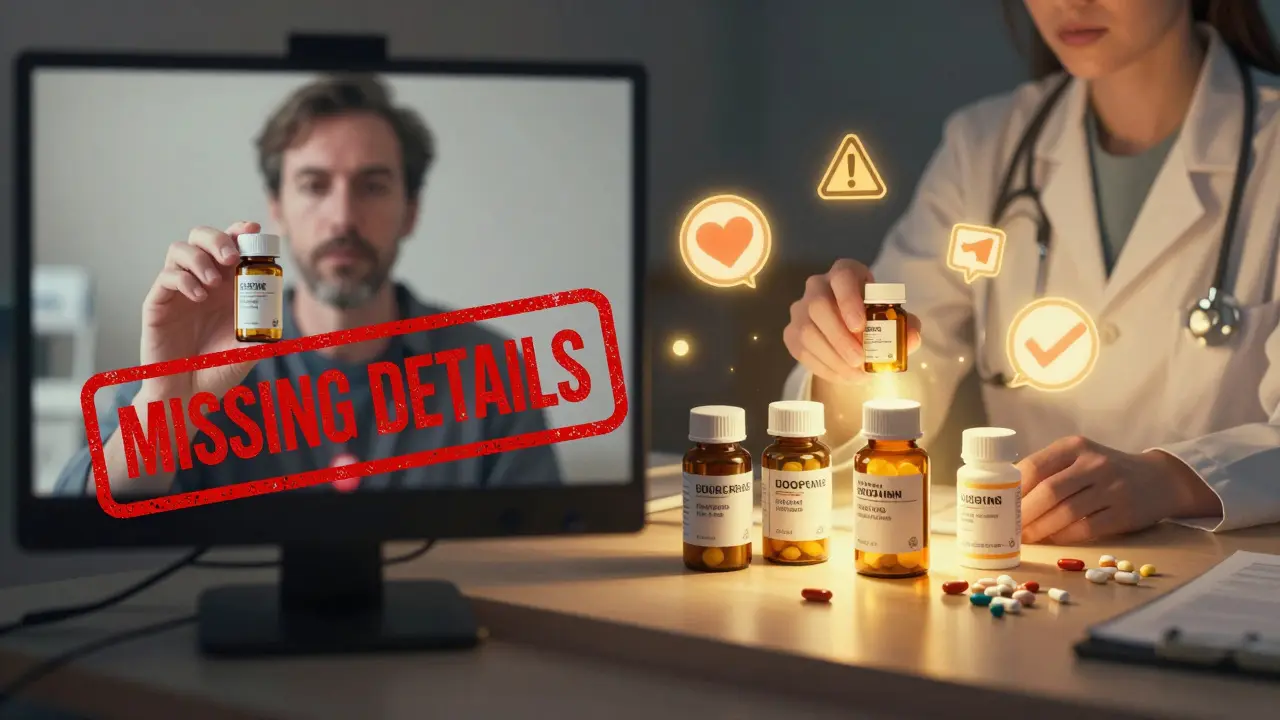
What to Do If You’re Embarrassed
Some patients feel ashamed. They think, "I shouldn’t still have this bottle," or "I didn’t take it like I was supposed to." But your provider has seen it all. They’ve seen pills in coffee mugs, pill organizers with mismatched tabs, and bottles labeled "Grandma’s medicine." The goal isn’t to judge. It’s to keep you safe. If you’re worried, say it out loud: "I’m not sure if I’m still supposed to take this one." That’s exactly what they want to hear. It opens the door to a better plan.What’s Next: Digital Tools and the Future
There are new apps, smart pill bottles, and AI tools that scan pills with your phone. Some even remind you when to take them. But none of them replace the physical bottle. Why? Because the FDA requires labels on prescription bottles to include specific, verified information - name, strength, instructions, lot number, expiration. No app can replicate that. No digital list can guarantee it’s up to date. By 2026, pharmacies will be able to send your real-time medication history directly to your doctor’s system. That’s coming. But until then, the bottle in your hand is the most accurate source you have.Final Checklist: Before Your Appointment
- Gather all prescription, OTC, vitamin, and supplement bottles
- Include empty or expired bottles
- Bring pill organizers, but also the original bottles they came from
- Don’t sort or throw anything away
- Take photos of labels if you’ve discarded bottles
- Write down any questions: "Why am I taking this?", "Is this still needed?", "Can I stop this?"
- Put everything in one bag - this is called the "brown bag review" and saves time
What If You Forget?
If you show up without your bottles, don’t cancel. Tell your provider right away. Ask if you can bring them to your next visit. Some clinics keep a "meds bag" you can use to collect bottles between appointments. Others can call your pharmacy for a fill history - but that takes time and might not catch everything. The bottom line: bringing your pill bottles isn’t about being perfect. It’s about being honest. It’s about giving your doctor the full picture - not the edited version.Do I need to bring every single pill bottle, even if I haven’t used it in months?
Yes. Even if you stopped taking a medication weeks or months ago, bring the bottle. Your doctor needs to know you had it - and that you’re no longer using it. Many dangerous interactions happen because a doctor assumes you’ve stopped a drug when you haven’t. Empty bottles also help confirm you didn’t just run out.
Can I just show a photo of my pill bottles on my phone during a video call?
You can use photos as a backup, but they’re not enough. Photos can’t show if a bottle is half-empty, if pills are stuck together, or if you’ve poured them into a different container. In-person checks catch 22% more errors than virtual ones. Always bring the physical bottles to in-person visits, even if you sent photos ahead of time.
What if I use a pill organizer? Do I still need the original bottles?
Yes. Pill organizers are great for daily use, but they don’t tell your doctor what’s inside. You need the original bottles to confirm the drug name, strength, and instructions. Bring both: the organizer for convenience, and the bottles for accuracy.
Why do I need to bring over-the-counter meds and supplements?
Many OTC meds and supplements interact with prescription drugs. For example, ibuprofen can raise blood pressure and interfere with kidney function. St. John’s Wort can cancel out antidepressants. Even "harmless" vitamins can cause problems. Your doctor needs to see everything you’re taking - not just the prescriptions.
I’m worried my doctor will judge me for having unused meds. What should I do?
Your doctor isn’t there to judge - they’re there to keep you safe. Most have seen hundreds of pill bottles. If you’re not taking a med anymore, tell them. That’s exactly the information they need to adjust your plan. Saying, "I stopped this because it made me dizzy," helps them find a better option.
What if I don’t know what a pill is for?
That’s very common - and completely okay. Bring the bottle anyway. Your doctor or pharmacist can look up the label and explain what it’s for. Many patients don’t know what their meds do, and that’s one reason why reconciliation is so important. You don’t need to be an expert. You just need to bring the bottle.




Alex Warden
January 1, 2026 AT 20:38