
Diabetes affects over 500 million people worldwide, and insulin is life-saving for millions. But for many, the cost is unbearable-sometimes over $400 a month for a single vial. Enter insulin biosimilars: cheaper, scientifically validated alternatives to brand-name insulins. They’re not generics. They’re not copies. They’re highly similar versions of complex biological medicines, made using living cells. And they’re changing how diabetes is treated-especially where money matters most.
What Makes Insulin Biosimilars Different from Generics?
When you think of a generic drug, you imagine a small, identical pill-like generic ibuprofen that looks and acts exactly like Advil. That’s not how insulin biosimilars work. Insulin is a protein made by living cells, not chemically synthesized. Even tiny changes in how it’s made-temperature, fermentation process, purification-can affect how it behaves in your body.
That’s why biosimilars go through far more testing than generics. Companies must prove their insulin version matches the original in structure, purity, and how it works in the body. They run clinical trials to show it lowers blood sugar just as well, with no more side effects. The European Medicines Agency and U.S. FDA both require this. The result? A product that’s not identical, but clinically equivalent.
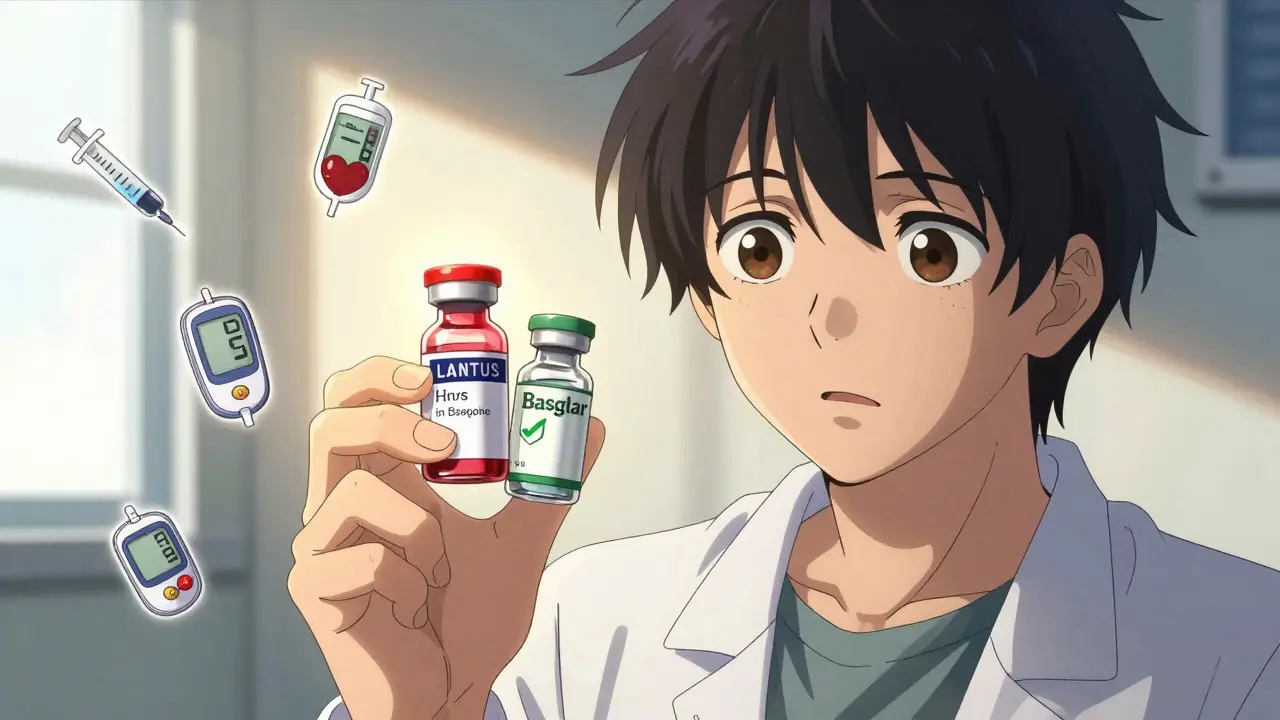
Take Basaglar, a biosimilar to Lantus (insulin glargine). Multiple studies show it performs the same in controlling A1C levels. Same for Semglee, another Lantus biosimilar. Patients report no difference in daily use. But unlike generics, you can’t just swap them at the pharmacy without your doctor’s approval in most places.
Why Are Insulin Biosimilars So Much Cheaper?
Branded insulins like Lantus, Humalog, and Toujeo cost hundreds of dollars because their manufacturers held patents for decades. When those patents expired, biosimilar companies didn’t have to start from scratch. They didn’t need to run full-scale trials proving insulin works-they just had to prove their version was just as good.
That cuts development costs by 60-70%. The savings get passed on. In the U.S., biosimilar insulins typically cost 15-30% less than the brand. In India, where insulin prices were once a barrier to survival, biosimilars now cost up to 70% less. One patient in Mumbai told me his monthly insulin bill dropped from $120 to $35 after switching to a biosimilar.
The U.S. government is helping too. Medicare now reimburses pharmacies at ASP + 8% for biosimilars-meaning they get paid more to stock them than the brand-name version. That’s a big incentive for pharmacies to carry them.
Market Leaders and Key Products
The insulin biosimilar market is crowded but dominated by a few big players. Here’s who’s making waves:
- Sanofi: Still holds the top spot with Lantus, but now sells an unbranded version to compete directly with biosimilars.
- Biocon + Viatris: Marketed Semglee, the first interchangeable insulin biosimilar approved by the FDA in 2021.
- Eli Lilly: Offers Lyumjev and its biosimilar version, targeting rapid-acting insulin needs.
- Samsung Bioepis: Produces Basaglar, widely used in Europe and now in the U.S.
- BGP Pharma and Aspen: Strong in emerging markets like South Africa, Brazil, and India.
As of 2025, six insulin biosimilars are approved in the EU. The U.S. has five, with more expected by 2026-including versions for Toujeo and Tresiba, two long-acting insulins still protected by patents. Once those come out, prices could drop even further.
Why Adoption Is Slower Than Expected
Despite the savings and proven safety, insulin biosimilars haven’t taken over like oncology biosimilars did. In cancer, biosimilars hit 80% market share within five years. For insulin? Only 26%.
Why? Three big reasons:
- Doctors are cautious. Many were trained on brand-name insulins. They worry about switching patients, even if studies say it’s safe.
- Patient fear. One Reddit user switched to a biosimilar and had more low blood sugar episodes. He switched back. That story spreads fast.
- Pharmacy rules vary. Only 17 U.S. states let pharmacists automatically substitute insulin biosimilars. In the other 33, the doctor must write a new prescription-creating friction.
Even in Australia, where the Therapeutic Goods Administration supports biosimilars, uptake is slow. Many patients don’t even know they exist.
Switching Safely: What Patients and Providers Need to Know
Switching from a branded insulin to a biosimilar isn’t risky-but it’s not zero-effort either.
The American Association of Clinical Endocrinologists recommends a 3-6 month transition period. Here’s how to do it right:
- Start with one insulin type. Don’t switch all your insulins at once. Begin with your long-acting (basal) insulin.
- Monitor blood sugar closely. Check fasting and bedtime glucose daily for the first month. Watch for unexplained highs or lows.
- Don’t assume dosing is identical. Some patients need a 5-10% adjustment after switching. That’s normal.
- Communicate with your care team. Tell your doctor if you feel different. Don’t ignore subtle changes.
Most patients-68%, according to a 2025 survey-report no difference in effectiveness or side effects. About 22% need a small dose tweak. Only 10% have to switch back.
One patient in Texas, ‘DiabetesWarrior87’, switched to Basaglar and saw her A1C drop from 7.8 to 7.2 while saving $360 a month. That’s the win.
Global Differences: Where Biosimilars Are Winning
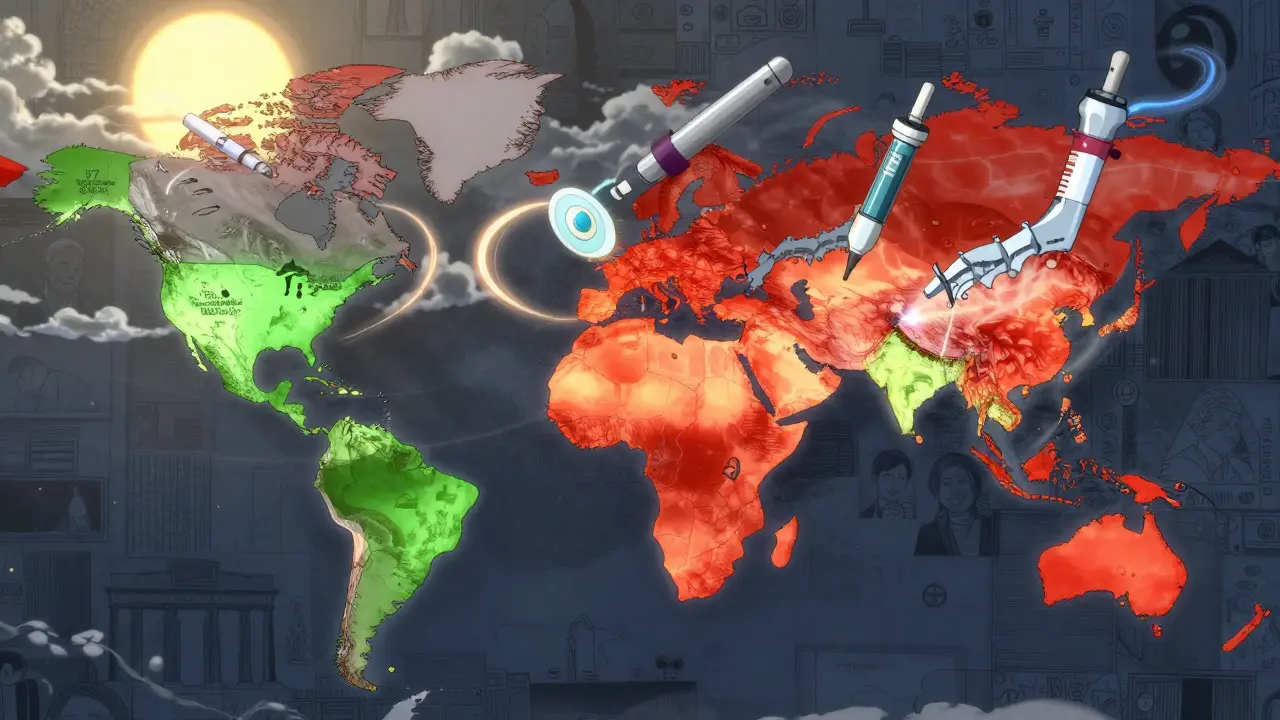
The U.S. market is big-29.8% of global insulin biosimilar sales in 2025-but it’s slow-moving. Germany and the UK are ahead, thanks to government pressure to cut drug costs. In India, where 141 million people have diabetes, biosimilars are the default choice for many. Dr. Arjun Patel in Mumbai says 45% of his patients use them.
China’s market is expected to hit $261 million in 2025, driven by state-backed manufacturing. Japan is cautious, sticking close to originators. But the Asia-Pacific region as a whole is growing fastest-6.8% CAGR through 2035.
Regulatory differences matter. The EU treats all approved biosimilars as interchangeable. The U.S. requires a separate ‘interchangeable’ label. That means in Europe, a pharmacist can swap your Lantus for Semglee without asking. In the U.S., they can’t-unless your state allows it and your doctor signs off.
The Future: What’s Coming Next
By 2030, insulin biosimilars could capture 35-40% of the market in wealthy countries and 60-65% in developing ones. That’s not just hope-it’s projected by industry analysts.
Manufacturers are already working on next-gen delivery systems: biosimilar insulins in smart pens, inhalers, and even patches. Seventy-eight percent of companies are investing in these technologies.
Regulators are talking. The FDA and EMA are aligning their standards. That could cut approval times by over a year. More biosimilars will hit the market faster.
And prices? They’ll keep falling. The average selling price of biosimilar insulins was $1,840 per unit in early 2025-down from $2,100 just two years prior. As more competitors enter, that number will drop again.
Final Thoughts: Is It Right for You?
Insulin biosimilars aren’t a magic fix. But they’re the most realistic path to affordable, life-sustaining care for millions. The science is solid. The savings are real. The only thing holding them back is fear-of change, of the unknown, of systems that aren’t built for affordability.
If you’re paying over $200 a month for insulin, ask your doctor: ‘Is there a biosimilar option for me?’ If you’re a provider, consider offering it to patients who struggle with cost. If you’re a policymaker, make substitution rules clearer.
This isn’t about replacing brands. It’s about giving people access to what they need without choosing between food and medicine.
Are insulin biosimilars safe?
Yes. Insulin biosimilars undergo rigorous testing to prove they’re as safe and effective as the original product. Studies show no meaningful difference in side effects, hypoglycemia rates, or long-term outcomes. The FDA and EMA only approve them after clinical trials involving thousands of patients.
Can I switch from my current insulin to a biosimilar?
You can, but not always on your own. In most places, your doctor must approve the switch. It’s safest to transition slowly-over 3 to 6 months-with close blood sugar monitoring. Most patients adapt without issue, but some may need a small dose adjustment.
Why aren’t insulin biosimilars more widely used?
Three main reasons: doctors and patients are used to brand-name insulins, there’s fear of switching (even if unfounded), and pharmacy substitution rules are inconsistent. In the U.S., only 17 states allow pharmacists to swap insulin biosimilars without a new prescription. That slows adoption.
How much cheaper are insulin biosimilars?
Typically 15-30% cheaper in the U.S., and up to 70% cheaper in countries like India. For example, a vial of Lantus might cost $450, while its biosimilar Basaglar costs around $90. Medicare and private insurers are increasingly covering them at lower copays.
Is there a difference between ‘biosimilar’ and ‘interchangeable’?
Yes. All interchangeable insulins are biosimilars, but not all biosimilars are interchangeable. ‘Interchangeable’ means a pharmacist can substitute it for the brand without needing the doctor’s permission-like generic pills. Only Semglee and a few others have this designation in the U.S. In the EU, all approved biosimilars are treated as interchangeable.
What’s the biggest barrier to insulin biosimilar adoption?
Perception. The science supports them. The data shows they work. But fear-of change, of unknown side effects, of being a ‘guinea pig’-holds people back. Education and clear communication from healthcare providers are the keys to overcoming this.




Maggie Noe
January 9, 2026 AT 10:01