
When a generic drug company finally gets the green light from the FDA to sell its version of a popular medication, it’s not the end of the story-it’s often just the beginning. Many companies spend years waiting for that moment, not because their drug isn’t good enough, but because someone else still holds a patent. This is where tentative approval comes in. It’s not final approval. It’s not a license to sell. But for generic drug makers, it’s the closest thing to a promise that they’ll be first in line when the patent clock runs out.
The U.S. Food and Drug Administration (FDA) grants tentative approval to Abbreviated New Drug Applications (ANDAs) that have passed every scientific test: bioequivalence, manufacturing quality, labeling, you name it. The problem? There’s still an active patent or exclusivity period blocking the door. So instead of saying "yes, you can sell," the FDA says, "you’re approved-but not yet. Come back when the patent expires."
This system didn’t just appear out of nowhere. It was created in 1984 by the Hatch-Waxman Act, a law designed to balance two things: protecting innovation from brand-name drug makers and letting cheaper generics enter the market as soon as legally possible. Before Hatch-Waxman, generic companies had to wait until every single patent expired before even starting their application. Now, they can apply early-and if they challenge those patents head-on, they might even get 180 days of exclusive market access as a reward.
What Tentative Approval Actually Means
Tentative approval isn’t a delay tactic. It’s a strategic tool. Think of it like being first in line at a concert. You’ve already bought your ticket, passed security, and been cleared to enter-but the doors won’t open until the headliner finishes their set. Once the last song ends, you walk right in. That’s what tentative approval does: it keeps your application alive and ready while the patent clock ticks down.
Here’s how it works in practice. A generic company submits its ANDA. The FDA reviews it. If everything checks out but there’s a patent still in force, the agency issues a Tentative Approval letter. That letter doesn’t let the company sell the drug. But it does two important things: it confirms the drug meets all safety and quality standards, and it locks in the company’s place in the approval queue. No one else can jump ahead. If the patent expires tomorrow, and you’ve got tentative approval, you’re next.
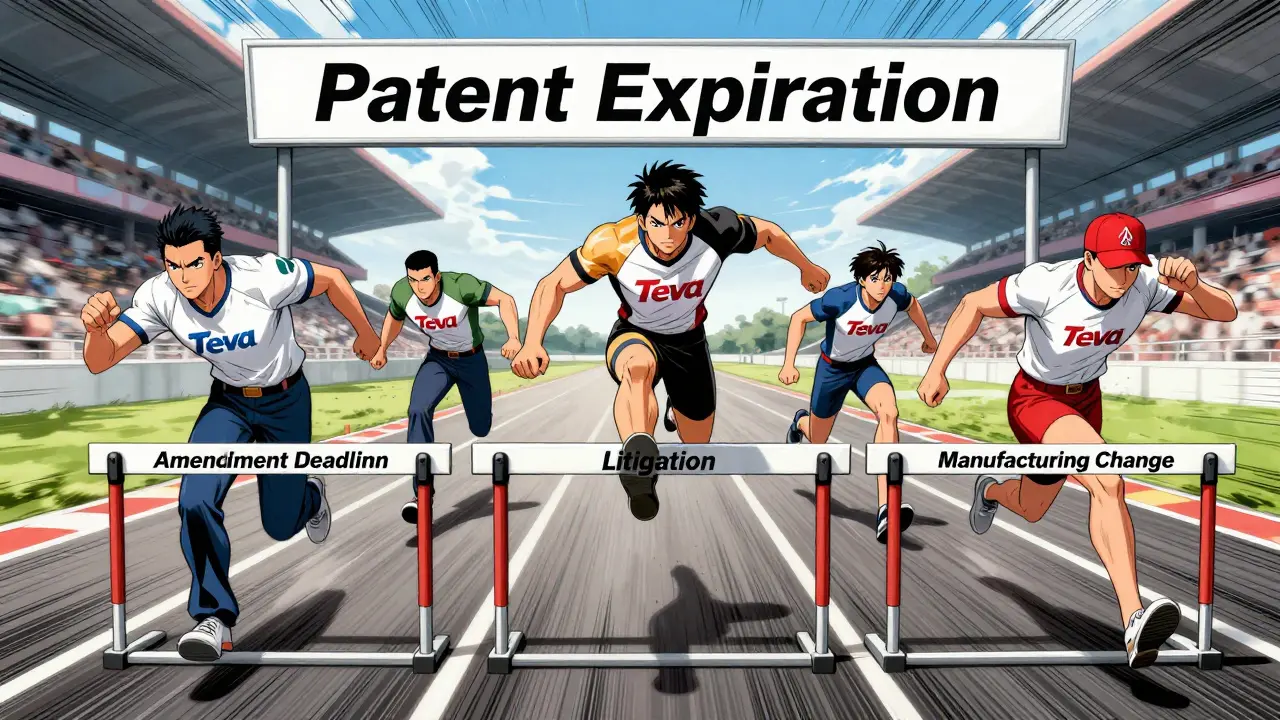
But here’s the catch: you can’t just sit back and wait. Many companies assume tentative approval means they’re done. They’re not. The FDA requires companies to submit amendments-updates to their application-at least three months before the patent expires if the changes are minor. For major changes, like switching manufacturing sites, it’s ten months. Miss that window, and your approval gets pushed back. You’ve waited three years for this moment, and now you’re stuck waiting another 60 days because you didn’t file paperwork on time.
The Litigation Gamble: Paragraph IV Certifications
The real game-changer comes when a generic company files a Paragraph IV certification. This is a legal notice saying, "We believe your patent is invalid or we don’t infringe it." That triggers a 45-day clock for the brand-name company to sue. If they do, the FDA can’t give final approval for up to 30 months while the lawsuit plays out. That’s a long time. But here’s the incentive: if the generic company wins-or if the brand backs down-the first filer gets 180 days of exclusive market rights. No other generics can enter during that time.
That’s why companies like Teva, Lupin, and Aurobindo spend millions on legal teams just to file Paragraph IV certifications. In 2018, Lupin’s generic version of Cialis hit the market within 24 hours of patent expiration. They’d been in tentative approval for years. When the patent fell, they flipped the switch and captured 42% of the market in the first month. That’s the dream.
But it’s risky. If you lose the lawsuit, you get nothing. No exclusivity. No early entry. And you’ve spent years and millions. Some companies settle instead, agreeing to delay their launch in exchange for a cut of future profits. The FTC has called this "pay-for-delay," and it’s controversial. But for some, it’s the safer bet.
Why Timing Is Everything
One of the biggest mistakes companies make is assuming that when a patent expires, approval happens automatically. It doesn’t. The FDA still needs time to process the final approval request. And if you don’t submit your amendment on time, you lose your spot.
Take Mylan’s experience with the EpiPen. They had tentative approval for 18 months. But they didn’t realize the brand had also secured pediatric exclusivity-a six-month extension on top of the patent. When the patent expired, the exclusivity hadn’t. They missed the window. Their market entry was delayed by six months. That cost them millions in lost revenue.
Another common pitfall? Manufacturing changes. In 2021, Aurobindo Pharma’s generic version of Jardiance got stuck because they switched production facilities. They didn’t properly document it in their final approval request. The FDA flagged it. The delay? Four months. Estimated revenue loss? $150 million.
These aren’t rare cases. According to Evaluate Pharma, about 15% of tentatively approved ANDAs face delays because companies didn’t submit the right paperwork at the right time. The FDA doesn’t send reminders. No one calls to say, "Hey, your 90-day window is closing." It’s all on you.
Who Uses This System-and Why
Nearly 85% of all generic drugs in the U.S. enter the market through tentative approval when patents are in play. The top 10 generic manufacturers each have 15 to 25 products in this status at any given time. Smaller companies might have two or three. It’s become standard practice.
Why? Because the financial upside is massive. The first generic to market after patent expiration can capture 65-80% of the market share during its 180-day exclusivity window. For a drug that sells $1 billion a year, that’s hundreds of millions in revenue. That’s why companies invest so heavily in legal teams, regulatory experts, and patent tracking systems.
The FDA has also made changes to speed things up. In May 2023, they announced they’d cut review times for final approval requests from 60-90 days down to 30 days for minor amendments. That’s a big deal. It means if you file correctly, you could be selling your drug within a month of patent expiration.
What You Need to Get Started
If you’re a generic drug company, here’s what you need to do:
- Submit a complete ANDA with accurate patent certifications
- Decide whether to file a Paragraph IV challenge (and be ready for a lawsuit)
- Track every patent and exclusivity period-down to the day
- Submit amendments at least three months before the earliest lawful approval date
- Keep your manufacturing site compliant with cGMP standards at all times
- Coordinate between your legal team and regulatory team-no silos
The learning curve is steep. Regulatory teams typically need 6-12 months just to understand how the system works. Many companies hire former FDA officials or patent lawyers to guide them. The Generic Pharmaceutical Association offers quarterly webinars, and attendance has grown to over 120 professionals per session. This isn’t something you wing.
The Future of Tentative Approval
The system isn’t perfect. As complex generics and biosimilars become more common, patent portfolios are getting more tangled. Some patents now cover delivery methods, dosing schedules, or even patient education programs. The FDA has warned this could strain the current framework.
But it’s not going away. Analysts at Barclays say there’s a 95% chance tentative approval will still be around in 2030. Why? Because it works. It’s the only system that lets generics prepare while respecting patents. It’s how we get cheaper drugs without killing innovation.
The real winners? Companies that treat tentative approval not as a waiting room, but as a launchpad. They track every deadline. They update their filings. They plan for litigation. And when the patent expires, they’re ready to roll.
What is the difference between tentative approval and final approval?
Tentative approval means the FDA has determined your generic drug meets all scientific and regulatory requirements for approval, but it cannot be marketed yet because of unexpired patents or exclusivity periods. Final approval means the FDA has removed all legal barriers and you are legally allowed to sell the drug in the U.S. market. Tentative approval is a placeholder; final approval is the green light.
Can a company sell a drug with tentative approval?
No. A drug with tentative approval status cannot be legally marketed or sold in the United States. It is not an approved drug under FDA regulations (21 CFR 314.107). Selling it would violate federal law. Final approval is required before any commercial distribution.
How long does tentative approval last?
Tentative approval doesn’t expire-it stays active until the patent or exclusivity barrier is resolved. However, if a company fails to submit required amendments or makes unauthorized changes to the application, the FDA can revoke the tentative approval status. The status can last for years while the company waits for patent expiration.
What is a Paragraph IV certification?
A Paragraph IV certification is a legal statement filed with the FDA by a generic drug applicant claiming that a listed patent is invalid, unenforceable, or that the generic product does not infringe the patent. This triggers a 45-day window for the brand-name company to sue for infringement. If sued, the FDA may delay final approval for up to 30 months while litigation proceeds. The first company to file a Paragraph IV certification may earn 180 days of market exclusivity if successful.
Why do companies risk patent litigation if they might lose?
Because the reward is huge. The first generic to successfully challenge a patent gets 180 days of exclusive market rights-during which no other generics can enter. For high-selling drugs, that period can mean hundreds of millions in revenue. Even if the lawsuit fails, some companies settle for delayed entry and a share of profits. The risk is high, but so is the payoff.
What happens if a company misses the amendment deadline for final approval?
Missing the deadline can delay final approval by 30 to 90 days or more. The FDA requires minor amendments to be submitted at least three months before the earliest lawful approval date, and major amendments at least ten months in advance. If missed, the application is put back in queue, and the company loses its priority position. This can result in lost revenue, especially if competitors are ready to enter immediately after patent expiration.
What Comes Next?
If you’re a generic manufacturer, your next step is simple: audit your portfolio. How many products do you have in tentative approval? Are you tracking every patent, every exclusivity period, every amendment deadline? Are your legal and regulatory teams talking to each other? If not, you’re one missed filing away from a million-dollar delay.
For investors or healthcare professionals, understand this: the race to market isn’t just about who makes the best drug. It’s about who understands the rules best. Tentative approval is the hidden engine behind 85% of generic drug launches. And in a market where timing is everything, that’s worth knowing.



Alex LaVey
February 4, 2026 AT 20:31