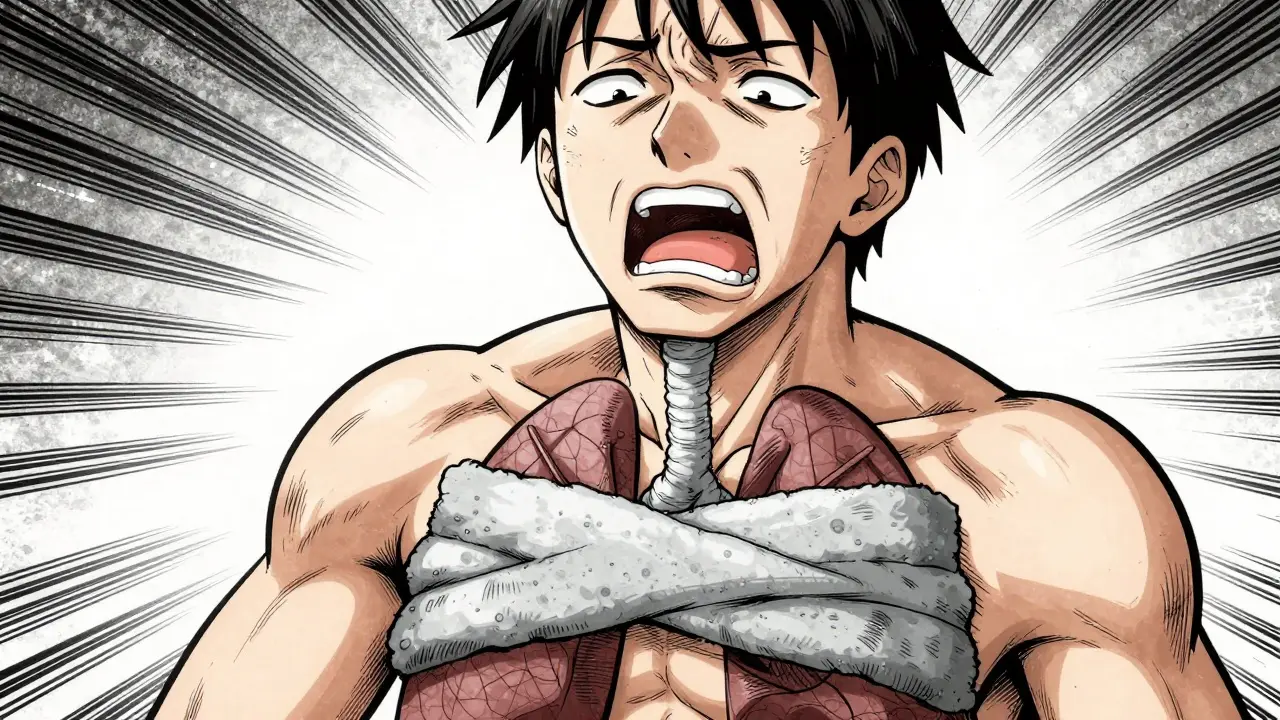
Imagine trying to breathe through a thick, stiff sponge. That is essentially what happens when you have Interstitial Lung Disease is an umbrella term for over 200 disorders that cause inflammation and scarring in the lungs' interstitium-the delicate tissue and space surrounding the air sacs (alveoli). While a healthy lung is elastic and light, diseased lungs become rigid, making it harder for oxygen to enter your bloodstream. Because this scarring is typically irreversible, the goal of modern medicine isn't to "cure" the damage already done, but to slow the progression and keep you active for as long as possible.
The Mechanics of Lung Scarring
To understand how this works, you have to look at the scale of the damage. In a healthy pair of lungs, the interstitial tissue is incredibly thin-usually less than 0.1mm. When you have an inflammatory or fibrotic response, this tissue can thicken to 1mm or 2mm. It doesn't sound like much, but on a cellular level, it's a massive wall that blocks oxygen from crossing into your blood vessels.
This process, known as fibrosis, turns flexible lung tissue into stiff, scarred tissue. As the lungs lose their ability to expand, you experience a restrictive breathing pattern. You aren't just "out of breath"; your lungs physically cannot hold as much air as they used to. This leads to a drop in your forced vital capacity (FVC), which is the amount of air you can forcefully exhale after taking a deep breath.
Common Symptoms and Warning Signs
The tricky thing about Interstitial Lung Disease is that it sneaks up on you. It rarely starts with a sudden crisis; instead, it's an insidious creep. You might notice you're getting winded walking the dog or climbing a flight of stairs-something you used to do without thinking. This exertional dyspnea is the hallmark symptom, reported in over 90% of patients.
Beyond shortness of breath, keep an eye out for these red flags:
- A persistent, dry cough that doesn't produce mucus.
- Chronic fatigue that doesn't go away with rest.
- Clubbing, where the fingertips widen and the nails curve downward (common in about 35-50% of advanced cases).
- Chest discomfort or a feeling of tightness.
Many people mistake these symptoms for aging, asthma, or poor cardiovascular fitness. In fact, some patients are misdiagnosed an average of two times before a specialist correctly identifies the disease. If you find yourself breathless while resting, your oxygen saturation may be dropping below 88%, which is a critical sign that you need medical intervention.
Navigating the Different Types of ILD
Not all lung scarring is the same. The cause of the scarring often determines how fast the disease moves and how it's treated. The most prevalent form is Idiopathic Pulmonary Fibrosis (or IPF), which makes up 20-30% of cases. "Idiopathic" simply means the cause is unknown, and it tends to be more aggressive, often seen in people over 75.
Other types are linked to specific causes, which can change the prognosis significantly. For example, those with connective tissue disease-associated ILD (like those with rheumatoid arthritis) often have a slower progression. Some cases are triggered by environmental toxins, such as asbestosis, while others are the result of medications or radiation therapy.
| Subtype | Primary Cause | Progression Speed | General Outlook |
|---|---|---|---|
| IPF | Unknown | Fast | More severe; requires antifibrotics |
| Sarcoidosis | Inflammatory | Variable | 60-70% may resolve spontaneously |
| CTD-ILD | Autoimmune | Moderate/Slow | Better 5-year survival rates |
| Drug-Induced | Medication | Reversible/Slow | Improves after stopping medication |
Modern Treatment Options and Strategies
We've moved past the era of just treating symptoms. Today, we use targeted therapies to change the course of the disease. The primary goal is to slow the decline of lung function, measured by that FVC we mentioned earlier.
The most effective tools currently available are antifibrotic medications. Nintedanib (Ofev®) and Pirfenidone (Esbriet®) are the heavy hitters here. These drugs don't remove existing scars, but they can slow the rate of decline by roughly 50% over a year. However, they aren't without drawbacks; many users experience gastrointestinal issues or skin sensitivity to sunlight.
Beyond medication, a comprehensive approach includes:
- Pulmonary Rehabilitation: A structured program of exercise and education that helps you use your remaining lung capacity more efficiently. It can significantly improve your walking distance and overall exercise tolerance.
- Oxygen Therapy: When your blood oxygen levels drop too low, supplemental oxygen is prescribed. This doesn't fix the lungs, but it protects your heart and brain from hypoxia and reduces fatigue.
- Energy Conservation: Learning how to pace your daily activities so you don't exhaust yourself by mid-morning.
Looking ahead, the field is evolving. New medications like zampilodib are entering the market, and researchers are using AI to analyze high-resolution CT scans with over 90% accuracy, catching the disease much earlier than a human radiologist might.
The Path to a Correct Diagnosis
Getting a diagnosis can be a frustrating journey. The "gold standard" for spotting ILD is a High-Resolution Computed Tomography (HRCT). Unlike a standard X-ray, an HRCT uses 1mm slices to see the fine details of the lung tissue. If the CT shows subtle fibrosis, doctors will then hold a multidisciplinary discussion involving a pulmonologist, a radiologist, and a pathologist to confirm the specific subtype.
If you're advocating for yourself or a loved one, push for these specific tests: pulmonary function tests (PFTs) to check your diffusing capacity (DLCO) and the 6-minute walk test. The latter is a practical way to see how your body handles activity and serves as a strong predictor of how the disease will progress.
Can the scarring from ILD be reversed?
Unfortunately, once lung tissue has turned into permanent scar tissue (fibrosis), it cannot be reversed. Treatment focuses on preventing new scars from forming and slowing the progression of existing ones to preserve your remaining lung function.
What is the difference between IPF and other types of ILD?
IPF (Idiopathic Pulmonary Fibrosis) is a specific type of ILD where the cause is unknown and the scarring is typically more aggressive. Other ILDs are caused by known factors like autoimmune diseases, environmental exposures (like asbestos), or specific medications, and they often progress at different speeds.
How do I know if I need supplemental oxygen?
Doctors typically recommend oxygen therapy when your resting oxygen saturation (SpO2) drops below 88%. If you feel an extreme lack of air even while sitting still, or if your lips and fingertips have a bluish tint, you should consult your doctor immediately.
Are antifibrotic drugs right for everyone with ILD?
No. Antifibrotics like Nintedanib and Pirfenidone are primarily approved and most effective for IPF. They may have minimal benefit for other ILD subtypes, which is why a precise diagnosis of the disease subtype is critical before starting these medications.
What is pulmonary rehabilitation and does it actually work?
It is a supervised program of exercise, nutrition, and breathing techniques. Studies show it can improve exercise tolerance and walking distance by 45-60 meters on average, significantly improving the quality of life for those with chronic lung disease.
Next Steps for Patients and Caregivers
If you've just received a diagnosis, your first priority should be finding a multidisciplinary ILD clinic. Specialist centers often have much higher diagnosis accuracy than general hospitals. Start a symptom diary-track when you feel most breathless and what triggers it-as this data is invaluable for your pulmonologist.
For caregivers, focus on the logistics of oxygen management and mobility assistance. Because ILD can be exhausting, helping the patient implement energy conservation techniques (like sitting while dressing or using a shower chair) can reduce their daily fatigue. Don't overlook the mental health aspect; anxiety regarding breathlessness is common and can be managed through support groups and specialized counseling.