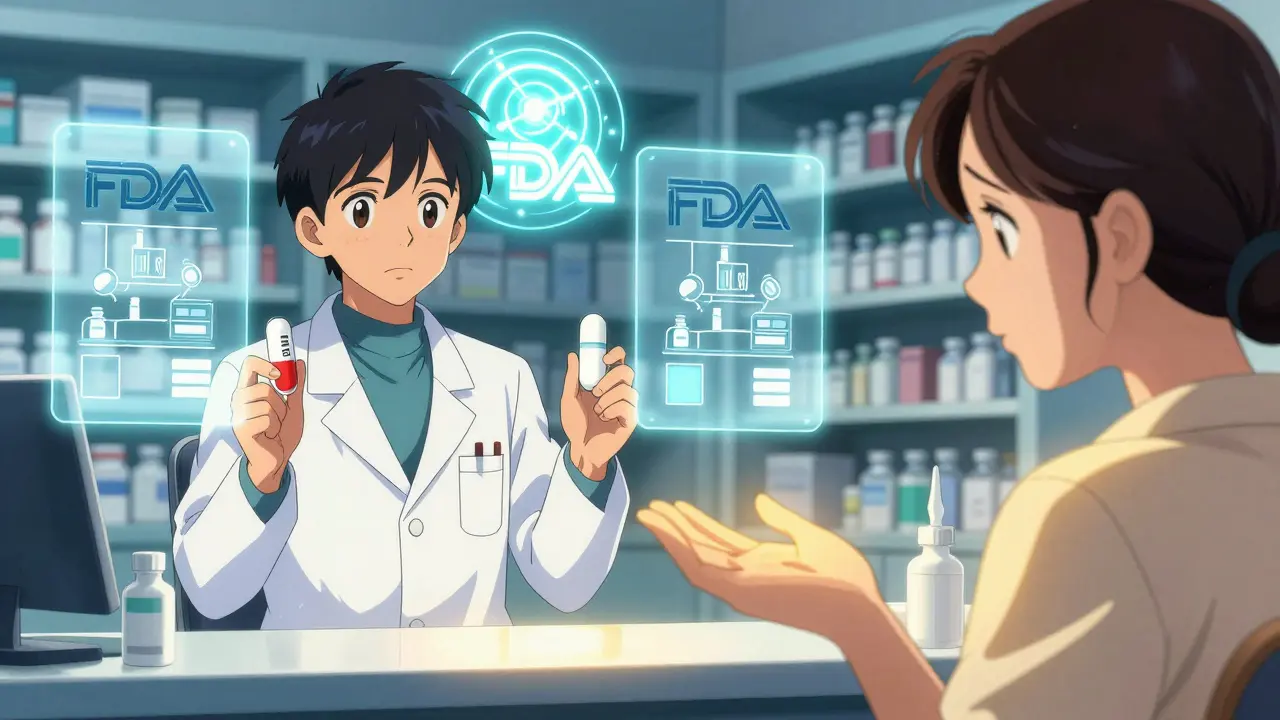
When a patient walks into the pharmacy with a prescription for a brand-name drug, the pharmacist has a choice: dispense the expensive brand, or suggest a cheaper alternative. But not all generics are created equal. Authorized generics are one of the most powerful, yet underused, tools in a pharmacist’s toolkit for improving patient outcomes and lowering costs - if you know when to use them.
What Exactly Is an Authorized Generic?
An authorized generic isn’t just another generic drug. It’s the exact same medication as the brand-name version - same active ingredient, same inactive ingredients, same manufacturing process - but sold without the brand name on the label. The FDA defines it as a drug approved under the same New Drug Application (NDA) as the brand, but marketed under a different name or label. This means it’s made by the original brand manufacturer (like Pfizer or Merck) or under their direct permission.
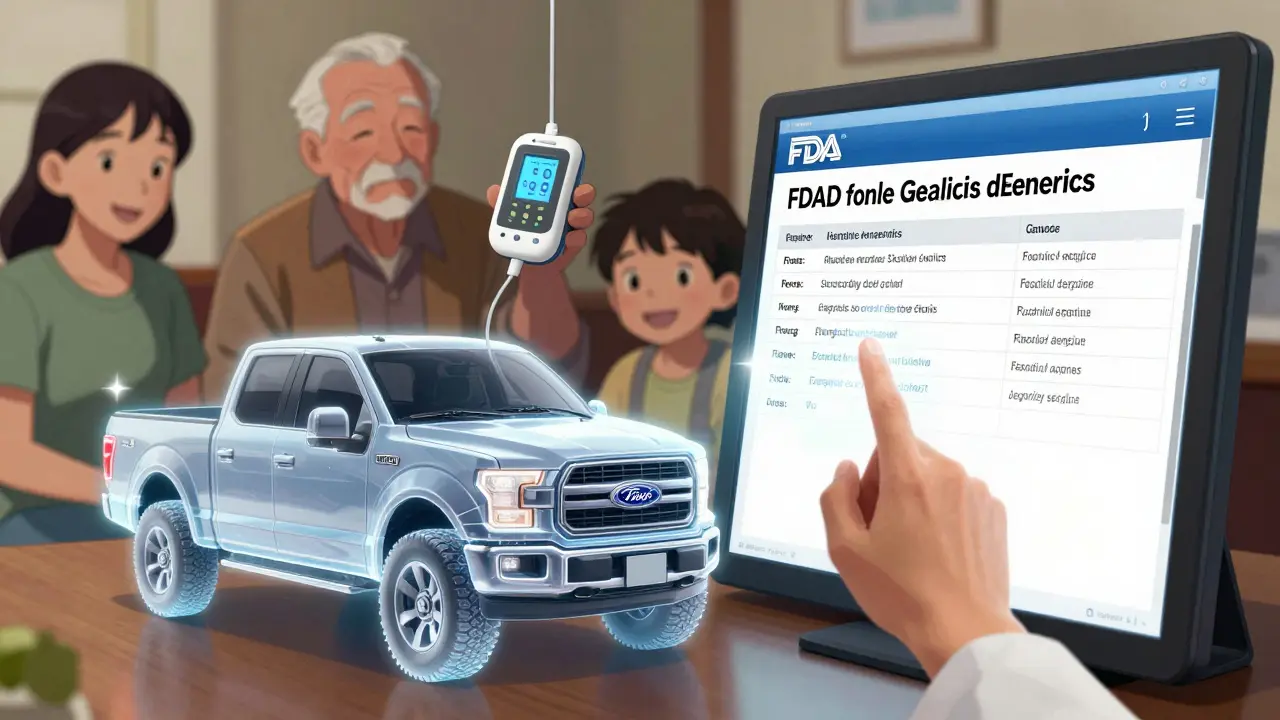
Think of it this way: if the brand-name drug is a Ford F-150, the regular generic is a similar truck made by a different company using slightly different parts. The authorized generic? It’s the exact same F-150 off the same assembly line, just with a different sticker on the door.
Unlike regular generics that go through the Abbreviated New Drug Application (ANDA) process, authorized generics don’t need to prove bioequivalence because they’re identical. They’re the same pill, same capsule, same coating - just cheaper.
Three Key Times to Recommend Authorized Generics
Not every patient needs an authorized generic. But there are three clear situations where they’re not just a good option - they’re the best one.
1. When Patients Have Allergies or Dietary Restrictions
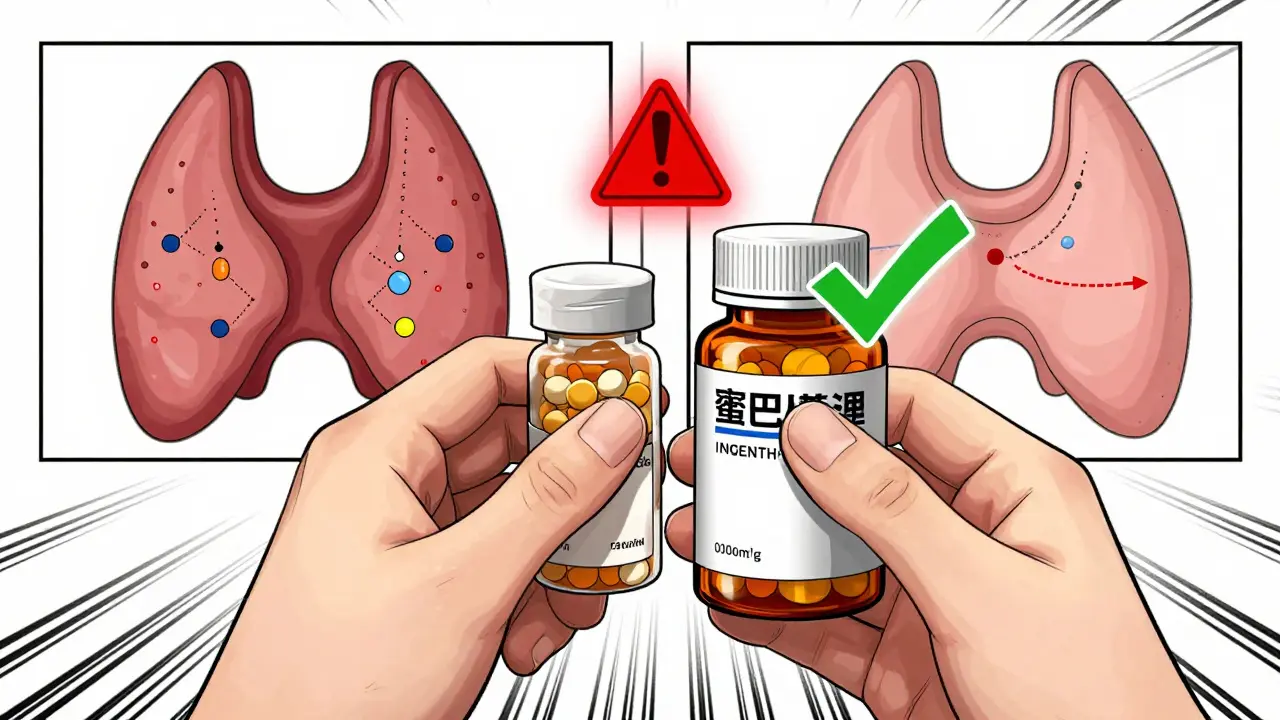
Regular generics often swap out inactive ingredients like fillers, dyes, or preservatives. That’s fine for most people. But for someone with celiac disease, a lactose intolerance, or a vegan lifestyle, those tiny differences can be dangerous or unacceptable.
For example, a patient with celiac disease might have been prescribed a brand-name levothyroxine that uses a gluten-free filler. A regular generic might use wheat starch. The authorized generic? It uses the exact same gluten-free filler as the brand. No risk. No guesswork.
Same goes for patients avoiding gelatin, lactose, or certain dyes. If they’ve tolerated the brand, the authorized generic is their safest bet. Pharmacists should ask: “Has this patient ever had a reaction to their current medication’s appearance or ingredients?” If yes, reach for the authorized generic.
2. For Narrow Therapeutic Index (NTI) Drugs
Some medications have a razor-thin line between working and causing harm. Warfarin, levothyroxine, phenytoin, and lithium are classic examples. Even a 5% variation in blood levels can lead to clots, seizures, or thyroid crashes.
Studies show that switching from brand to regular generic for NTI drugs causes therapeutic problems in 3-5% of patients. Why? Because while the active ingredient is the same, differences in how the pill breaks down in the gut - due to different binders or coatings - can alter absorption.
Authorized generics eliminate that risk. Since they’re made by the same company using the same formula, the absorption profile is identical. For patients on warfarin, where INR levels must be tightly controlled, this isn’t a luxury - it’s a safety net.
3. When Patients Report Problems After Switching to a Regular Generic
One in eight patients (12%) report unexpected side effects or reduced effectiveness after switching to a regular generic, according to a 2021 survey of 1,200 community pharmacists by the American Pharmacists Association.
That patient who says, “My blood pressure isn’t as controlled since I switched,” or “I feel more jittery on this new pill” - they’re not imagining it. The difference might be subtle, but it’s real.
That’s your cue to check if an authorized generic exists. Offer it as a bridge back to stability. You’re not just changing the pill - you’re restoring trust.
How to Spot an Authorized Generic
You can’t tell by looking at the pill. The color, shape, or markings might be completely different. That’s why you need to know where to look.
The FDA publishes a quarterly updated list of authorized generics on its website. As of September 2023, it included 257 products - about 5% of all brand-name drugs with generic alternatives. Most are oral tablets or capsules.
Use the National Drug Code (NDC) directory. Authorized generics will have the same active ingredient and strength as the brand, but the labeler code will match the brand manufacturer (e.g., Pfizer) or an authorized licensee like Prasco or Greenstone - not a typical generic maker.
Don’t rely on the Orange Book. Authorized generics don’t appear there as separate entries because they’re not considered distinct products - they’re the brand in disguise.
Cost and Insurance: What You Need to Know
Authorized generics typically cost 20-80% less than the brand-name drug. That’s more than regular generics sometimes save - and with none of the formulation risks.
But here’s the catch: pharmacy benefit managers (PBMs) often treat authorized generics as brand-name drugs for billing purposes. A 2022 study found that 63% of PBMs place them on brand-tier formularies, meaning patients pay more out-of-pocket than they would for a regular generic.
That doesn’t mean you shouldn’t recommend them. It means you need to explain it. Tell patients: “This is the same medicine you’ve been taking, but cheaper. Your insurance might not label it as a generic, so your copay might be higher than expected - but you’re still saving.”
Always check the patient’s actual out-of-pocket cost. Sometimes, the authorized generic is still cheaper than the brand - even with a higher tier.
What About Packaging and Patient Confusion?
Patients get nervous when their pill changes color or shape. A 2022 study found that 27% of patients stopped taking their medication after a packaging change - unless they were properly counseled.
That’s why your conversation matters more than the prescription.
When handing over an authorized generic, say: “This is the exact same medicine as your brand, just without the brand name. The ingredients are identical - same active and inactive components. The only difference is the price.”
Compare it to buying a generic soda - same recipe, different label. If they’re still unsure, offer to call the manufacturer or show them the FDA list on your tablet.
When NOT to Recommend an Authorized Generic
There are limits.
First, if the brand has no authorized generic available - only 5% of brand drugs do. Don’t waste time searching for one that doesn’t exist.
Second, if the prescriber wrote “Do Not Substitute” on the script. Even authorized generics require permission unless state law overrides it. Forty-two states allow substitution without prescriber approval - but 18 require notification. Know your state’s rules.
Third, if the patient has had a negative experience with the authorized generic before. Rare, but possible. Always listen.
The Future of Authorized Generics
The number of authorized generics has grown 18% per year since 2010. More are coming. Consumer searches for “authorized generics” jumped 47% from 2021 to 2022. Patients are starting to ask for them.
Pharmacists who understand this tool will become the go-to experts for safe, cost-effective prescribing. The American Pharmacists Association is updating its guidelines in 2024 to give clearer direction - and that’s a sign this isn’t a niche topic anymore.
As healthcare shifts toward value-based care, your role isn’t just filling prescriptions. It’s making smarter choices. And authorized generics? They’re one of the clearest, safest ways to do that.
Are authorized generics the same as brand-name drugs?
Yes. Authorized generics are manufactured by the same company that makes the brand-name drug, using the exact same formula, active ingredients, and inactive ingredients. The only difference is the label - no brand name, no fancy packaging. They’re identical in every way that matters to your health.
Why are authorized generics cheaper if they’re the same as the brand?
Because they’re sold without the marketing, advertising, and brand-name overhead. The manufacturer doesn’t need to spend millions on TV ads or patient support programs. They just produce the same pill and sell it under a neutral label. That savings gets passed to the patient - often 20-80% less than the brand.
Can I substitute an authorized generic without the prescriber’s permission?
In 42 out of 50 U.S. states, yes - as long as the prescription doesn’t say “Do Not Substitute.” Federal law allows pharmacists to substitute authorized generics just like regular generics because they’re considered therapeutically equivalent. But 18 states require you to notify the prescriber. Always check your state’s pharmacy board rules.
Why do some insurance plans charge more for authorized generics?
Many pharmacy benefit managers (PBMs) classify authorized generics under brand-name tiers because they’re made by the original manufacturer. Even though the drug is identical, the system treats it like the brand. This can lead to higher copays. Always check the patient’s actual cost - sometimes the authorized generic is still cheaper than the brand, even with a higher tier.
How do I find out if an authorized generic exists for a brand drug?
Check the FDA’s quarterly updated list of authorized generics on their website. You can also look up the National Drug Code (NDC) in your pharmacy system. If the labeler code matches the brand manufacturer (like Pfizer or Merck) or an authorized licensee like Prasco or Greenstone, it’s an authorized generic. Don’t rely on the Orange Book - it doesn’t list them separately.