

Antibiotic-Dairy Interaction Calculator
When you take an antibiotic like doxycycline or ciprofloxacin, you’re counting on it to enter your bloodstream and fight the infection. But if you drink a glass of milk, eat yogurt, or even have a slice of cheese within a few hours of your dose, that antibiotic might not work at all. It’s not a myth. It’s not exaggeration. It’s science-and it’s happening to millions of people every year.
Why Dairy Stops Antibiotics from Working
The problem isn’t that dairy is bad for you. It’s that dairy contains calcium. And calcium, when it meets certain antibiotics in your stomach, sticks to them like glue. This binding forms a solid, insoluble compound that your body can’t absorb. Instead of traveling through your gut and into your blood, the antibiotic gets trapped and flushed out with your waste. This is called chelation. It’s a chemical reaction where calcium ions (Ca²⁺) latch onto the antibiotic molecule. For tetracyclines-like tetracycline, doxycycline, and minocycline-the binding happens at specific spots on the drug’s structure. For fluoroquinolones like ciprofloxacin and levofloxacin, it’s a similar story. Studies show that taking these antibiotics with milk can slash absorption by 20% to over 90%. One 1991 study found ciprofloxacin’s peak blood levels dropped by 36% when taken with milk. With yogurt? Up to 92% reduction. It’s not just milk. Yogurt, cheese, ice cream, cottage cheese, butter, and even whey protein shakes can trigger this. Even a splash of milk in your coffee or tea can be enough. The critical threshold? About 200 mg of calcium-that’s roughly six ounces of milk. A single cup of yogurt can contain more than that.Which Antibiotics Are Affected?
Not all antibiotics react this way. Some are unaffected. Others? They’re highly sensitive.- High-risk (avoid dairy completely): Tetracycline, doxycycline, minocycline. These are the most affected. Doxycycline’s absorption can drop by 40-50% with dairy. Tetracycline itself? Up to 75% less absorbed.
- Moderate-risk: Ciprofloxacin, levofloxacin, ofloxacin. Fluoroquinolones show strong interference too. Ciprofloxacin with yogurt? Nearly useless.
- Low-risk (usually safe with dairy): Amoxicillin, azithromycin, penicillin V, most cephalosporins like cefalexin. These don’t bind to calcium the same way. You can take them with food-even dairy-without losing effectiveness.
How Long Should You Wait?
Timing isn’t optional. It’s non-negotiable. For tetracyclines, the standard advice is: take them two hours before or four hours after eating dairy. Why the gap? Because it takes time for your stomach to empty and for the calcium to move out of the way. Studies show that even a two-hour gap isn’t always enough for tetracycline-it needs the full four hours to ensure full absorption. Fluoroquinolones like ciprofloxacin need at least a two-hour gap. Some newer formulations, like doxycycline monohydrate (sold as Oracea), are designed to be taken with food, including dairy. But if your prescription doesn’t say that, assume you need to wait. And here’s where people get tripped up: it’s not just meals. If you take your antibiotic at 7 a.m., you can’t have your morning coffee with milk until 9 a.m. (for fluoroquinolones) or 11 a.m. (for tetracyclines). Same goes for lunch or dinner. A cheese sandwich at noon? Wait until after 4 p.m. if you took doxycycline at 7 a.m.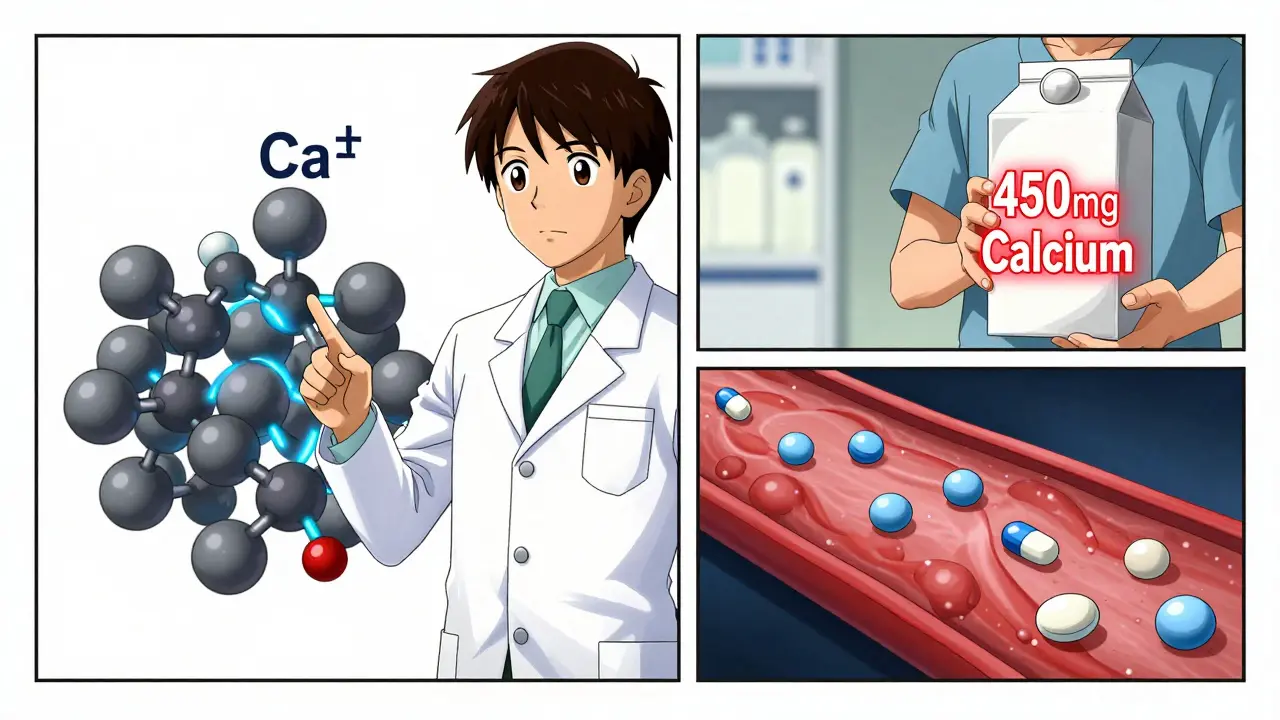
What About Non-Dairy Alternatives?
Almond milk, oat milk, soy milk-aren’t those safe? Not necessarily. Many plant-based milks are fortified with calcium. In fact, some have more calcium than cow’s milk. A cup of fortified almond milk can contain up to 450 mg of calcium. That’s more than double the amount that can interfere with antibiotics. So if you’re avoiding dairy for health or ethical reasons, don’t assume your oat milk latte is harmless. Check the label. If it says “calcium carbonate” or “tricalcium phosphate,” treat it like dairy. Same goes for calcium supplements, antacids like Tums, and even some mineral waters. If it has added calcium, it’s a no-go during your antibiotic window.Why This Isn’t Just a Minor Issue
You might think, “So what? I’ll just take a little more next time.” But antibiotics aren’t like vitamins. You can’t just up the dose to make up for poor absorption. If you don’t get enough of the drug into your bloodstream, the bacteria don’t die. They survive. And when they survive, they adapt. That’s how antibiotic resistance starts. The World Health Organization calls this one of the top global health threats. In 2021, resistant infections directly caused 1.27 million deaths worldwide. This isn’t just about personal health. It’s about public health. Every time an antibiotic fails because someone drank milk with it, we’re one step closer to a world where common infections become deadly again. The American Pharmacists Association ranks dairy-antibiotic interactions as the #3 preventable cause of treatment failure in outpatient settings. In 2021, this mistake contributed to an estimated $1.3 billion in extra healthcare costs in the U.S. alone-repeat visits, extended courses, hospitalizations.
Real-Life Problems People Face
Patients aren’t ignoring advice out of carelessness. They’re confused. One pharmacist on Reddit shared that 78% of patients misunderstand the timing. Some think almond milk is safe. Others take their antibiotic with breakfast and assume “I didn’t drink milk, I drank orange juice” - not realizing their orange juice was fortified with calcium. Another common issue: stomach upset. Tetracyclines often cause nausea when taken on an empty stomach. So patients eat dairy to feel better-even though it ruins the drug’s effect. A 2022 survey found nearly 30% of patients did this intentionally. And scheduling? It’s brutal. Taking doxycycline at 7 a.m. means no coffee with milk until 11 a.m. No yogurt at breakfast. No cheese at lunch. No ice cream after dinner. For people with busy lives, this isn’t just inconvenient-it’s unsustainable. That’s why adherence rates for tetracyclines are so low.What Can You Do?
Here’s what actually works:- Read your prescription label. Does it say “take on empty stomach”? Or “avoid dairy”? If yes, follow it.
- Ask your pharmacist. Don’t assume. Ask: “Can I have milk with this?” or “Is my antibiotic affected by calcium?”
- Check your supplements. If you take calcium, iron, or antacids, space them out by at least two hours from your antibiotic.
- Plan your meals. Take your antibiotic first thing in the morning with water, then wait four hours before dairy. Or take it at bedtime, after your last meal.
- Know your alternatives. If your antibiotic is a penicillin or azithromycin, you’re fine with dairy. But if it’s doxycycline or ciprofloxacin, you’re not.
Bottom Line
Antibiotics aren’t magic pills. They’re precise tools. And like any tool, they need to be used correctly. Drinking milk with your antibiotic doesn’t just make it less effective-it can turn a simple infection into a serious one. It can fuel antibiotic resistance. It can cost lives. The solution isn’t complicated. It’s simple: take your antibiotic with water. Wait. Then enjoy your yogurt.Can I drink milk with doxycycline?
No. Milk, yogurt, cheese, and other dairy products contain calcium that binds to doxycycline and stops your body from absorbing it. This can make the antibiotic ineffective. Wait at least 2 hours before or 4 hours after taking doxycycline to consume dairy.
Is almond milk safe with antibiotics?
Not always. Many almond milks are fortified with calcium-sometimes more than cow’s milk. Check the nutrition label. If it lists calcium carbonate, calcium phosphate, or tricalcium phosphate, treat it like dairy and avoid it for 2-4 hours around your antibiotic dose.
What if I accidentally take my antibiotic with milk?
Don’t panic, but don’t ignore it either. If you realize right away, wait at least two hours and take another dose if your doctor says it’s okay. If you don’t realize until later, keep taking your full course as prescribed. But talk to your pharmacist or doctor-they may need to monitor your response or adjust your treatment, especially if you’re treating a serious infection.
Do all antibiotics interact with dairy?
No. Antibiotics like amoxicillin, azithromycin, penicillin V, and most cephalosporins (like cefalexin) are not affected by dairy. You can take them with food, including milk or yogurt. But tetracyclines and fluoroquinolones are. Always check the label or ask your pharmacist.
Can I take calcium supplements with antibiotics?
No. Calcium supplements, antacids, and iron tablets all contain minerals that bind to antibiotics like doxycycline and ciprofloxacin. Separate them by at least 2-4 hours. Even a multivitamin with calcium can interfere.
Why does yogurt interfere more than milk?
Yogurt often has higher calcium content than milk, and its lower pH helps dissolve calcium more easily, making it more available to bind with antibiotics. Studies show yogurt can reduce ciprofloxacin absorption by up to 92%, compared to 70% with milk.






Bryan Wolfe
January 12, 2026 AT 01:52