
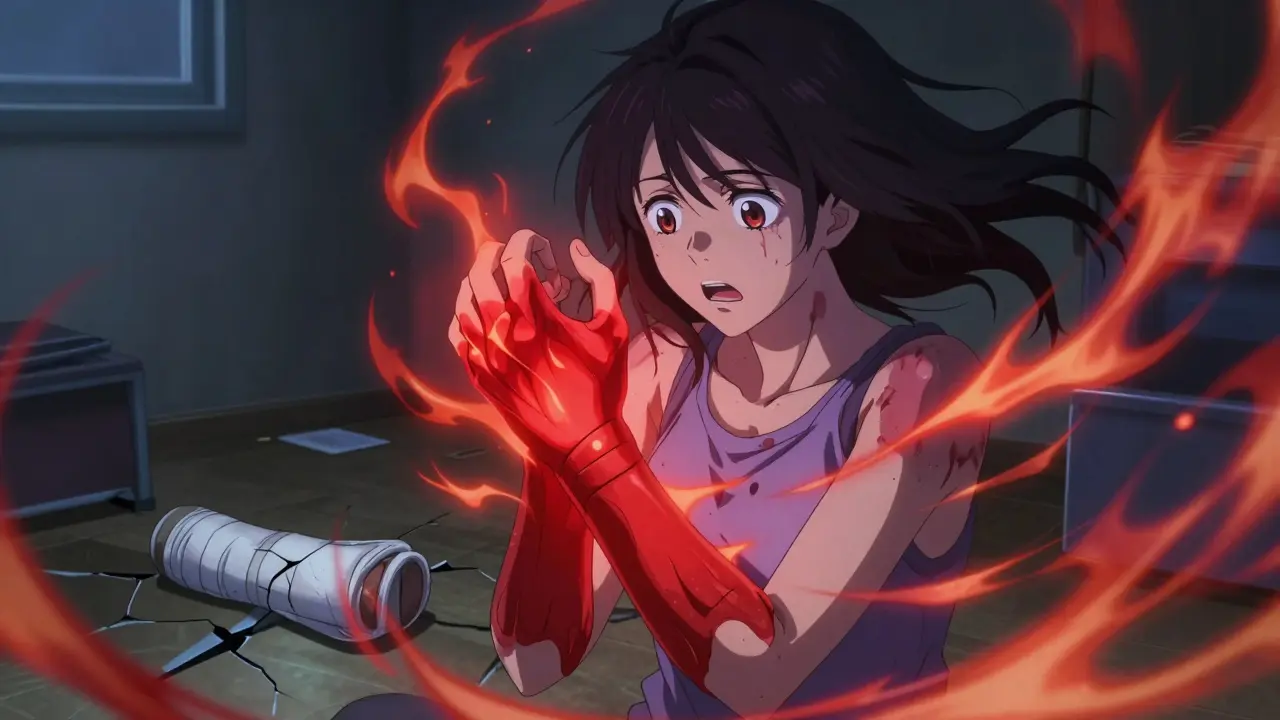
After a broken wrist, a sprained ankle, or even minor surgery, most people expect pain to fade over weeks. But for some, the pain doesn’t just stick around-it gets worse. It turns into a deep, unrelenting burning sensation, as if their skin is on fire from the inside. Even the lightest touch, a breeze, or a change in room temperature can trigger unbearable pain. This isn’t normal healing. This is Complex Regional Pain Syndrome, or CRPS.
It’s Not Just Pain-It’s Your Nervous System Going Haywire
CRPS isn’t a muscle strain or a lingering bruise. It’s a neurological malfunction. Your nervous system, which normally sends pain signals to warn you of injury, gets stuck in overdrive. It starts sending pain messages even when there’s no tissue damage left to explain them. The result? Pain that’s way out of proportion to what originally happened.Think of it like a car alarm that won’t shut off. The crash (your injury) triggered it, but now the alarm keeps screaming, even though the car is fine. In CRPS, your nerves keep screaming. And the brain? It starts listening harder, amplifying the signal. That’s why a light brush against your skin can feel like a knife.
The pain is usually constant or comes in waves-burning, stabbing, or like electric shocks. It’s often focused on the hand, foot, arm, or leg where the injury happened. But it doesn’t stop there. The whole limb can feel swollen, stiff, or heavy. Some people describe it as if their limb doesn’t belong to them anymore.
What Does CRPS Look Like? Signs Beyond the Pain
CRPS doesn’t just hurt. It changes how your body looks and acts. You might notice:- Your skin turns red, purple, or pale-sometimes all in one day.
- One hand or foot feels much warmer or colder than the other.
- Your skin gets thin, shiny, or extra sweaty.
- Nails grow faster or become brittle.
- Hair growth changes in the affected area.
- You lose fine motor control-buttoning a shirt, typing, or holding a cup becomes impossible.
- Your muscles twitch, spasm, or lock up.
These changes don’t happen all at once. They often come in stages. In the first 1 to 3 months, you might notice warmth, swelling, and sensitivity. Later, the limb might get colder, skin tighter, and joints stiffer. But not everyone follows this pattern. Some jump straight into chronic pain without clear stages. That’s why CRPS is so hard to diagnose.
What Triggers CRPS? It’s Not Always Obvious
Most cases start after an injury-often something you’d think would heal quickly. Fractures are the #1 trigger. About 40% of CRPS cases happen after a broken bone, especially in the wrist. But it can also follow:- Surgery (like carpal tunnel repair or knee arthroscopy)
- Deep cuts or lacerations
- Sprains or strains
- Even minor injuries like a needle stick or a cast that’s too tight
Here’s the twist: sometimes, there’s no clear injury at all. People wake up with CRPS after a flu shot, a viral illness, or even nothing obvious. That’s why doctors still don’t fully understand why it happens to some and not others.
Women are three times more likely to get CRPS than men. It’s most common between ages 40 and 60, but teenagers and older adults can get it too. If you’ve had intense pain after an injury-especially if it felt like the cast or bandage was squeezing your limb-you’re at higher risk.
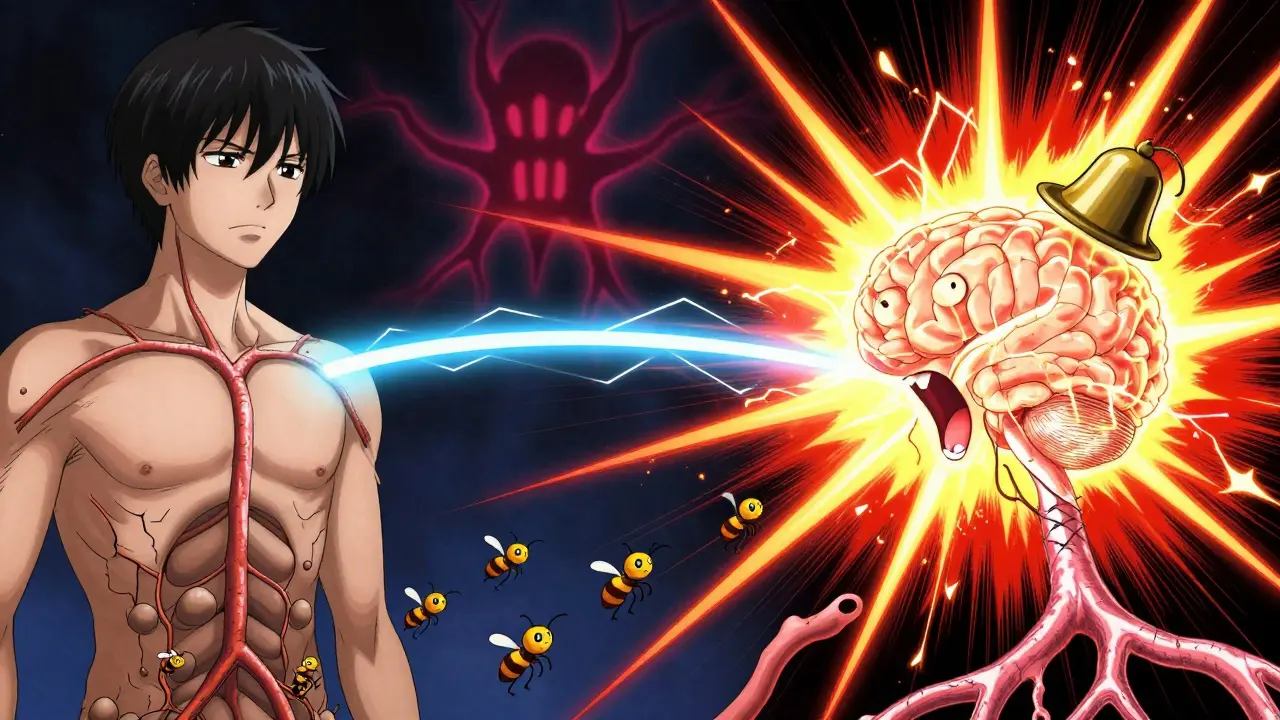
Why Does It Happen? The Science Behind the Fire
CRPS isn’t one problem. It’s a mix of three things working together:- Inflammation: After injury, your body releases chemicals to heal. In CRPS, this goes too far. Immune cells flood the area, causing redness, swelling, and heat.
- Nerve damage: Tiny nerve fibers, especially those that control pain and temperature, get injured or irritated. They start misfiring, sending false pain signals.
- Nervous system overload: Your brain and spinal cord start interpreting normal sensations as pain. Your sympathetic nervous system-responsible for fight-or-flight-gets stuck in "on" mode, making blood vessels spasm and skin change color.
Some research even suggests CRPS might involve an autoimmune reaction. In about 30% of patients, the body produces antibodies that mistakenly attack nerve tissue. This could explain why symptoms persist long after the injury heals.
Diagnosis: No Blood Test, No X-Ray-Just Your Story
There’s no scan that shows CRPS. No MRI, no blood test, no X-ray will confirm it. Diagnosis is based on the Budapest Criteria-a set of symptoms and signs doctors look for:- Pain that’s disproportionate to the original injury
- Symptoms in at least two of these categories: sensory (burning, tingling), vasomotor (temperature/color changes), sudomotor (sweating), or motor/trophic (weakness, hair/nail changes)
- No other condition that explains the symptoms
Early diagnosis is everything. If you wait six months, the condition becomes harder to treat. If you’re still in pain six weeks after an injury-and it’s getting worse, not better-see a pain specialist. Don’t wait for your doctor to say "it’s all in your head."
Treatment: The Only Way Out Is Through
CRPS won’t go away on its own for everyone. Some people improve slowly. Others live with it for years. But early, aggressive treatment can change the outcome.Physical therapy is the foundation. Moving the affected limb-even if it hurts-is critical. A therapist will guide you through gentle exercises to prevent stiffness and retrain your brain. Avoiding movement makes things worse.
Medications help manage symptoms:
- NSAIDs (like ibuprofen) for early inflammation
- Corticosteroids (like prednisone) in the first few months
- Neuropathic pain drugs like gabapentin or pregabalin
- In some cases, ketamine infusions to reset pain signaling
Nerve blocks can interrupt the abnormal signals. Injecting numbing medicine near the sympathetic nerves in your neck or back can give relief for days or weeks. For chronic cases, spinal cord stimulators-tiny devices implanted near the spine-can send electrical pulses that block pain signals.
Psychological support matters too. Chronic pain changes how your brain works. Depression, anxiety, and sleep loss aren’t just side effects-they make the pain worse. Cognitive behavioral therapy (CBT) helps rewire how you respond to pain.
What Doesn’t Work
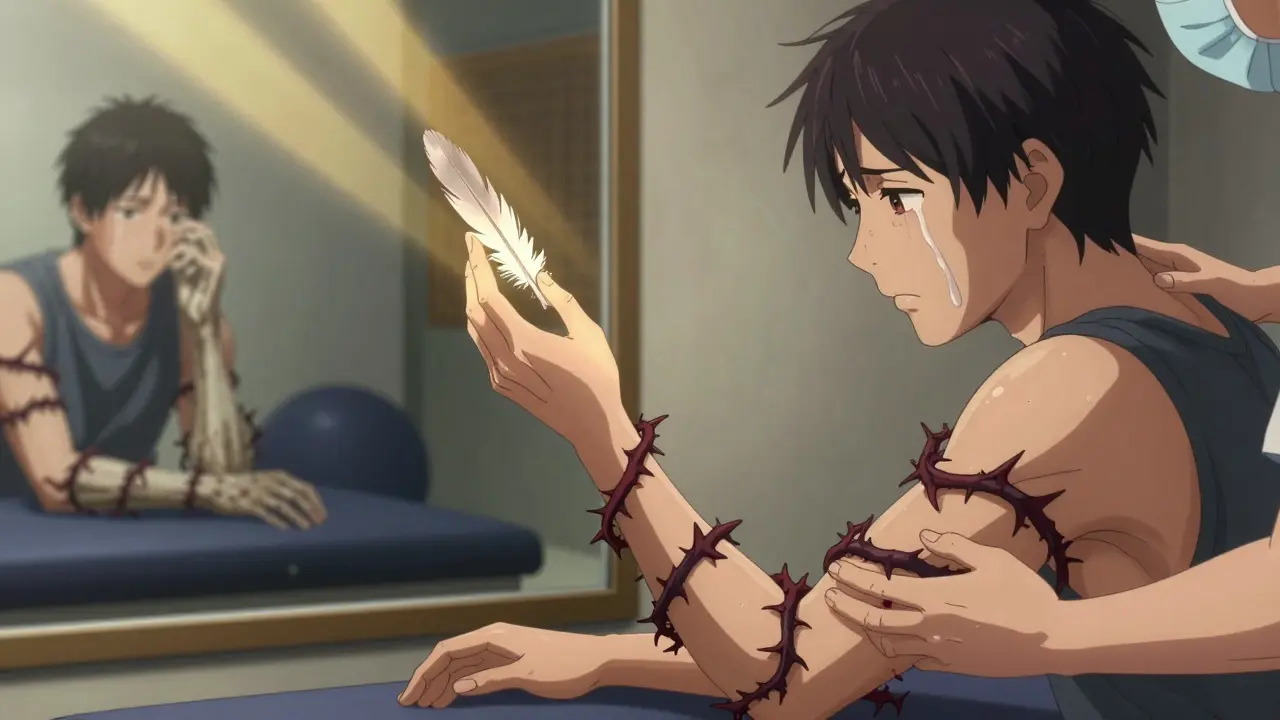
Avoid treatments that promise quick fixes. Steroid injections alone? They might help early on, but won’t fix the root issue. Opioids? They don’t work well for nerve pain and carry high risks. Surgery to cut nerves? Often makes things worse.And don’t ignore your symptoms because they’re "not serious." CRPS is real. It’s not psychosomatic. It’s not weakness. It’s a documented neurological disorder recognized by the World Health Organization.
What Happens If You Don’t Treat It?
Left untreated, CRPS can lead to permanent changes:- Muscles atrophy from lack of use
- Joints become frozen
- Skin and bones thin out
- Pain spreads to other parts of the body
Some people lose the ability to walk, grip, or use their hands. The emotional toll is just as heavy-depression, isolation, loss of work, strained relationships. But with early intervention, many regain function and reduce pain significantly.
Hope? Yes. But It Starts With Action
CRPS is unpredictable. Some people recover fully in a few months. Others need years of care. But the odds improve dramatically if you act fast.If you’ve had an injury and now your pain feels wrong-burning, spreading, worse with touch-don’t wait. See a pain specialist. Ask about CRPS. Bring a list of your symptoms. Don’t let anyone dismiss you. This isn’t normal. You don’t have to live like this.
There’s no magic cure. But there’s a path. And it starts with recognizing the fire-not ignoring it.
Can CRPS go away on its own?
Some cases do improve without treatment, especially if caught early. But studies show that about half of people still have symptoms after a year without intervention. Waiting rarely helps-it often makes the condition worse. Early treatment increases the chance of full recovery.
Is CRPS the same as fibromyalgia?
No. Fibromyalgia causes widespread pain all over the body, usually without a clear trigger. CRPS starts after a specific injury and stays focused on one limb. Fibromyalgia doesn’t cause skin changes, swelling, or temperature differences. They’re different conditions with overlapping symptoms, but different causes and treatments.
Can stress make CRPS worse?
Yes. Stress activates the sympathetic nervous system-the same system that’s already overactive in CRPS. Anxiety, sleep loss, or emotional trauma can trigger flare-ups. Managing stress through therapy, breathing exercises, or mindfulness is part of treatment, not just "mental health support." It’s a biological necessity.
Why does the pain spread to other limbs?
The nervous system doesn’t always keep pain localized. As CRPS progresses, the brain’s pain map can expand. This is called "mirror pain"-when pain appears in the opposite limb or nearby areas. It’s not psychological. It’s a sign the central nervous system is rewiring itself in response to constant pain signals.
Are there any new treatments on the horizon?
Yes. Researchers are testing drugs that target autoantibodies linked to CRPS, new forms of spinal stimulation, and even low-dose ketamine combined with physical therapy. A 2023 study in the Journal of Neuroinflammation showed promise in reducing pain by blocking specific inflammatory proteins. Clinical trials are ongoing, and personalized treatment based on individual biology is becoming the goal.


winnipeg whitegloves
March 25, 2026 AT 07:48