Every time you pick up a prescription, there’s a small sticker on the bottle. It might say "Do not drink alcohol," "Take with food," or "May cause drowsiness." These aren’t just random notes. They’re life-saving instructions - and most people don’t fully understand them.
What Those Stickers Are Really For
Those little warning labels aren’t there to scare you. They’re the final safety check before you take a pill. The U.S. Food and Drug Administration (FDA) requires them because medication errors cause about 1.3 million injuries every year in the U.S. alone. Many of those errors happen because patients miss or misunderstand the warnings on their bottles. The labels you see are based on strict federal rules. They’re designed to tell you what could go wrong if you take the medicine the wrong way. Some warn about dangerous interactions - like how grapefruit juice can make blood pressure meds too strong. Others tell you when not to take the drug at all, like if you’re pregnant or have liver disease.Black Box Warnings: The Red Flag You Can’t Ignore
Not all warnings are created equal. The most serious ones are called Black Box Warnings. These are the only type of warning printed in a bold, black border on the official prescribing info - and they’re often repeated on the pharmacy label. They mean the drug carries a risk of serious injury or death. About 40% of new drugs approved between 2013 and 2017 had one of these. They’re used for drugs that can cause heart failure, liver damage, suicidal thoughts, or sudden death. If your prescription has a Black Box Warning, it doesn’t mean you can’t take it. It means you need to be extra careful. Talk to your pharmacist. Ask what signs to watch for. Don’t skip follow-up blood tests.Color Matters - But Not the Way You Think
You’ve probably noticed some labels are red, others are yellow or blue. Many patients assume red means "danger," yellow means "be careful," and white means "just a suggestion." That’s what most people think - and that’s exactly the problem. Studies show that 42% of patients use color to judge severity. But here’s the catch: pharmacies don’t use color consistently. One pharmacy might use red for "avoid alcohol," another for "take on empty stomach." There’s no national standard. So if you’re relying on color, you’re guessing. The real danger? People ignore blue or white labels. They think they’re optional. But those often contain critical info - like "Do not crush," or "Refrigerate." A pill that needs to stay cold can lose its power if left on the counter. A capsule meant to be swallowed whole can cause throat burns if chewed.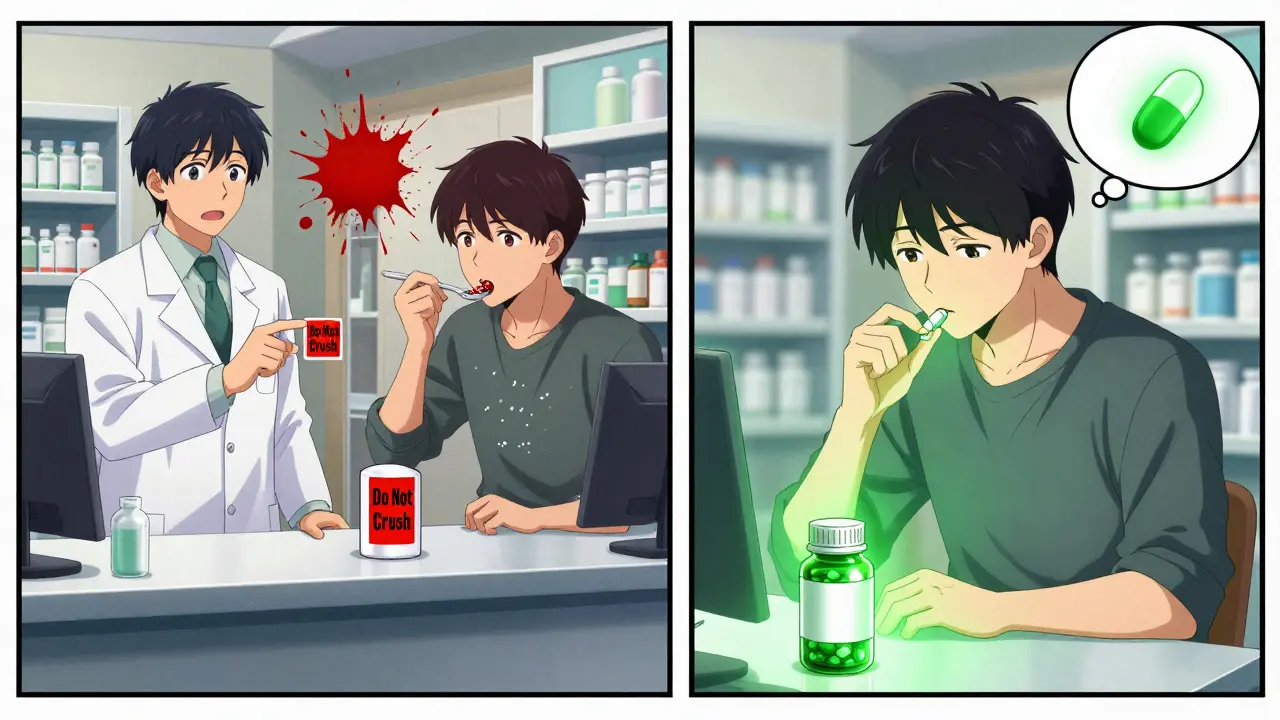
What the Words Actually Mean (And What You’re Probably Misreading)
Here’s the truth: most warning labels are written for doctors, not patients. Phrases like "Contraindicated in severe renal impairment" or "Use with caution in hepatic dysfunction" sound like a foreign language. Even simple phrases get twisted. - "Take on empty stomach" means: Wait at least one hour before eating, or two hours after. Not "take it before breakfast" - that’s not enough time. - "Do not chew or crush, swallow whole" - 30% of patients think this means "chew it up so it dissolves faster." That’s dangerous. Some pills are designed to release slowly. Crush them, and you get a full dose all at once. - "Avoid sunlight" - this isn’t just about sunburn. Some drugs make your skin so sensitive that even a few minutes outside can cause blistering. You need sunscreen, long sleeves, and shade - not just "don’t lie on the beach." - "For external use only" - 90% of patients misunderstand this. Some think it means "don’t swallow," others think it means "don’t use on cuts." The real meaning: this medicine is NOT for eating, inhaling, or injecting. Only apply to skin.Why People Ignore Warnings - And What Happens When They Do
A Healthline survey found that 64% of people have ignored at least one warning. The top three? "Take with food," "Avoid alcohol," and "Avoid sunlight." Why? Because they think it’s no big deal. Or they forget. Or they’re overwhelmed. One 65-year-old patient in Brisbane threw away the paper that said not to take his blood pressure medicine with grapefruit juice. He drank juice every morning. Two weeks later, he ended up in the ER with dangerously low blood pressure. His meds had spiked because the juice blocked how his body broke them down. Another woman took a muscle relaxer with a "do not drive" warning. She thought, "I’ll be fine - I’ve taken it before." She fell asleep at the wheel. She survived. Her car didn’t. These aren’t rare stories. They happen every day.How to Actually Understand Your Labels
You don’t need a medical degree. You just need to slow down and ask three questions:- Does this match what I was told? Check the pill’s shape, color, and imprint against the description on the label. If it looks different, ask. It might be a generic version - or it might be the wrong drug.
- What happens if I skip this step? Don’t just read the warning. Think: "What’s the worst that could happen?" If it says "May cause drowsiness," imagine driving, operating machinery, or caring for kids while sleepy. That’s the risk.
- Can I say it back in my own words? This is called the "teach-back" method. After the pharmacist explains, say: "So if I take this with milk, it won’t work right?" Or: "I need to keep this in the fridge, not the bathroom?" If you can’t explain it, they haven’t explained it well enough.

What’s Changing - And What You Should Expect
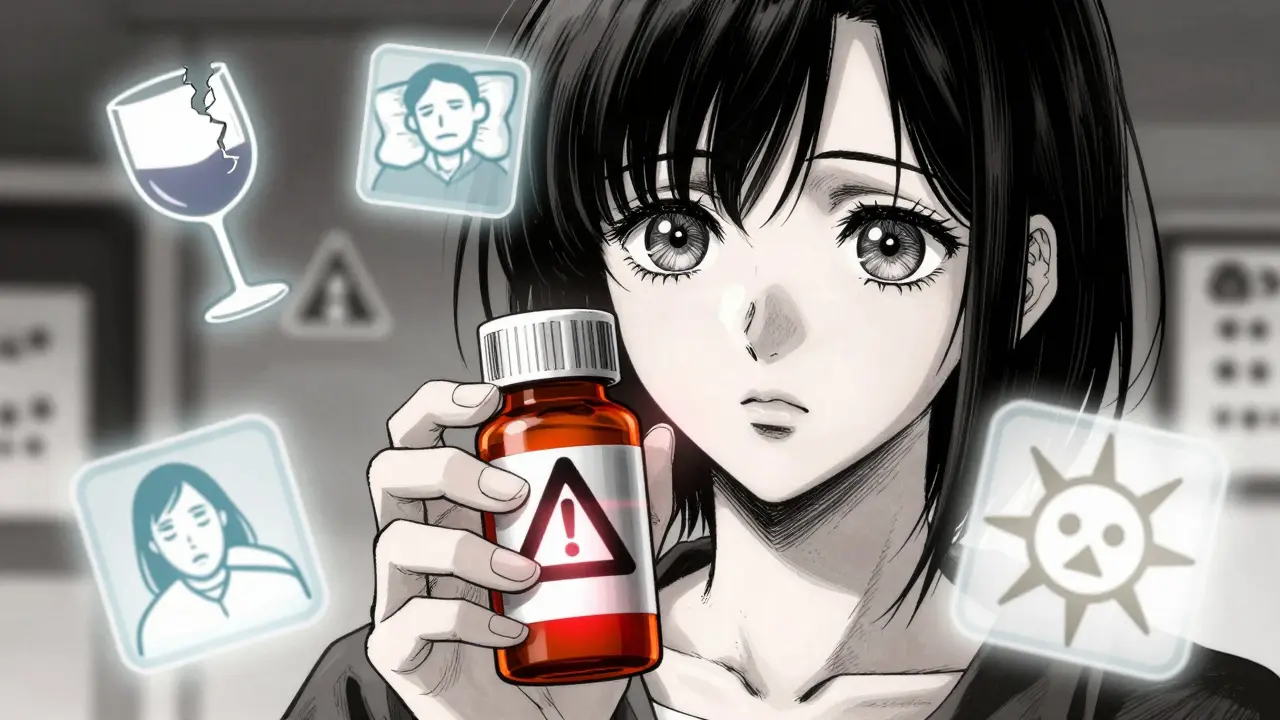
The system is finally starting to change. In 2023, the FDA approved a new set of simple icons for warning labels - like a broken pill for "do not crush," or a wine glass with a slash for "no alcohol." In clinical tests, these reduced misunderstandings from 31% to just 8%. By June 2025, 20 high-risk drug classes will have to use a new "Facts Label" - a simplified version printed right on the bottle, in plain language. It’ll say things like: "This medicine can make you dizzy. Don’t drive until you know how it affects you." Some pharmacies are testing QR codes on labels. Scan it, and a short video plays explaining the warning in plain English. Early results show comprehension jumps by over 50%.What You Can Do Today
You don’t have to wait for new labels. Here’s what works right now:- Always read the label before you leave the pharmacy.
- Ask: "Is there anything I should avoid while taking this?" Don’t just say "any side effects?" - be specific.
- Keep the paper insert. Even if it’s long, flip to the "Warnings" section. That’s where the real risks are listed.
- If you’re confused, call the pharmacy. Pharmacists are trained to explain this stuff. They won’t mind.
- Set phone reminders for "take with food" or "avoid alcohol" if you forget.
Final Thought: This Isn’t Just About Reading - It’s About Listening
The biggest mistake isn’t ignoring the sticker. It’s assuming you already know what it means. Your body reacts differently than your neighbor’s. Your liver processes meds differently than your cousin’s. What’s safe for one person could be deadly for another. These labels aren’t bureaucracy. They’re your last line of defense. Treat them like the emergency alert they are.Why do some prescription labels say "take on empty stomach"?
"Take on empty stomach" means you should wait at least one hour before eating or two hours after eating. Some medications need to be absorbed directly into your bloodstream without food blocking the way. Food can slow down or block absorption, making the drug less effective - or, in rare cases, causing dangerous spikes in blood levels.
What does a Black Box Warning mean on my prescription?
A Black Box Warning is the strongest safety alert the FDA requires. It means the drug has been linked to serious, sometimes life-threatening side effects - like liver failure, heart problems, or suicidal behavior. It doesn’t mean you can’t take it, but you need to understand the risks, follow all monitoring rules (like blood tests), and report any unusual symptoms immediately.
Can I ignore a warning if I’ve taken the medicine before without problems?
No. Your body changes over time. Your liver, kidneys, or other medications might be working differently now. A warning like "avoid alcohol" might not have mattered last year - but if you’ve started a new blood pressure drug or lost weight, that same interaction could now be dangerous. Never assume past safety equals future safety.
Why do some pharmacies use red labels and others use yellow for the same warning?
There’s no national standard for color coding. One pharmacy might use red for "do not drive," another for "take with food." Colors are chosen by the pharmacy or label printer, not by the FDA. Never rely on color alone. Always read the words.
What should I do if I don’t understand a warning on my prescription?
Call the pharmacy. Pharmacists are trained to explain these warnings in plain language. Ask them to repeat it in your own words. If you’re still unsure, ask your doctor. Don’t guess. Misunderstanding a warning is one of the most common causes of preventable harm from medications.