

For many people living with PTSD, the worst part isn’t the memories-it’s what happens when they close their eyes. Nightmares don’t just disturb sleep; they rewire the brain. They leave you exhausted, anxious, and trapped in a cycle where fear of sleep becomes as painful as the trauma itself. About 71% to 90% of military veterans with PTSD experience frequent, vivid nightmares. Civilian survivors aren’t far behind-over half report the same struggle. And yet, for years, doctors had few real tools to help. Today, two paths have emerged: one through a blood pressure pill repurposed for nightmares, and another through structured, non-drug sleep therapy. Neither is perfect. But together, they’re changing how we treat PTSD-not by erasing trauma, but by restoring sleep.
Why PTSD Nightmares Are More Than Just Bad Dreams
PTSD nightmares aren’t just scary dreams. They’re replay loops. The brain doesn’t just recall the trauma-it relives it. The same heart rate spikes, the same muscle tension, the same panic. Studies using brain imaging show that during these nightmares, the amygdala-the fear center-lights up like it’s happening all over again. Meanwhile, the prefrontal cortex, which normally helps calm you down, goes quiet. That’s why waking up from one feels worse than the dream itself. You’re not just tired. You’re hypervigilant. You start avoiding sleep. Then insomnia sets in. Then anxiety grows. And the PTSD gets worse.This isn’t theoretical. In a 2022 VA survey of 1,200 veterans, 68% said nightmares made their PTSD symptoms 50% harder to manage. Sleep loss didn’t just add to the stress-it became part of the trauma. That’s why treating sleep isn’t an add-on anymore. It’s central to recovery.
Prazosin: The Blood Pressure Pill That Quieted Nightmares
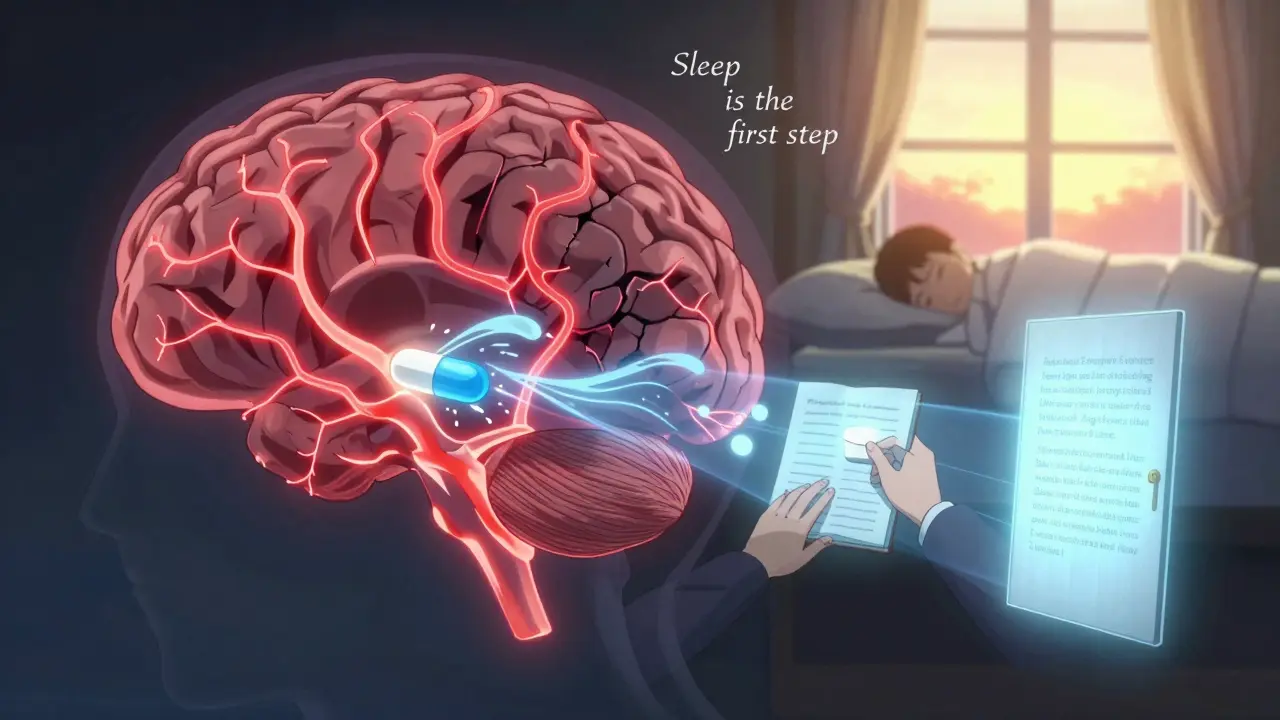
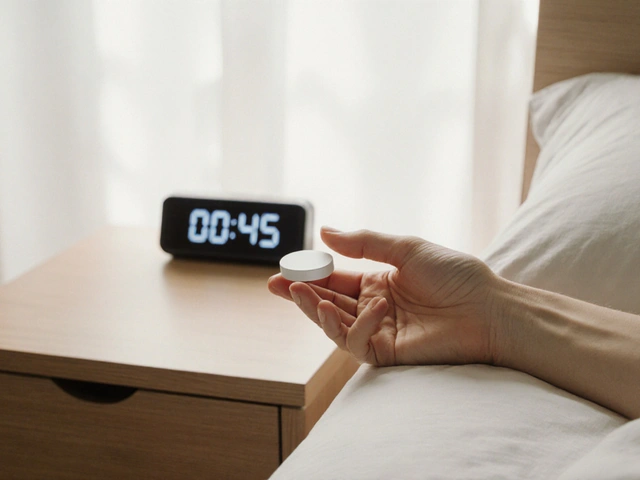
Prazosin was developed in 1976 to treat high blood pressure. It works by blocking alpha-1 receptors, which helps relax blood vessels. But in the early 2000s, Dr. Murray Raskind noticed something odd. Veterans taking prazosin for hypertension were reporting fewer nightmares. He tested it. The results were startling. In one 2003 trial, 12 out of 13 veterans had a dramatic drop in nightmare frequency. By 2007, a larger study confirmed it: prazosin reduced nightmares by over 50% in 70% of PTSD patients.Today, it’s widely used off-label. The typical dose? 1 mg at bedtime, slowly increased to 3-15 mg. Most people take it 60-90 minutes before sleep to match when the drug peaks in the bloodstream. It doesn’t just dull nightmares-it seems to interrupt the fear circuit in the brain. Studies show reduced nighttime adrenaline surges and lower heart rates during REM sleep. That’s huge. Because adrenaline is what keeps nightmares locked in.
But it’s not magic. A 2018 Department of Defense trial found no benefit over placebo. Why? Turns out, dose matters. Many trials used too little. Others included patients who didn’t even have frequent nightmares. Dr. Raskind argues the negative results came from flawed methods-not the drug. A 2023 trial (PRAZ-PTSD III) with 360 patients showed prazosin at 6 mg reduced nightmare distress by 32% versus 18% with placebo. That’s statistically significant. And real.
Side effects? Dizziness (29%), low blood pressure (15%), nasal congestion (18%). Some people feel lightheaded standing up. That’s why doctors check blood pressure before and during treatment. And stopping suddenly? 28% of users report rebound nightmares. You can’t quit cold turkey.
Cognitive Behavioral Therapy for Insomnia (CBT-I): Rewiring Sleep Without Drugs
If prazosin is a chemical tool, CBT-I is a mental one. It’s not about sleeping pills. It’s about rebuilding your relationship with sleep. Developed in the 1980s and now a first-line treatment per the American Academy of Sleep Medicine, CBT-I for PTSD typically involves 6-8 weekly sessions. Each one is 60 minutes. And it’s structured.- Stimulus control: If you’re awake for more than 20 minutes, get out of bed. Go sit in another room. Don’t watch TV. Don’t scroll. Return only when sleepy. This breaks the link between bed and anxiety.
- Sleep restriction: You limit time in bed to match how much you actually sleep. If you’re only sleeping 4 hours, you’re only allowed in bed for 4 hours. Sounds cruel? It is-briefly. But over time, your sleep efficiency shoots up. You stop lying there worrying.
- Cognitive restructuring: You challenge thoughts like “I’ll never sleep again” or “If I don’t sleep, I’ll die.” These aren’t true. But they feel true. Therapy helps you see them as habits, not facts.
- Sleep hygiene: No caffeine after noon. No screens an hour before bed. Cool, dark room. Consistent wake time-even on weekends.
A 2021 review found CBT-I had a large effect on insomnia (g=1.35) and a moderate effect on overall PTSD symptoms (g=0.62). That’s not minor. It means better sleep didn’t just help people rest-it reduced flashbacks, hypervigilance, and emotional numbness. One veteran told a VA therapist, “I didn’t realize I was still in combat until I started sleeping.”
But CBT-I isn’t easy. The first two weeks are rough. Sleep restriction feels like torture. People report feeling foggy, irritable, even more anxious. But by week 4, most say it’s worth it. And 63% of those who complete it still report better sleep six months later.
Imagery Rehearsal Therapy (IRT): Rewriting the Nightmare
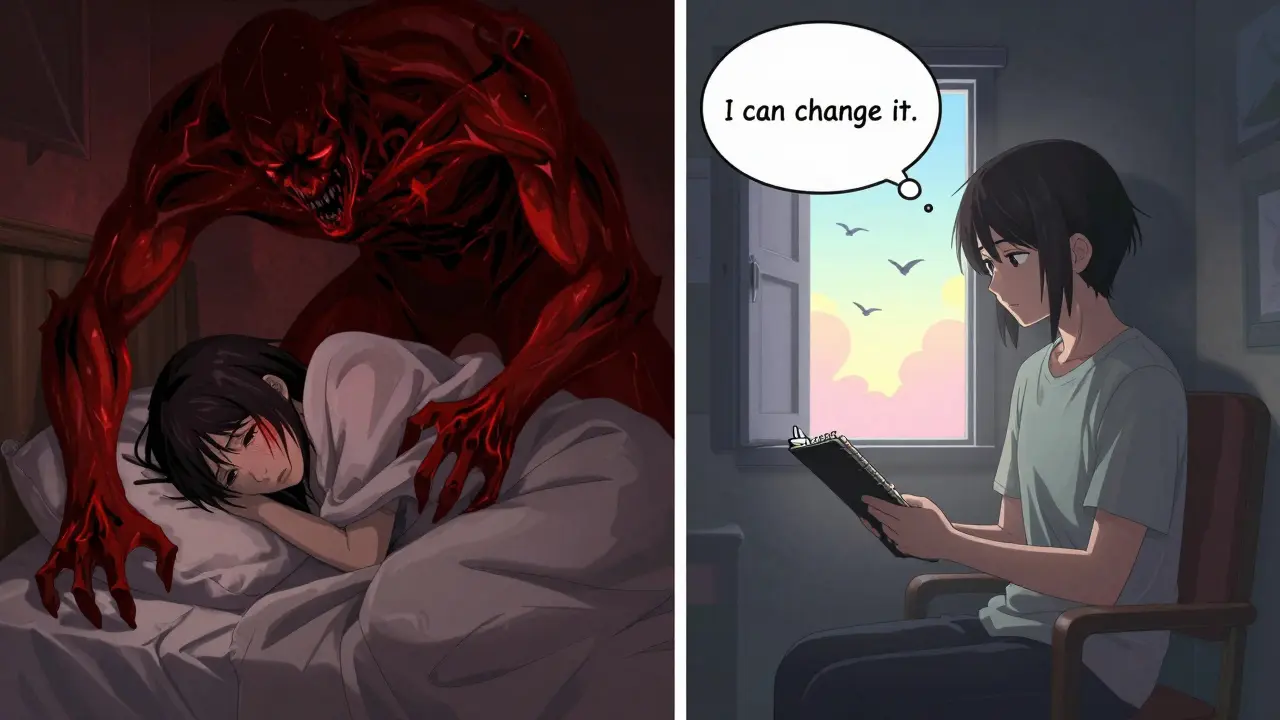
If CBT-I rebuilds sleep, IRT rewrites the dream. It’s simple in concept, powerful in practice. You take a recent nightmare. You write it down. Then you change the ending. Not just a little. A big, bold, positive change. If you’re being chased, now you’re flying away. If you’re trapped, now you’re calling for help-and someone answers. You rehearse this new version for 10-15 minutes every day. Just before bed.That’s it. No drugs. No trauma exposure. Just mental rehearsal. In studies, 67% to 90% of PTSD patients report fewer nightmares after 3-5 sessions. A 2020 National Center for PTSD survey found 85% of users felt less distress from nightmares afterward. One woman, a survivor of domestic violence, rewrote her nightmare from being locked in a burning house to opening a door and walking into sunlight. She said, “I didn’t believe I could feel safe again. But now I dream of doors.”
IRT works because nightmares aren’t memories. They’re emotional patterns. By changing the script while awake, you teach the brain a new way to respond. It’s like updating software. The old program still exists. But now you’ve installed a patch.
Combining Treatments: The Best of Both Worlds
Prazosin helps. CBT-I helps. IRT helps. But together? They’re stronger. A 2022 VA study compared two groups: one got standard PTSD therapy plus sleep hygiene. The other got trauma therapy (Prolonged Exposure) combined with CBT-I. The results? The CBT-I-PE group had a 12.4-point drop in insomnia severity. The other? Just 4.2. Total sleep time increased by 78 minutes in the combo group. The other? 22 minutes. Sleep efficiency jumped 15.3% versus 3.1%.That’s not a small difference. That’s life-changing. One veteran said, “Prazosin stopped the nightmares. CBT-I let me sleep without fear. I didn’t know I could feel calm again.”
Even the VA now pushes a “Sleep SMART” initiative-offering CBT-I in 143 facilities to 86,000 veterans annually. Completion rates? 74%. That’s higher than most mental health programs.
The Catch: Access, Cost, and the Medication Gap
Here’s the hard truth: prazosin is cheap. CBT-I? Not so much. A full course can cost $1,000-$2,000 out-of-pocket. Insurance often limits it to 6 sessions, even though 8 are proven better. And finding a certified CBT-I therapist? In rural areas, 47% fewer veterans have access than those in cities. Meanwhile, 78% of VA patients get prazosin. Only 32% get trauma-focused therapy. Why? Because pills are easier to hand out than therapists are to hire.And prazosin isn’t approved for PTSD nightmares. The FDA rejected it in 2021 because trials were inconsistent. That means doctors prescribe it off-label. No insurance coverage guarantee. No drug company backing. Just clinical experience and patient reports.
Then there’s NightWare. An FDA-approved app that uses Apple Watch to detect nightmare-related heart rate spikes. When it senses one, it delivers a gentle vibration to shift the brain out of REM-without waking you. In a 2022 study, 58% of users saw fewer nightmares. It’s not a cure. But it’s a tool. And it’s available now.
What Works for Whom?
There’s no one-size-fits-all. But here’s what the data suggests:- If nightmares are your main issue and you can’t do trauma therapy yet-start with prazosin. It’s fast, cheap, and works for most.
- If you’re ready to rebuild sleep long-term-go for CBT-I. It takes effort, but the gains last.
- If your nightmares are vivid and repetitive-try IRT. It’s short, focused, and surprisingly powerful.
- If you’re stuck in a cycle of fear and insomnia-combine them. Prazosin for immediate relief. CBT-I or IRT for lasting change.
And if you’re a clinician? Screen for sleep problems in every PTSD patient. Not just “Do you have nightmares?” Ask: “How many nights a week do you sleep more than 5 hours?” Track sleep diaries. Use the CBT-I Coach app. It’s not about treating PTSD alone. It’s about treating the person who can’t sleep.
What’s Next?
The Department of Defense just funded $28 million for integrated sleep-PTSD research in 2024. New studies are testing CBT-I with virtual reality exposure. Others are exploring lower-dose prazosin regimens. And the RAND Corporation predicts that by 2027, every PTSD treatment guideline will require sleep assessment. That’s progress.But real change won’t come from a new pill. It’ll come from making sleep care as normal as therapy. From training more therapists. From expanding telehealth. From insurance covering 8 sessions, not 6. From recognizing that healing trauma isn’t just about talking about the past. It’s about letting the body rest again.
Does prazosin cure PTSD nightmares permanently?
No. Prazosin reduces nightmare frequency and intensity for many, but it doesn’t eliminate the underlying trauma. If you stop taking it, nightmares can return-especially if you don’t address sleep habits or trauma through therapy. It’s a tool, not a cure.
Can I use prazosin and CBT-I together?
Yes. In fact, combining them is often the most effective approach. Prazosin can reduce nightmare intensity enough to make it easier to engage in CBT-I. Once sleep improves, many people are able to reduce or stop prazosin while keeping the gains from therapy.
Why isn’t prazosin FDA-approved for PTSD nightmares?
The FDA rejected prazosin’s application in 2021 because clinical trials showed inconsistent results. Some studies found strong benefits; others found no difference from placebo. Experts blame poor dosing, short treatment lengths, and including patients without prominent nightmares. The drug remains widely used off-label because real-world evidence is strong.
Is CBT-I hard to stick with?
The first two weeks are tough. Sleep restriction means less sleep initially, which can make you feel awful. But most people who stick through it report major improvements by week 4. Adherence is high when patients track sleep with a diary or app. Those who can’t commit to 6-8 sessions usually don’t see lasting results.
What if I can’t afford CBT-I or don’t have access to a specialist?
Start with prazosin under a doctor’s supervision. Use free tools like the CBT-I Coach app, which offers guided sessions. Try IRT on your own: write down your nightmare, change the ending, and rehearse it daily. Many veterans and civilians have improved with these steps-even without a therapist. Progress isn’t all-or-nothing.
Are there new treatments on the horizon?
Yes. The NightWare app (FDA-approved) uses Apple Watch to gently disrupt nightmares without waking you. The VA is testing virtual reality exposure paired with CBT-I. Research is also exploring low-dose psychedelics and neurofeedback for sleep disruption in PTSD. But the biggest shift? Treating sleep as a core symptom-not an afterthought.
Healing from PTSD doesn’t start with a conversation about trauma. It starts with a quiet night. With rest. With the simple, powerful act of falling asleep without fear. That’s where real recovery begins.





Randall Walker
March 11, 2026 AT 01:13