
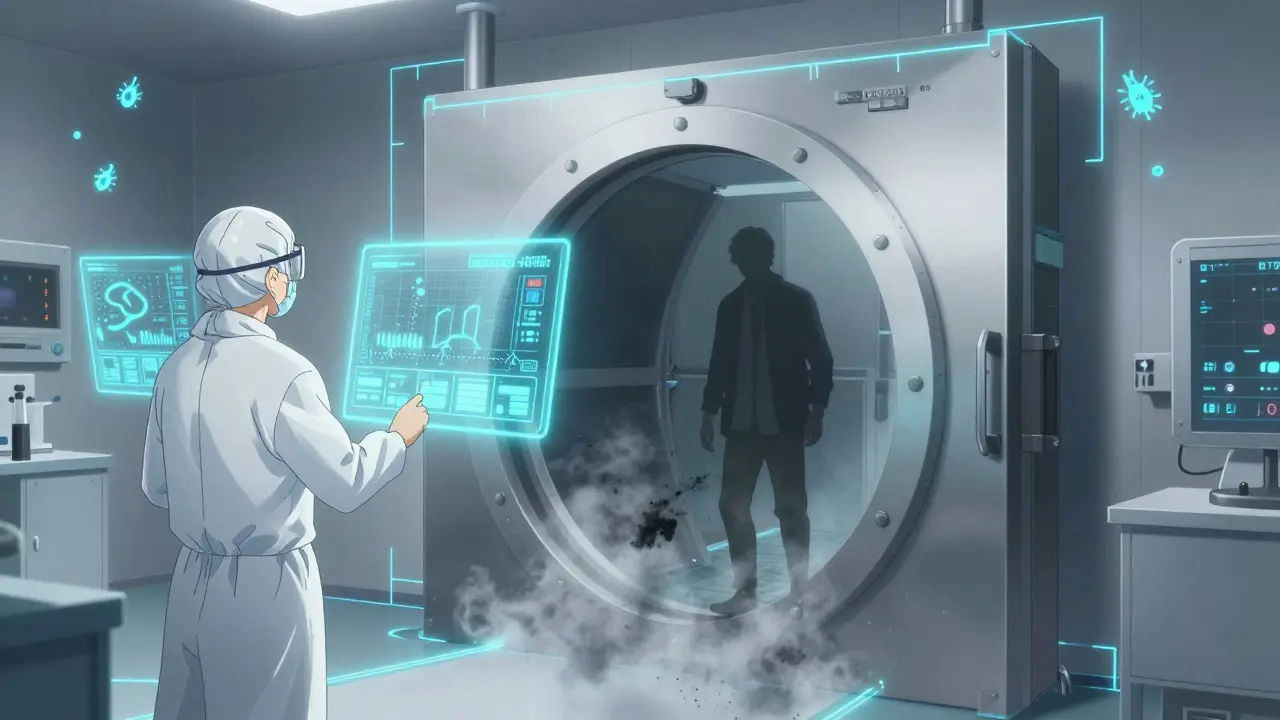
When you take a generic pill, you expect it to work just like the brand-name version. But behind that simple tablet is a complex battle against invisible threats-dust, microbes, chemical residues, and human error-that can turn a safe medicine into a dangerous one. Contamination controls aren’t just paperwork; they’re the line between a life-saving drug and a public health crisis.
What Happens When Contamination Gets Through
In 2020, a single chemical impurity-nitrosamines-showed up in blood pressure meds like Valsartan. It wasn’t a one-off. Twenty-two generic manufacturers were caught off guard. The result? A $1.2 billion recall across the globe. The problem wasn’t the active ingredient. It was how the drug was made. Contamination crept in during shared equipment cleaning, poor airflow, or even from workers’ clothing. The FDA calls this adulteration. Under 21 CFR 210.3(b)(3), a drug is adulterated if it’s made under unsanitary conditions that could make it harmful. In fiscal year 2022, nearly 4 out of every 10 warning letters the FDA sent to drugmakers were about contamination. That’s not a glitch. It’s a pattern.How Clean Is Clean Enough?
You can’t see contamination. So how do you know you’ve got it under control? It’s not about feeling clean. It’s about numbers. In the cleanest areas of a generic drug plant-where liquid or powder is filled into vials or tablets-the air must have no more than 3,520 particles per cubic meter that are 0.5 microns or larger. That’s ISO Class 5, or Grade A. For context, a typical office has 10 million particles in the same space. Air doesn’t just need to be clean. It needs to flow the right way. Airlocks, pressure differences of 10-15 Pascals between rooms, and unidirectional airflow keep dirty air from creeping into clean zones. HVAC systems must swap the air in these rooms 20 to 60 times every hour. Cleaning isn’t a quick wipe-down. It’s a science. After making one drug, the equipment must be cleaned so thoroughly that no more than 10 colony-forming units (CFU) of microbes remain on a 25 cm² surface. Chemical residue? No more than 10 parts per million (ppm). That’s like finding a single grain of salt in a swimming pool.Real-Time Monitoring vs. Old-School Checks
For years, factories relied on swabs and cultures. You’d take a sample, send it to a lab, and wait five to seven days for results. By then, hundreds of batches might’ve been made-and shipped. Now, real-time particle counters like the MetOne 3400+ are common in top facilities. These devices track airborne particles every second. A 2022 ISPE study found they cut contamination incidents by 63%. Why? Because manual checks miss 78% of contamination events-often happening in bursts when someone opens a door or moves a cart. ATP bioluminescence systems give results in five minutes instead of days. They detect organic residue by measuring a molecule found in all living cells. The correlation to traditional culture methods? 95%. That means you can act fast-shut down a line, clean again, and save a whole batch.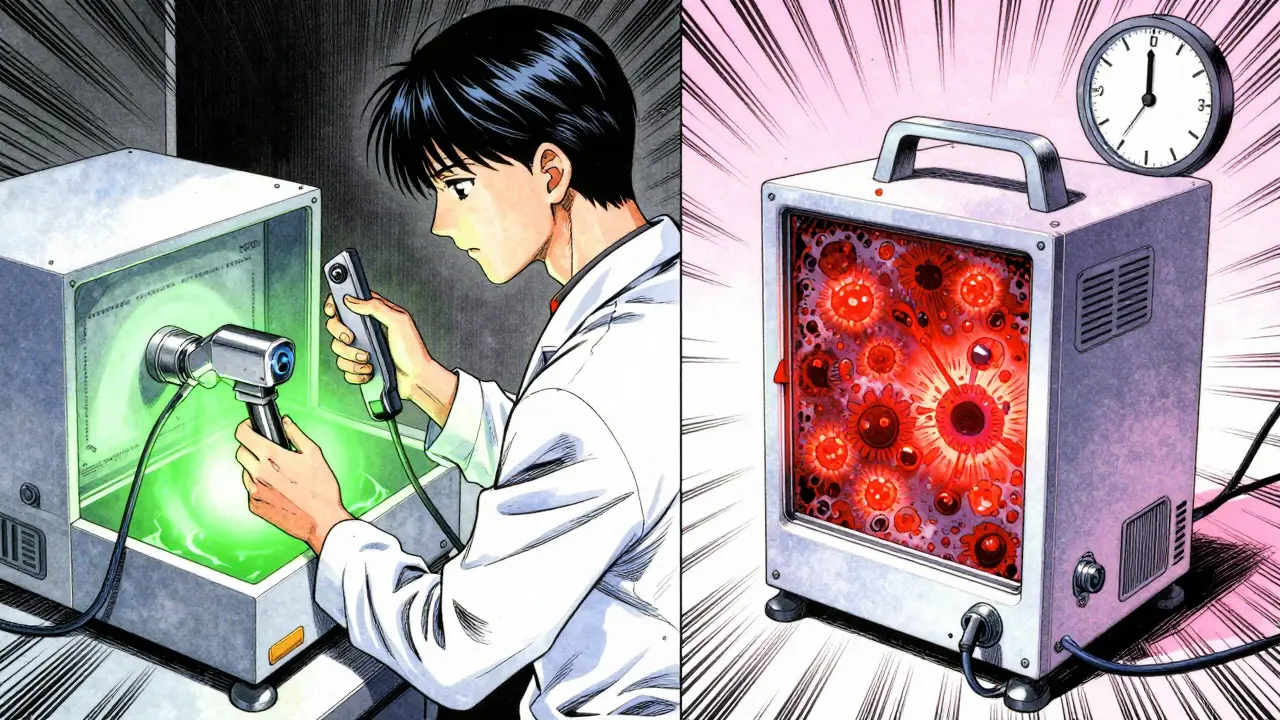
Human Error: The Biggest Risk
You’d think machines are the problem. But they’re not. People are. Dr. Michael Gamlen, a leading consultant in pharmaceutical quality, says 83% of contamination events trace back to human factors. Think about it: someone forgets to change their gown. Someone skips a cleaning step because they’re tired. Someone uses the wrong cleaning cloth because the labels are faded. One facility reported a 30% spike in gowning violations after switching to reusable isolation gowns. Why? The gowns were harder to put on correctly. They had to invest $185,000 in better air showers to blow off particles before workers entered clean rooms. Color-coded equipment helps. Red tools for one product. Blue for another. No overlap. One study showed this cut mix-ups by 65%. Staggered shift changes reduce traffic through clean zones. And training? It’s not optional. One validation software system, ValGenesis V2, took users 147 hours to learn properly. Without that, data gets messy, audits fail, and batches get rejected.What’s Changing in 2025?
The rules are tightening. In September 2023, the FDA released a draft guidance requiring all solid oral dosage forms-like pills and capsules-to use health-based exposure limits (HBELs) by 2025. That means manufacturers must prove they can control contamination down to 1 nanogram per square centimeter for high-potency drugs. That’s less than a single grain of sand. The cost? About $1.2 million per facility to upgrade. For small generic makers, that’s a huge burden. But the alternative is worse: FDA inspections will increase 27% for facilities with past violations. EMA data shows 41% of generic drug applications now get deficiency letters over contamination controls. AI is stepping in. Honeywell’s Forge Pharma system uses machine learning to predict contamination spikes before they happen. In a Merck pilot, false alarms dropped by 68%. That means fewer shutdowns and more consistent production.Who’s Leading the Way?
The market for contamination control tools is worth $4.7 billion and growing fast. Three types of players dominate:- Dycem-specializes in sticky floor mats that trap dirt from shoes. One Pfizer facility reported a 72% drop in foot-borne contamination after using them.
- Freyr Solutions-offers end-to-end validation services. Their data shows facilities using their systems get regulatory approvals 40% faster.
- Thermo Fisher-sells the sensors and monitoring gear. Their real-time systems are now standard in the top 50 generic manufacturers.

What Works in the Real World?
One plant switched to a “one batch at a time” model. No overlapping production. No shared equipment between different drugs. Result? 53% fewer cross-contamination incidents. Simple. Effective. Another facility reduced utility costs by 22% using waterless cleaning. No rinsing. No drying. No wastewater. Just a special wipe and a UV light. It’s not magic-it’s innovation. And it’s not just about technology. Culture matters. A 2021 study found that after 8 hours, gowning compliance dropped 40%. Workers got tired. Supervisors didn’t catch it. The fix? Shorter shifts. More breaks. Better lighting. Human-centered design.Why This Matters to You
You might think contamination control is a factory problem. But it’s not. It’s your problem. Generic drugs make up 90% of all prescriptions in the U.S. by volume. They’re cheaper. More accessible. But if the manufacturing isn’t flawless, you’re not getting a safe drug-you’re getting a gamble. The same plant that made your blood pressure pill might also make your diabetes med or your antibiotic. If cleaning fails, you could be exposed to a drug you’re allergic to. Or a carcinogen. Or a toxin. Contamination controls aren’t about compliance. They’re about trust. The trust that when you swallow a pill, you’re not swallowing something worse.What’s the difference between contamination and adulteration in generic drugs?
Contamination refers to the physical presence of unwanted substances-like dust, microbes, or chemical residues-in a drug product. Adulteration is the legal term used by the FDA when contamination (or other violations) makes the drug unsafe or ineffective. Not all contamination leads to adulteration, but if it crosses regulatory thresholds (like 10 ppm residue or 10 CFU per surface), the product is legally adulterated and must be destroyed.
Why are generic drug manufacturers more at risk for contamination than brand-name companies?
Brand-name companies often have dedicated production lines for each drug, reducing cross-contamination risk. Generic manufacturers produce dozens of different drugs on shared equipment to cut costs. This means they rely more heavily on cleaning validation, environmental controls, and procedural discipline. While innovators spend nearly 2.3 times more on facility design, generics must compensate with tighter operational controls-which is harder to maintain at scale.
How do cleanroom classifications affect contamination control?
Cleanroom classes define how clean the air must be. ISO Class 5 (Grade A) is for sterile filling-air must have fewer than 3,520 particles per cubic meter. ISO Class 7 (Grade C) is for preparing solutions and packaging. ISO Class 8 (Grade D) is for less critical areas like storage. Each level requires different airflow, filtration, and personnel protocols. Mixing these zones without proper barriers risks contamination. For example, bringing a Class 8 cart into a Class 5 area without decontamination can spike particle counts and ruin a batch.
Can real-time monitoring replace traditional cleaning validation?
Not entirely-but it can reduce reliance on it. Traditional swab and rinse tests are still required for regulatory documentation. But real-time systems like particle counters and ATP bioluminescence give instant feedback during production. If particle counts spike during a run, operators can pause and investigate immediately. This shifts contamination control from reactive (testing after the fact) to proactive (preventing problems before they happen).
What’s the biggest mistake generic manufacturers make with contamination controls?
Assuming that because a drug is low-risk, contamination doesn’t matter. That’s dangerous. Even low-potency drugs can cause allergic reactions or interact dangerously if cross-contaminated. The 2023 FDA draft guidance now requires health-based exposure limits (HBELs) for all products, no matter how mild. Another common mistake is underinvesting in training. People are the #1 source of contamination. If staff aren’t trained, monitored, and held accountable, even the best equipment won’t help.
How can small generic manufacturers afford modern contamination controls?
Start with high-risk areas first. Focus on the critical points where contamination is most likely-filling lines, aseptic processing zones, and equipment used for multiple products. Use cost-effective tools like Dycem mats ($2,000 each) and ATP swabs ($15 per test) to catch issues early. Partner with a validation service provider instead of buying full systems. And prioritize human factors: better lighting, color-coded tools, and shorter shifts can reduce contamination by 30% without spending millions. The goal isn’t to copy big pharma-it’s to be smart, targeted, and compliant.



Milad Jawabra
March 4, 2026 AT 18:28