
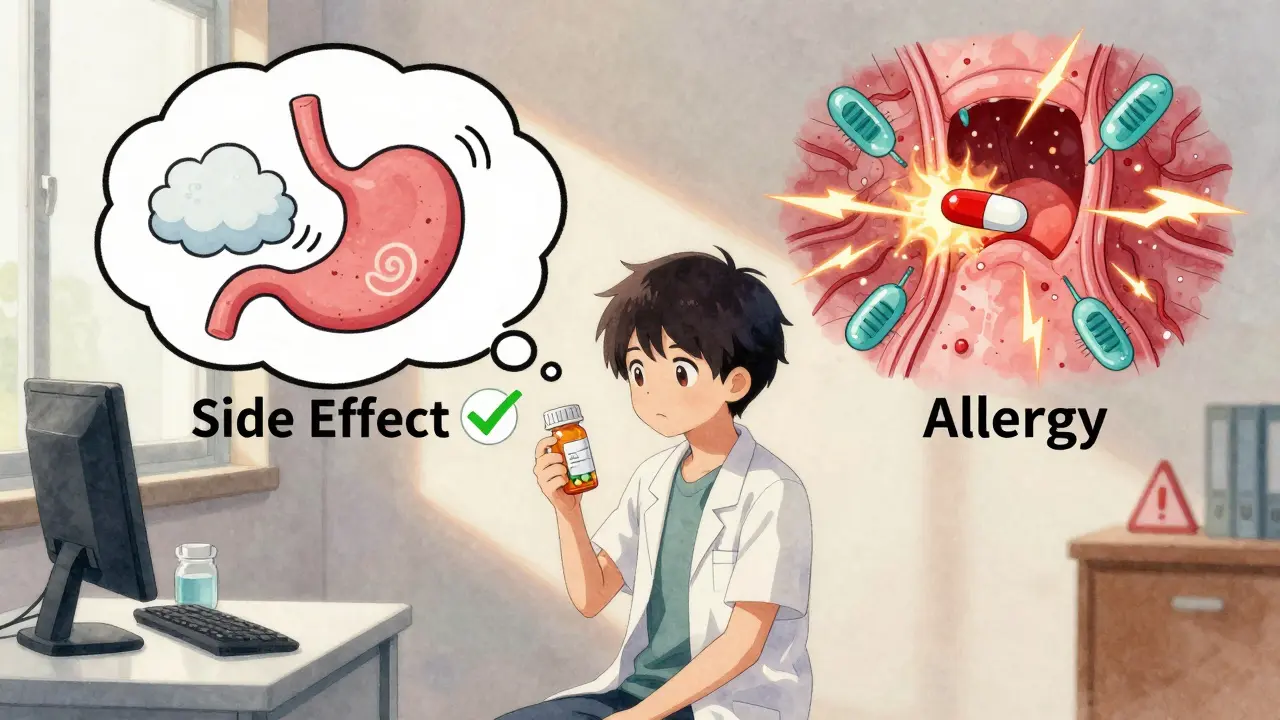
Ever been told you're allergic to a drug, only to find out later it was just a side effect? You're not alone. Most people mix up the two - and that mistake can cost you more than just a headache. It can limit your treatment options, raise your medical bills, and even put your health at risk.
What Are Medication Side Effects?
Side effects are the body’s normal, predictable response to a drug’s chemistry. They’re not an immune system overreaction - they’re just what happens when a medicine does more than it’s supposed to. Think of them like the unintended noise from a car engine. The car still runs, but it’s not silent.For example, metformin, a common diabetes drug, causes stomach upset in 20-30% of users. Statins, used to lower cholesterol, lead to muscle aches in about 5-10% of people. These aren’t rare. They’re listed in the drug’s official labeling, often with exact percentages. The FDA requires this transparency because these reactions are expected, not dangerous in most cases.
Side effects usually show up within hours or days of starting the drug. They often fade as your body adjusts. About 70-80% of common side effects like nausea, dizziness, or mild fatigue go away within two to four weeks. Many can be managed without stopping the medication. Taking metformin with food cuts GI side effects in 60% of people. Drinking extra water helps with lithium-induced thirst. Lowering the dose can reduce headaches from blood pressure meds.
These reactions don’t get worse with repeated exposure. If you take the same drug again, you’ll likely feel the same thing - no more, no less. That’s the key: side effects are pharmacological, not immunological. Your immune system isn’t involved. It’s just chemistry.
What Is a True Allergic Drug Reaction?
An allergic drug reaction is your immune system going into overdrive. It sees the medication as a threat - like a virus or pollen - and attacks it. This isn’t about how the drug works. It’s about how your body mistakes it for something dangerous.The first clue? Timing. True allergies often strike fast. If you break out in hives, your throat swells, or you start wheezing within minutes to two hours after taking a pill, that’s a red flag. This is IgE-mediated - your body has made antibodies that trigger mast cells to release histamine. That’s what causes itching, swelling, and in severe cases, anaphylaxis.
There are also delayed allergic reactions. These show up days later. A rash that spreads over your chest and back 5-10 days after starting an antibiotic? That’s often a T-cell response. It’s not as sudden as anaphylaxis, but it’s still an immune reaction. These can be serious, especially if they involve blistering skin or organ damage.
Penicillin is the classic example. About 80% of all severe drug allergies are linked to penicillin or its relatives. But here’s the twist: 80-90% of people who say they’re allergic to penicillin aren’t. They had a rash as a kid, or got sick to their stomach, and called it an allergy. When tested properly - with skin tests or blood tests - most turn out to be fine. That’s why allergists call penicillin allergy labels the “most overused diagnosis in medicine.”
True allergies don’t get better with time. If you’re allergic to sulfa drugs or NSAIDs like ibuprofen, you’ll react every time - even at tiny doses. And you can’t just “tough it out.” Your body remembers. Re-exposure risks anaphylaxis, which kills 0.3-1% of cases even with treatment.
How They’re Different - Side by Side
| Feature | Side Effect | Allergic Reaction |
|---|---|---|
| Immune System Involved? | No | Yes |
| Timing After Dose | Hours to days; often improves over time | Minutes to hours (immediate) or days (delayed) |
| Dose-Dependent? | Usually - higher dose = worse effect | No - even tiny amounts can trigger it |
| Reoccurrence | Same reaction each time, doesn’t worsen | Worsens with re-exposure; can become life-threatening |
| Common Symptoms | Nausea, dizziness, dry mouth, fatigue, mild rash | Hives, swelling, wheezing, anaphylaxis, blistering skin |
| Can It Be Managed? | Yes - dose change, timing, or added meds | No - must avoid completely |
| Testing Available? | No - diagnosed by pattern | Yes - skin tests, blood tests, oral challenges |
The biggest difference? Control. With side effects, you can often keep using the drug. With a true allergy, you can’t. And that’s why mislabeling matters so much.
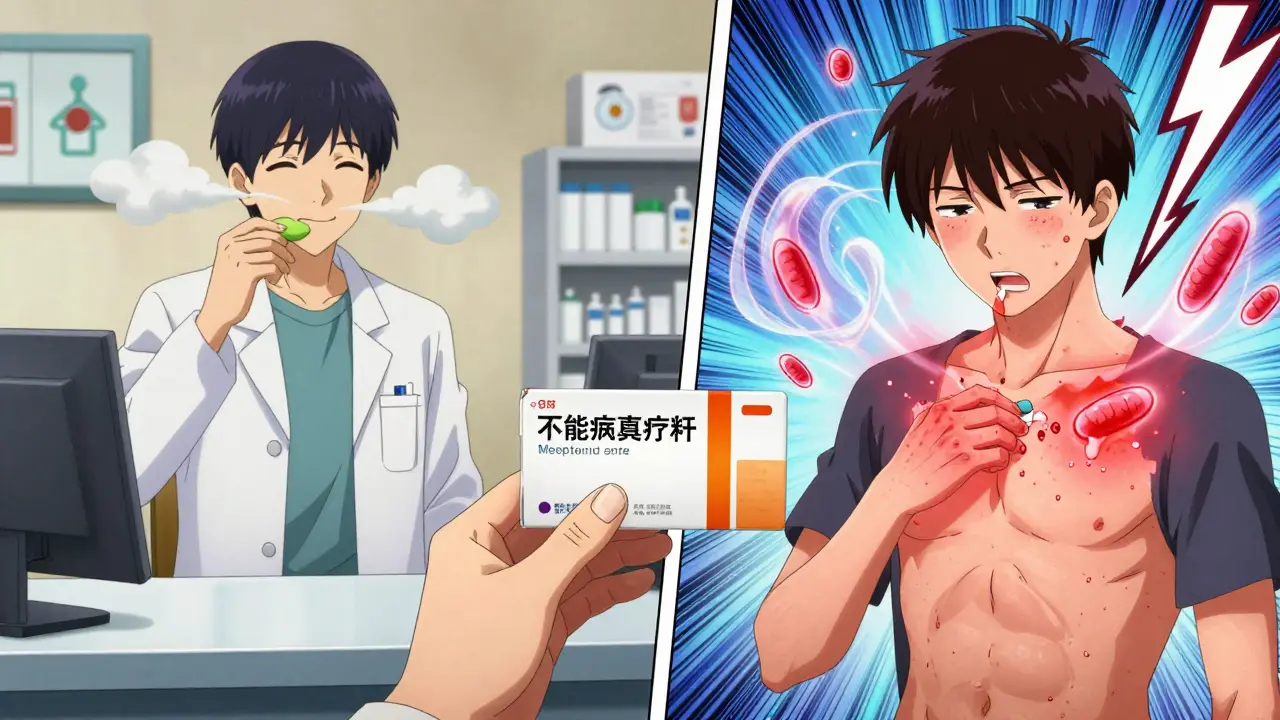
Why Mixing Them Up Is Dangerous
If you think you’re allergic to penicillin - but you’re not - your doctor might give you a stronger, broader antibiotic. These drugs are more expensive, harder on your gut, and increase your risk of catching drug-resistant infections like MRSA. A 2021 study in JAMA Internal Medicine found that patients wrongly labeled as penicillin-allergic cost the healthcare system $4,000 more per year. That’s because they get second-line drugs that are less effective and more toxic.And it’s not just penicillin. People avoid statins because they got muscle soreness. They skip NSAIDs after stomach upset. They refuse antidepressants because of drowsiness. But these aren’t allergies. They’re side effects. And avoiding them means missing out on treatments that could actually help.
Here’s the scary part: 30-40% of hospitalized patients have a documented drug allergy. But when allergists test them, 90-95% turn out to be wrong. That’s not a small error. That’s a system-wide problem. The American Medical Association says improper documentation contributes to $1.5 billion in annual healthcare waste. And it’s all because people don’t know the difference.
How to Tell What You’re Really Experiencing
Ask yourself these four questions:- How soon after taking the drug did symptoms start? Minutes to two hours? That’s a red flag for allergy. Days later? Could be either, but delayed rashes are often allergic.
- What were the symptoms? Nausea? Headache? Fatigue? That’s likely a side effect. Hives? Swollen lips? Trouble breathing? That’s an allergy.
- Did it happen every time you took the drug? If yes, and it got worse, it’s likely allergic. If it was just once and hasn’t returned, it might’ve been a one-off side effect.
- Can you take a lower dose and still feel okay? If yes - side effect. If even a tiny amount causes a reaction - allergy.
And if you’re unsure? Get tested. Penicillin skin testing is 97% accurate at ruling out allergy. Oral challenges - where you take a small dose under supervision - are safe and reliable. The CDC says 60% of people can be cleared just by talking through their history. You don’t need a hospital stay. Just a specialist.

What to Do If You Think You Have a Drug Allergy
Don’t just write it off. Don’t assume you’re allergic because you felt sick once. Don’t let a childhood rash define your adult treatment.Here’s what to do:
- Write down the details. What drug? When did you take it? What happened? How long did it last? Did you need emergency care?
- Don’t self-diagnose. Gastrointestinal upset isn’t an allergy. Dizziness isn’t an allergy. A mild rash might be - but not always.
- Ask your doctor about allergy testing. Especially if you’ve been told you’re allergic to penicillin, sulfa, or NSAIDs. Testing is safe, fast, and often free with insurance.
- Update your records. If testing shows you’re not allergic, make sure your chart, pharmacy, and emergency card reflect that. Many people still carry outdated allergy warnings in their medical files.
There’s no shame in being wrong. What’s dangerous is staying wrong.
What’s Changing in Drug Allergy Care
The field is shifting fast. In 2023, the FDA approved a new blood test called the basophil activation test (BAT) for penicillin allergy. It’s more accurate than skin tests alone, especially for people with dark skin where rashes are harder to spot.Genetic testing is also becoming standard. If you’re prescribed abacavir (for HIV), doctors now test for the HLA-B*57:01 gene first. If you have it, you’re at high risk for a life-threatening reaction. Without the test, 8% of people react. With it? Less than 0.4%. That’s prevention at its best.
Hospitals are starting to use electronic alerts to flag suspicious allergy labels. In 2023, 65% of U.S. hospitals had some kind of allergy clarification program - up from just 15% in 2018. But there’s still a gap. Only 10% of U.S. allergists can handle the volume of testing needed. That’s why primary care doctors are being trained to spot the difference.
The goal? Reduce mislabeled allergies by 50% in the next five years. Because every time we get this right, we save lives, money, and unnecessary suffering.
Final Thought: Your Health Is Too Important to Guess
You don’t need to be a doctor to understand the difference between a side effect and an allergy. You just need to pay attention. If you’ve been told you’re allergic to a drug, ask: “Was it tested? Or just assumed?”Side effects are annoying. Allergies are dangerous. One you can manage. The other you must avoid. And confusing them can cost you more than time - it can cost you your health.
Don’t let a label from ten years ago decide your treatment today. Get tested. Get clear. And take back control of your care.
Can you outgrow a drug allergy?
Yes - especially with penicillin. About 80% of people who had a penicillin allergy as a child lose it over time, even without testing. But you shouldn’t assume it’s gone. Always get tested before taking the drug again. Allergies to sulfa drugs or NSAIDs are less likely to fade.
Is a rash always a sign of a drug allergy?
No. Many rashes from drugs are side effects, not allergies. A mild, flat, pink rash that appears days after starting a medication is often non-allergic. True allergic rashes are usually raised, itchy, and spread quickly. But only testing can confirm. Never assume.
Can you have an allergic reaction the first time you take a drug?
Yes. Unlike some allergies (like pollen), drug allergies don’t require prior exposure. Your immune system can react the first time it sees the drug as a threat. That’s why even a first-time prescription can trigger anaphylaxis.
What should I do if I have a severe reaction?
If you have trouble breathing, swelling of the face or throat, or feel faint, call 911 immediately. Use an epinephrine auto-injector if you have one. Even if symptoms improve, go to the ER - reactions can come back. Afterward, see an allergist to confirm if it was truly an allergy.
Are there drugs that are more likely to cause allergies?
Yes. Penicillin and related antibiotics cause about 80% of severe drug allergies. Sulfonamides (like Bactrim), NSAIDs (like aspirin and ibuprofen), and chemotherapy drugs are also common triggers. Statins, blood pressure meds, and antidepressants rarely cause true allergies - their reactions are usually side effects.
Can I take other drugs if I’m allergic to one?
It depends. If you’re allergic to penicillin, you might still be able to take cephalosporins - but not always. Cross-reactivity varies. An allergist can test for this. For sulfa allergies, you can usually take non-antibiotic sulfa drugs (like some diabetes or diuretic pills) - they’re chemically different. Never guess. Always ask for testing.
Is it safe to try a drug again if I had a side effect before?
Usually, yes. Side effects don’t mean you can’t take the drug again. Many people tolerate them after adjusting the dose, timing, or taking them with food. Talk to your doctor. If the side effect was mild and didn’t involve your immune system, rechallenge is often safe and helpful.



Sinéad Griffin
December 15, 2025 AT 02:32