
Antihistamine Safety Checker
Compare Antihistamines for Fall Risk
Select an antihistamine to see its fall risk compared to safer alternatives
Why This Matters
First-generation antihistamines like diphenhydramine cause significant fall risk in older adults (up to 54% increase) due to drowsiness and impaired balance. Second-generation options like fexofenadine and loratadine have minimal fall risk and are much safer alternatives.
Key takeaway: Switching from diphenhydramine to fexofenadine cuts fall risk by about 42%.
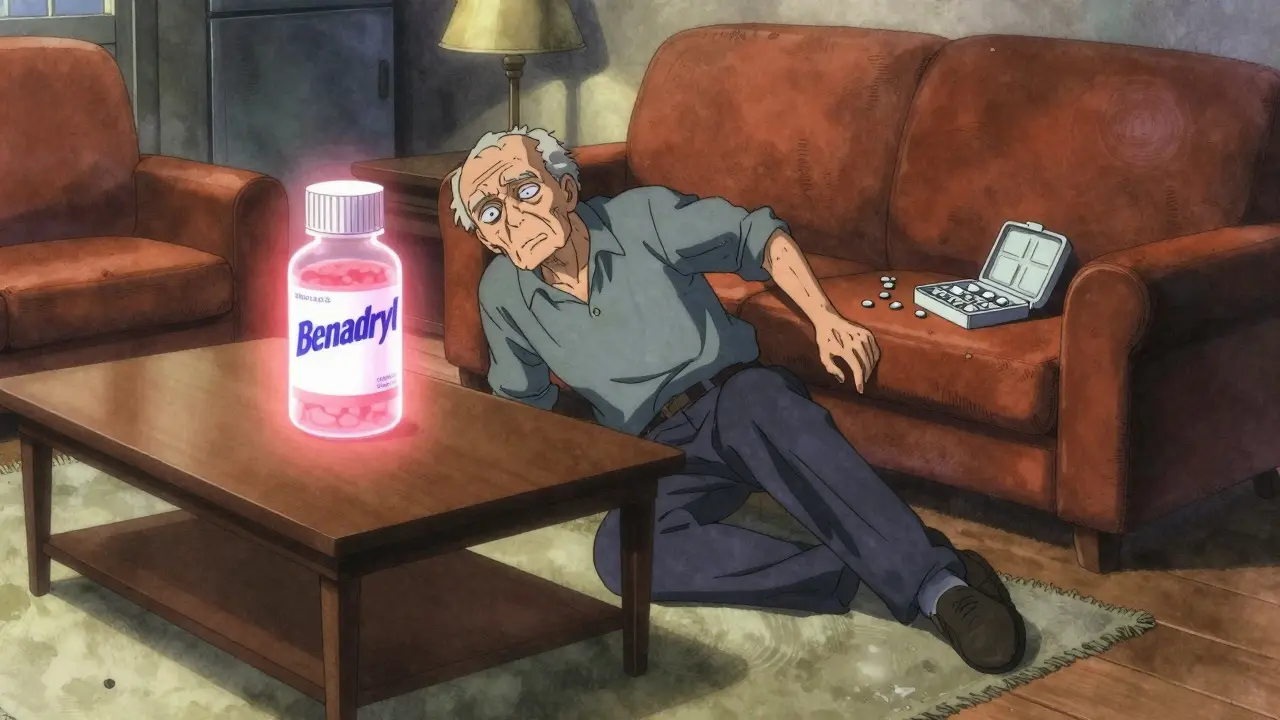
Every year, over 36 million older adults in the U.S. fall. About 32,000 of them die from those falls. Many of these falls aren’t just bad luck-they’re linked to something most people think is harmless: over-the-counter allergy pills and sleep aids. Drugs like diphenhydramine (Benadryl), chlorpheniramine, and brompheniramine are everywhere. They’re cheap. They’re easy to grab off the shelf. And for many older adults, they’re quietly making their homes more dangerous than they realize.
Why These Pills Are Riskier Than You Think
First-generation antihistamines were designed in the 1940s to stop sneezing and runny noses. They work by blocking histamine, but they also slip easily into the brain. That’s where the trouble starts. In younger people, the body clears these drugs quickly. In older adults? Not so much. Their liver and kidneys slow down. The half-life of diphenhydramine jumps from 8.5 hours in healthy adults to over 13 hours in someone over 65. That means drowsiness, dizziness, and poor coordination don’t fade after a few hours-they linger all day. A 2025 study tracking nearly 200,000 older adults found that 32% of those who visited the doctor for dizziness had filled a prescription for a first-gen antihistamine. And within 60 days, 8% of those people fell hard enough to need medical care. That’s not a coincidence. These drugs don’t just make you sleepy-they mess with your balance system. Your inner ear, your muscle control, your reaction time-all of it gets slower. For someone already dealing with weak legs, stiff joints, or poor eyesight, that’s a recipe for disaster. The American Geriatric Society calls these drugs “potentially inappropriate” for older adults. Their Beers Criteria, updated in 2025, still lists diphenhydramine as a major red flag. Why? Because it’s not just about falls. It’s also about confusion, memory lapses, and even delirium. One study found older adults hospitalized while taking these drugs were 2.3 times more likely to go into delirium. That’s not just scary-it’s deadly.The Clear Difference: First-Gen vs. Second-Gen Antihistamines
Not all antihistamines are the same. Second-generation drugs like loratadine (Claritin), cetirizine (Zyrtec), and fexofenadine (Allegra) were developed to avoid the brain. They’re designed to stay outside the blood-brain barrier. That’s why they don’t cause the same level of drowsiness. Here’s the data that matters:| Medication | Anticholinergic Burden Score | Drowsiness Rate in Older Adults | Injurious Fall Risk Increase |
|---|---|---|---|
| Diphenhydramine (Benadryl) | 4 | 15-20% | 54% |
| Chlorpheniramine | 3 | 12-18% | 49% |
| Cetirizine (Zyrtec) | 1 | 14% | 6% |
| Loratadine (Claritin) | 0 | 6% | 2% |
| Fexofenadine (Allegra) | 0 | 5% | 1% |
That’s not a small difference. Switching from diphenhydramine to fexofenadine cuts fall risk by about 42%. Even cetirizine, which is still a bit sedating, is far safer than the older options. And fexofenadine? It’s nearly neutral. No significant increase in falls. No major cognitive side effects. Just clear, safe relief.
Yet, despite all this, sales data shows diphenhydramine is still the third most bought OTC sleep aid for people over 65. Why? Because the labels don’t scream danger. They say “helps you sleep” or “relieves allergies.” They don’t say, “This could make you fall and break your hip.”
How to Prevent Falls When You Need Antihistamine Relief
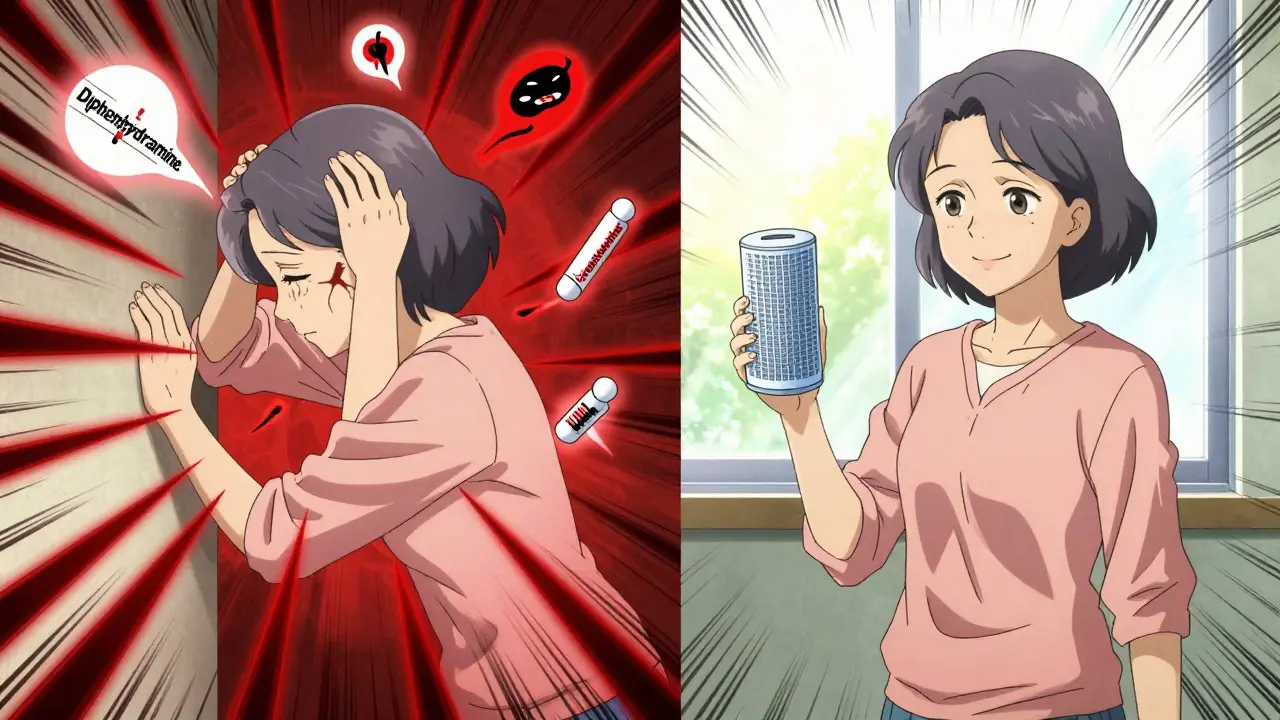
The good news? You don’t have to suffer. There are real, proven ways to reduce risk without giving up symptom control.- Switch meds-If you’re taking Benadryl for allergies or sleep, talk to your doctor about switching to fexofenadine or loratadine. These are available over-the-counter and work just as well for allergies. For sleep? Skip the pills entirely. Try melatonin (1-3mg) or better sleep hygiene instead.
- Use the lowest dose possible-If you absolutely must use diphenhydramine, go with 12.5mg instead of 25mg. And take it at night, not in the morning. That way, the drowsiness hits when you’re already in bed.
- Get a brown bag review-Take all your pills, supplements, and OTC drugs to your pharmacist. Ask them to check for interactions and sedating effects. Studies show pharmacist-led reviews cut fall risk by 26%. They catch things doctors miss.
- Try non-drug options-Nasal saline rinses reduce allergy symptoms by 35-40%. Allergen-proof pillowcases and mattress covers cut dust mite exposure by 83%. A HEPA air filter removes 99.97% of airborne allergens. These aren’t magic, but they’re safer than any pill.
Environmental Fixes That Save Lives
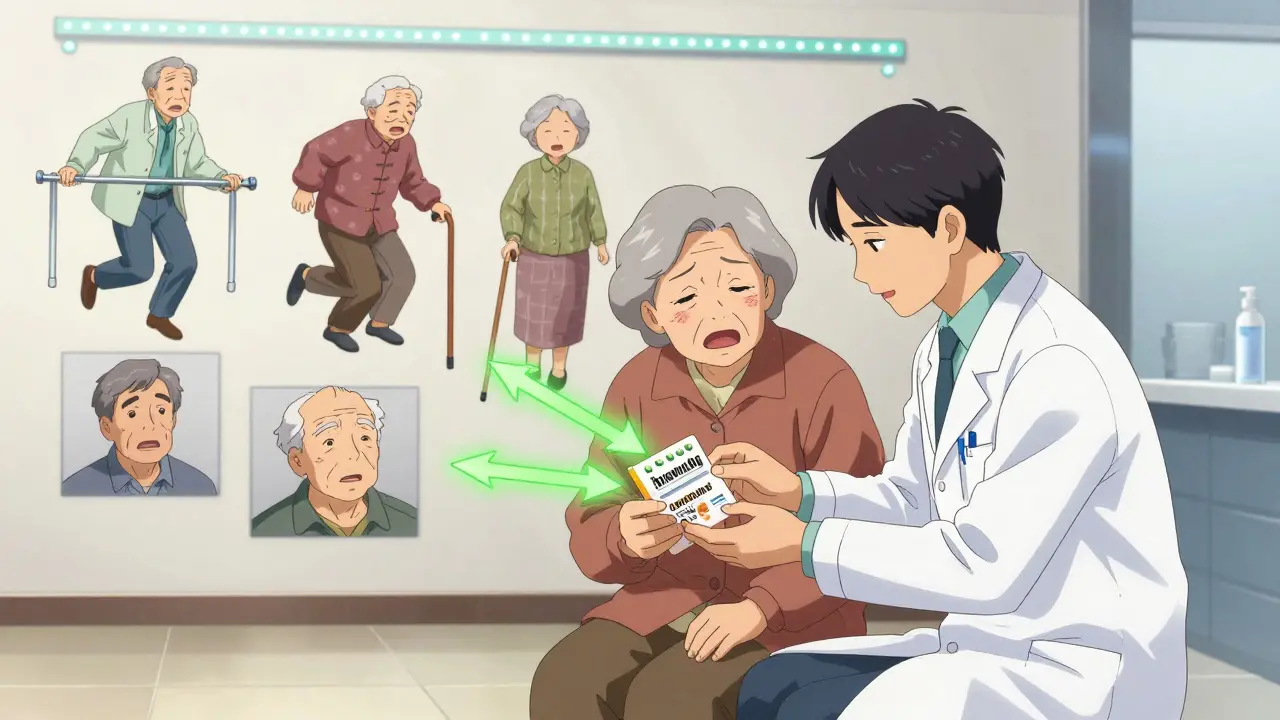
Even if you switch meds, your home might still be a hazard. Falls don’t happen because of one thing-they happen because of a chain of small risks.- Install grab bars in the bathroom. Just one can reduce fall risk by 28%.
- Replace dim bulbs with bright LEDs. Better lighting cuts falls by 32%.
- Remove loose rugs. They’re responsible for nearly 1 in 5 falls.
- Keep a flashlight by your bed. Going to the bathroom at night? Don’t fumble in the dark.
- Use a cane or walker if you’ve had a fall before. It’s not a sign of weakness-it’s a tool.
The CDC’s STEADI program says it best: STOP, SWITCH, REDUCE. Stop using high-risk drugs. Switch to safer ones. Reduce doses when possible. It’s simple. It’s effective. And it’s backed by years of data.
What’s Changing in 2026?
The tide is turning. Since 2024, Medicare’s Annual Wellness Visit now requires doctors to review all medications for fall risk-including OTC antihistamines. Pharmacists are being trained to flag sedating drugs during refill checks. And in early 2025, the American Academy of Neurology issued new guidance: avoid all vestibular suppressants in patients with a history of falls. Two new antihistamines are in Phase II trials right now-AGS-2025-01 and FEX-AGE-101. Early results show 89% less drowsiness than diphenhydramine. These aren’t sci-fi. They’re coming. But until then, the safest choice is already on the shelf.The truth is, we’ve known about this risk for over a decade. The data is clear. The alternatives exist. The tools to prevent falls are cheap and easy to use. So why do so many older adults still take these pills? Because no one told them. Or worse-because they were told it was fine.
You don’t need a fancy treatment. You don’t need expensive gadgets. You just need to ask: Is this pill helping me-or hurting me?
Are over-the-counter antihistamines safe for seniors?
Not all of them. First-generation antihistamines like diphenhydramine and chlorpheniramine are not safe for most older adults. They increase fall risk by over 50% and can cause confusion, dizziness, and delirium. Second-generation options like fexofenadine (Allegra) and loratadine (Claritin) are much safer and should be used instead. Always check the active ingredient-many OTC sleep aids and allergy pills contain the dangerous ones.
Why does diphenhydramine cause falls in older adults?
Diphenhydramine crosses the blood-brain barrier and blocks histamine and acetylcholine receptors in the brain. This causes sedation, slowed reaction time, poor balance, and dizziness. In older adults, the drug clears from the body much slower-sometimes taking over 13 hours-so the effects last all day. Combined with age-related muscle weakness and vision changes, this creates a perfect storm for falls.
Can I just take a lower dose of Benadryl to stay safe?
Lowering the dose helps a little, but it doesn’t eliminate the risk. Even 12.5mg of diphenhydramine can impair balance in older adults. The safest move is to switch to a non-sedating alternative like fexofenadine or loratadine. If you’re using it for sleep, try non-drug methods first-like keeping a cool, dark room and avoiding screens before bed.
What are the best non-drug alternatives for allergies in seniors?
Nasal saline rinses reduce symptoms by 35-40%. Allergen-proof bedding cuts dust mite exposure by 83%. HEPA air filters remove 99.97% of airborne allergens. Avoiding outdoor time during high pollen counts and showering before bed also helps. These methods work better than pills for many people and carry zero fall risk.
Should I stop taking my antihistamine cold turkey?
No. Stopping suddenly can cause rebound symptoms like worse allergies or trouble sleeping. Work with your doctor or pharmacist to create a plan. For example, if you’re using diphenhydramine for sleep, gradually reduce the dose over 1-2 weeks while introducing better sleep habits. Never stop without guidance.
How often should older adults review their medications?
At least once a year, but ideally every 6 months if they’re on multiple medications. The CDC recommends a full medication review during annual wellness visits. Bring all pills, supplements, and OTC drugs to your pharmacist for a “brown bag review”-they’ll spot hidden risks like sedating antihistamines that your doctor might miss.






Anil bhardwaj
February 23, 2026 AT 23:57