
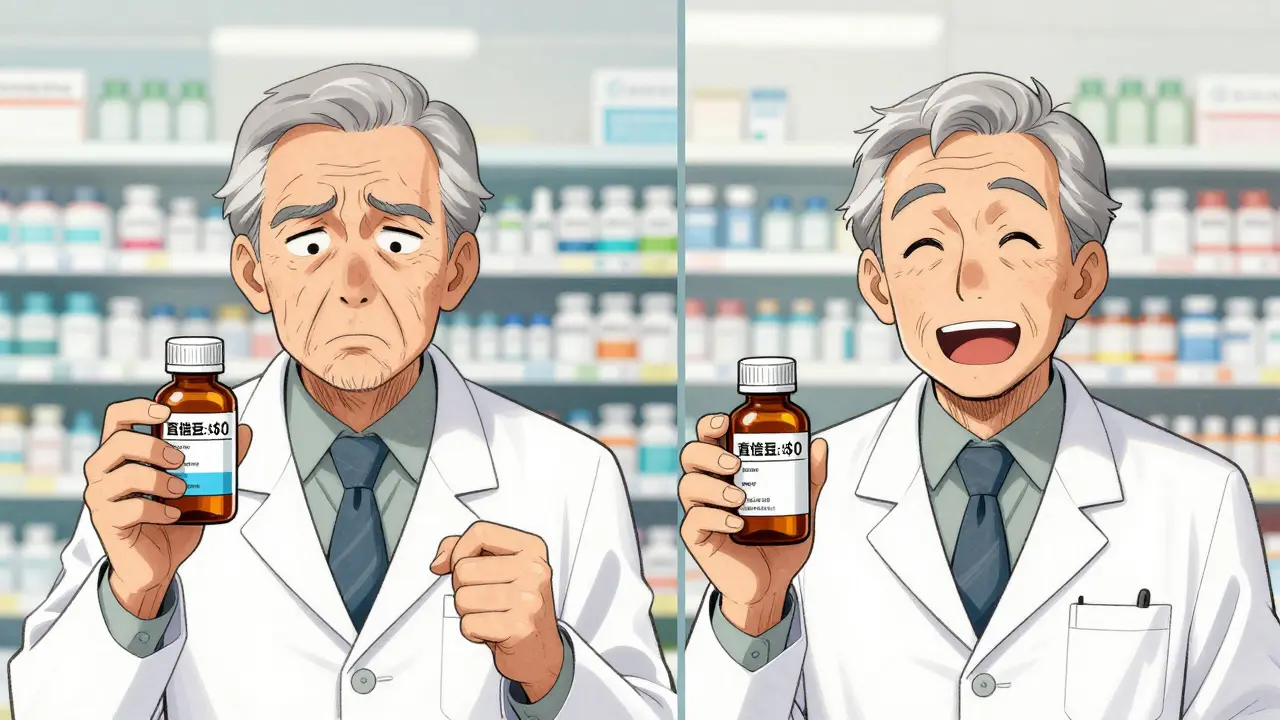
Imagine paying $45 a month for a blood pressure medication, only to find out your neighbor pays $0 for the exact same chemical compound. This isn't a glitch in the system; it is the core economic engine of Medicare Part D is a voluntary outpatient prescription drug benefit program administered through private insurance companies contracted with the government. The goal is simple: use the massive scale of the federal government to push patients toward cheaper alternatives, keeping the entire healthcare system from collapsing under the weight of brand-name pricing.
The Bottom Line on Generics
- Massive Savings: Generic drugs make up about 87% of all prescriptions but only account for roughly 24% of total spending.
- Tiered Pricing: Most plans use a 5-tier system where generics live in the cheapest buckets (Tier 1 and 2).
- Government Impact: Generic substitution saves the federal government billions annually in subsidies and catastrophic coverage.
- New Caps: A $2,000 out-of-pocket spending cap started in 2025, changing how high-cost generics are handled.
How the Tiered Formulary Drives Your Costs
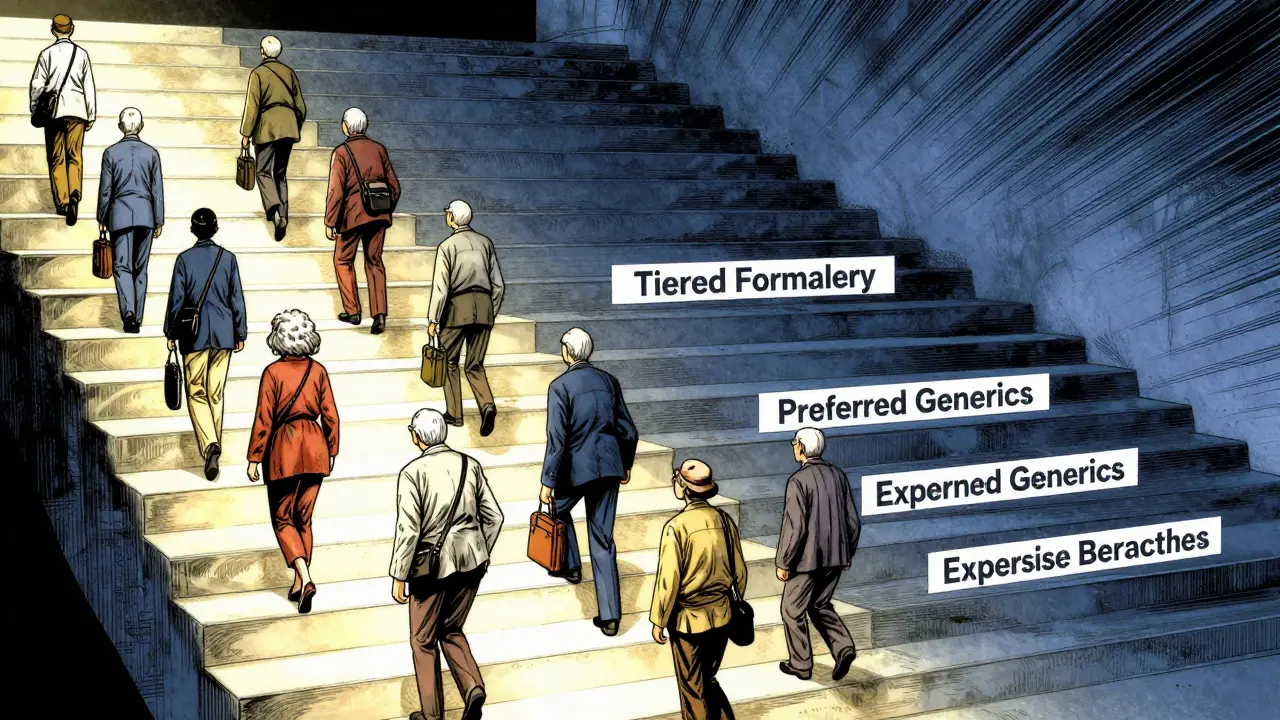
If you want to understand the economics of your pharmacy bill, you have to look at the formulary. Think of a formulary as a curated list of drugs the insurance company agrees to cover. To nudge you toward the most cost-effective choice, they use a tiered system. In a typical five-tier structure, Tier 1 is reserved for "Preferred Generics." These are the gold standard for savings, often costing between $0 and $10 for a 30-day supply at a preferred pharmacy.
Then there is Tier 2, which covers standard generics. These are still cheap, but the copay is slightly higher-averaging around $15. Once you hit Tier 3, you're usually dealing with brand-name drugs, where costs jump significantly, often ranging from $45 to $75. From an economic standpoint, the gap between Tier 1 and Tier 3 is where the real magic happens. A patient switching one medication from a brand to a generic can save anywhere from $1,560 to $2,340 per year per drug.
| Feature | Preferred Generic (Tier 1) | Brand-Name (Tier 3) |
|---|---|---|
| Typical Copay (30-day) | $0 - $10 | $45 - $75 |
| Plan Acquisition Cost | ~$18.75 per script | ~$156.42 per script |
| Utilization Rate | ~87.3% of fills | ~12.7% of fills |
| Out-of-Pocket Burden | Very Low | High |
The 'Donut Hole' and Catastrophic Coverage
The economics of Part D get complicated when you move through the different coverage phases. You start with a deductible (which hit $595 in 2025). After that, you enter the initial coverage phase where you typically pay 25% of the drug's cost. Because the base price of a generic is so much lower, that 25% is a tiny fraction of what you'd pay for a brand-name drug.
For years, the "donut hole"-or coverage gap-was a financial nightmare. However, thanks to the Bipartisan Budget Act of 2018, the cost for generics in this gap dropped to 25% of the negotiated price. This makes generics even more critical during the gap phase. When you finally hit the catastrophic coverage phase (after spending about $2,100 out-of-pocket in 2026), the incentive remains. In 2024, for example, the nominal copay for a generic was only $4.15, compared to $10.35 for a brand.
The Game Changer: The Inflation Reduction Act
The Inflation Reduction Act of 2022 threw a wrench into the old way of doing things-in a good way for the patient. The most significant shift is the $2,000 annual cap on out-of-pocket spending that took effect in 2025. This fundamentally changes the math for people using "specialty generics." These are complex drugs that are technically generic but still very expensive. Previously, these could bankrupt a patient; now, the cap limits that damage.
Another key move was the $35 monthly cap on insulin. Since insulin is a high-volume, high-cost necessity, capping the cost forces the economic burden away from the senior and more toward the manufacturer and the plan. We're also seeing the Manufacturer Discount Program, which requires drug makers to provide extra discounts during initial and catastrophic phases. Analysts expect this will push generic market share even higher, potentially hitting 91.5% by 2027.
Navigating the System: How to Actually Save Money
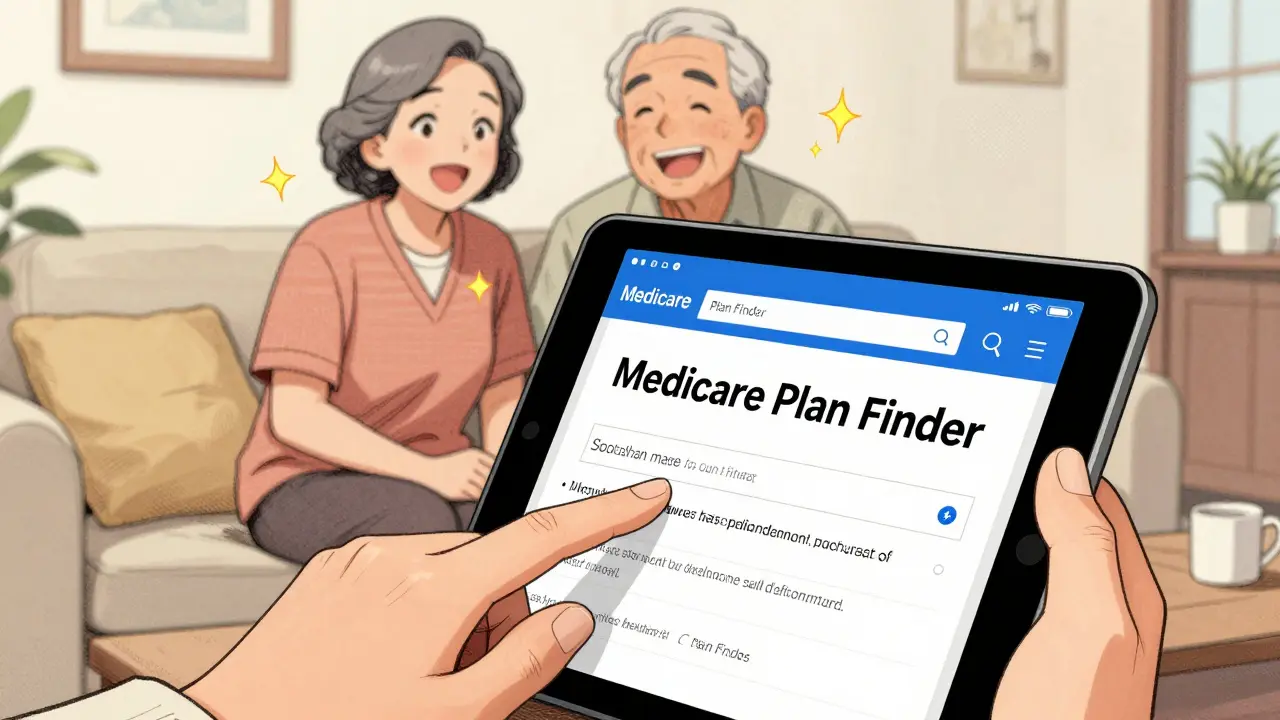
Knowing that generics are cheaper is one thing; getting them at the lowest price is another. The first step is the Annual Enrollment Period (October 15 to December 7). Don't just stick with last year's plan. Check the Medicare Plan Finder tool. Research shows that people who use this tool save an average of $427 annually because they find plans with $0 copays for their specific medications.
Be aware of "therapeutic interchange." This is when a pharmacist automatically swaps your brand-name drug for a generic. In about 58.6% of generic fills, this happens automatically. While usually a win, some people have adverse reactions to certain generic fillers. If a generic doesn't work for you, don't just pay for the brand-request a "coverage determination." This is a formal request to the plan to cover the brand-name drug at the generic price because it's medically necessary. These requests have a surprisingly high approval rate, around 78.4%.
The Hidden Risks of Generic-Only Strategies
It's not all sunshine and savings. One major economic weakness is formulary volatility. It's common for a plan to move a generic from Tier 1 to Tier 2 mid-year, or suddenly require "prior authorization" for a drug you've taken for a decade. About 18.7% of beneficiary complaints to CMS center on these sudden changes.
There's also a human cost to the 25% coinsurance model. Some low-income beneficiaries actually delay taking their medication because they can't afford even the generic copay until they hit the catastrophic phase. This "perverse incentive" can lead to worse health outcomes, which eventually costs the system more in hospitalizations than it saved in drug costs.
Why is my generic drug in a higher tier than others?
Not all generics are created equal. "Specialty generics" (complex drugs) often cost the plan more to acquire and are placed in Tier 3 or 4. Additionally, different insurance plans have different contracts with manufacturers, meaning a drug that is Tier 1 on an AARP plan might be Tier 2 on a SilverScript plan.
Can I get a brand-name drug for the price of a generic?
Yes, through a "coverage determination" or "formulary exception." If your doctor can prove that the generic version causes an adverse reaction or is therapeutically ineffective for you, the plan may agree to cover the brand-name version at the lower generic copay level.
Does the $2,000 cap apply to all drugs?
The $2,000 annual out-of-pocket cap introduced in 2025 applies to the total amount you spend on covered Part D drugs. Once you hit this limit, you move into the catastrophic phase and your costs drop significantly for the rest of the year, regardless of whether the drug is generic or brand-name.
What are "protected classes" of drugs?
CMS requires Part D plans to cover "substantially all" drugs in six categories: anti-cancer, anti-psychotic, anti-convulsant, anti-depressant, immunosuppressant, and anti-retroviral. This means generics in these categories often have fewer restrictions and are easier to get approved than drugs in other categories.
Are generics actually as effective as brand-name drugs?
From an economic and regulatory standpoint, yes. The FDA requires generic drugs to have the same active ingredient, strength, and dosage form as the brand-name version. While inactive ingredients (fillers) may vary, the therapeutic effect is designed to be identical.
What to Do Next
If you're currently on a Part D plan, your next move depends on your current spending. If you're paying more than $15 per month for a generic, you're likely in a higher tier and should shop around during the next open enrollment. Use the official Medicare.gov Plan Finder and enter every single medication you take to see the exact cost for each plan.
If you're struggling with costs despite using generics, check if you qualify for "Extra Help" (the Low-Income Subsidy program). This can virtually eliminate your premiums and deductibles, making the economic transition to generics even more seamless. Finally, always ask your pharmacist if there is a "preferred generic" version of your medication that might be in a lower tier of your specific plan.

Nicole Antunes
April 21, 2026 AT 15:26