
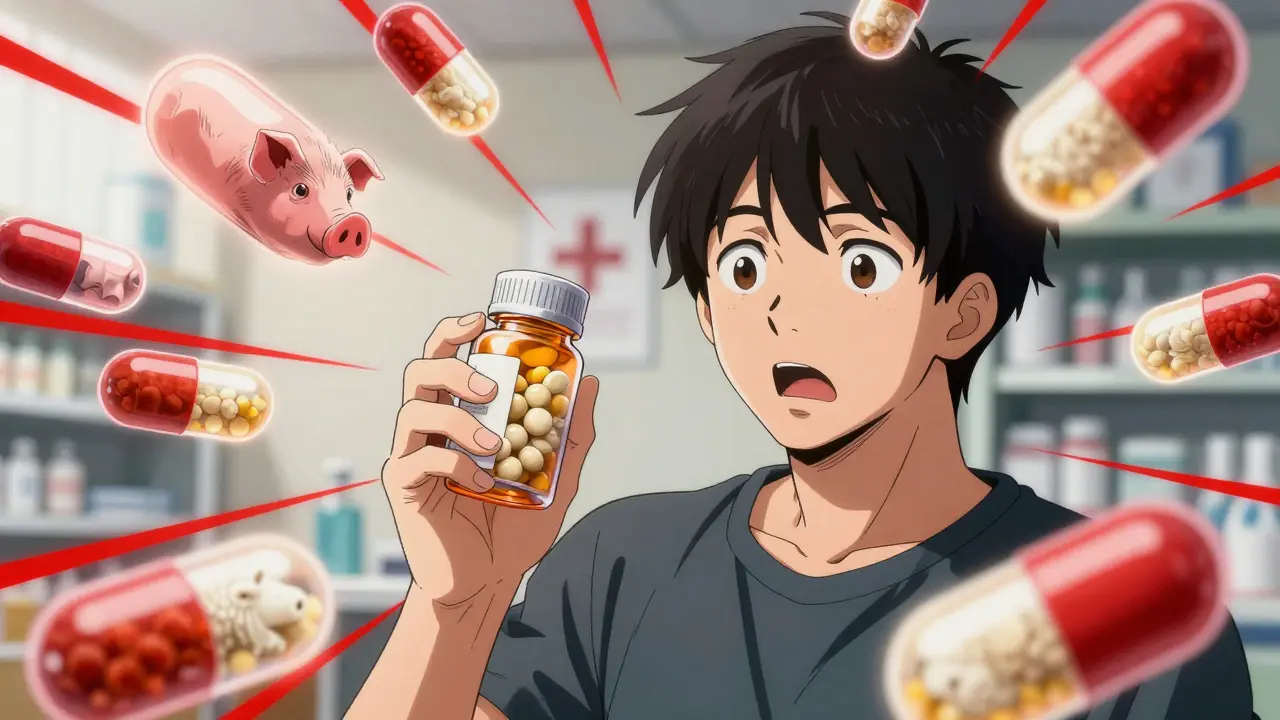
Most people assume their medications are just chemicals in a pill-clean, neutral, and free of moral baggage. But if you’re vegan or vegetarian, that assumption can be dangerously wrong. Hidden animal ingredients are hiding in plain sight in everyday prescriptions and supplements, and you might be swallowing them without knowing it.
What’s Really in Your Capsules?
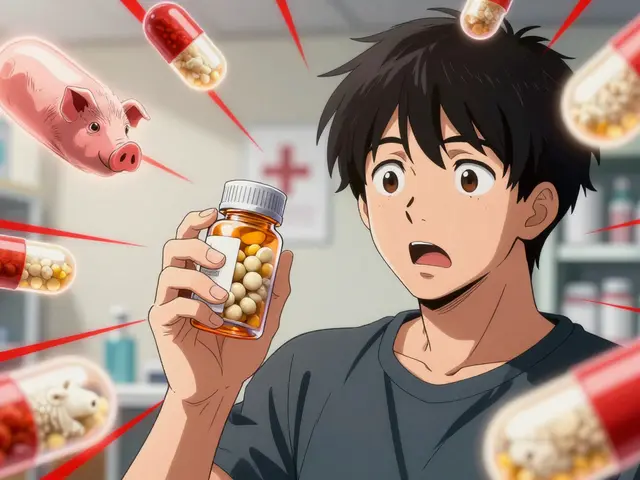
Gelatin is the most common hidden animal ingredient in medicine. It’s used in about 90% of capsules because it’s cheap, easy to mold, and dissolves well in the stomach. But gelatin comes from boiling down the bones, skin, and connective tissues of pigs, cows, and chickens. That means your daily multivitamin, your antibiotic capsule, or even your sleep aid could be made with pig-derived gelatin. You won’t find "pig fat" on the label. Instead, you’ll see "gelatin"-a word that sounds harmless, like something from a bakery. But it’s not. And if you’re avoiding animal products for ethical reasons, that’s not just a technicality-it’s a violation of your values. Other sneaky ingredients include:- Magnesium stearate: Often made from animal fat (about 65% of the time), it’s used as a lubricant to help pills move smoothly through manufacturing machines.
- Lanolin: Found in 80% of Vitamin D3 supplements, it’s extracted from sheep’s wool. Even though it’s not meat, it’s still an animal product.
- Stearic acid (E570): A fatty acid derived from cow, sheep, or pig fat. Used as a binder or coating in tablets.
- Glycerin: Can come from animal fat or plant oils. Unless specified, assume it’s animal-based.
- Squalane: Often sourced from shark liver oil, though plant-based versions exist.
Medications That Are Directly Made From Animals
Some drugs aren’t just coated with animal products-they’re made from them. These aren’t filler ingredients. They’re the active medicine.- Armour Thyroid: Made from dried pig thyroid glands. Used to treat hypothyroidism. There’s no vegan version of this exact formulation.
- Premarin: Derived from the urine of pregnant mares. Used for menopause symptoms. Synthetic estrogen alternatives exist, but they’re not identical.
- Heparin: Extracted from pig intestines. A blood thinner used in hospitals. No plant-based substitute works the same way.
- Creon and Viokace: Pancreatic enzymes made from pig pancreas. Used by people with cystic fibrosis or pancreas damage.
- Vascepa: Fish oil-based. Used to lower triglycerides. No vegan alternative with the same FDA approval exists.
- Propofol: An IV anesthetic containing egg phospholipids. Used in surgeries. No vegan substitute available.
What Can You Actually Do?
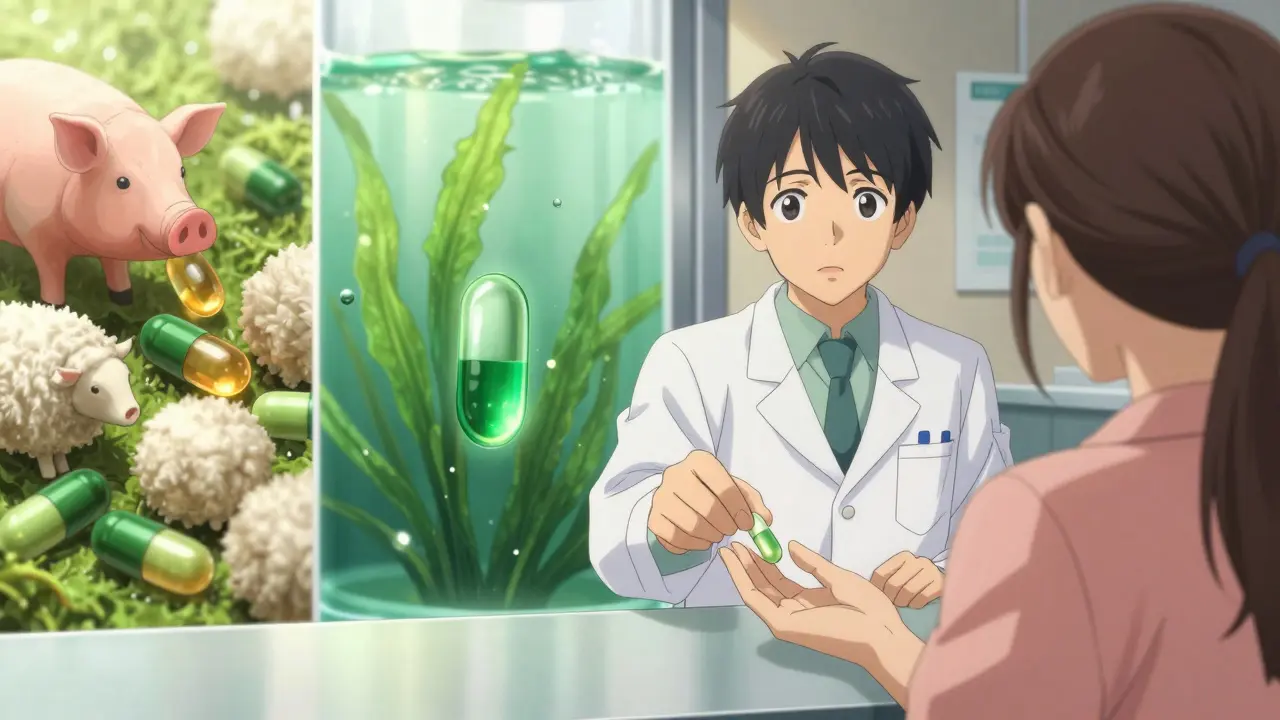
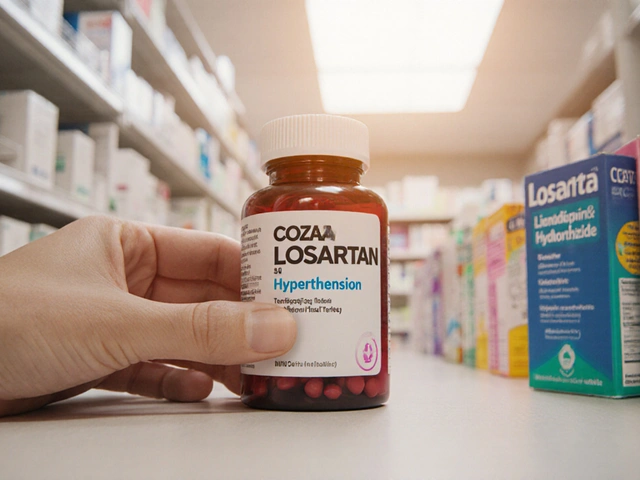
The good news? You have options. Not always perfect, but real. For many medications, the animal-based ingredient is just a capsule shell or filler. That means you can often switch to a vegan-friendly version.- Ask your pharmacist: Don’t just say, “I’m vegan.” Say, “I need this medication without gelatin, magnesium stearate, lanolin, or any animal-derived ingredients.” Be specific.
- Choose tablets over capsules: Tablets are more likely to be vegan. They don’t need gelatin. Look for ones labeled “vegetarian capsule” or “plant-based.”
- Switch Vitamin D3: Most D3 is from lanolin. But plant-based D3 from algae exists. Brands like Deva Nutrition and Garden of Life offer vegan D3. Check the label.
- Use Pill Clarity: This platform (formerly VeganMed) vets medications and certifies which ones are animal-free. They have a searchable database and even work with pharmacies to source alternatives.
- Request compounded medications: Compounding pharmacies can make custom pills without animal ingredients. They’re more expensive and may not be covered by insurance, but they’re an option for critical meds.
What Has No Vegan Alternative?
Some drugs simply don’t have a vegan version yet. Heparin, propofol, and certain pancreatic enzymes are still tied to animal sources because their biological function can’t be replicated with plants or synthetics. In these cases, you’re forced to make a choice: ethics or health. There’s no easy answer. Some vegans choose to take these medications because their life depends on it. Others seek out clinical trials or alternative therapies, though that’s not always safe or legal. The key is awareness. If you’re on Armour Thyroid, know that levothyroxine (Synthroid) is synthetic and animal-free. It’s not the same, but it’s often effective. Talk to your doctor about switching.Why Isn’t This Better Labelled?
Food labels in most countries require disclosure of animal ingredients. Medicine doesn’t. The FDA and other regulators don’t require pharmaceutical companies to list whether gelatin or stearic acid comes from pigs or plants. It’s not illegal-it’s just not required. This isn’t negligence. It’s tradition. The pharmaceutical industry has used animal-derived ingredients for over a century. Changing that means retooling factories, retesting formulations, and dealing with regulatory delays. Companies don’t see the financial incentive-until now. The vegan population in the U.S. is around 3%, and growing. More people are asking. More pharmacists are learning. And platforms like Pill Clarity are pushing for transparency. In 2024, the American Pharmacists Association started training pharmacists to handle these questions. That’s progress.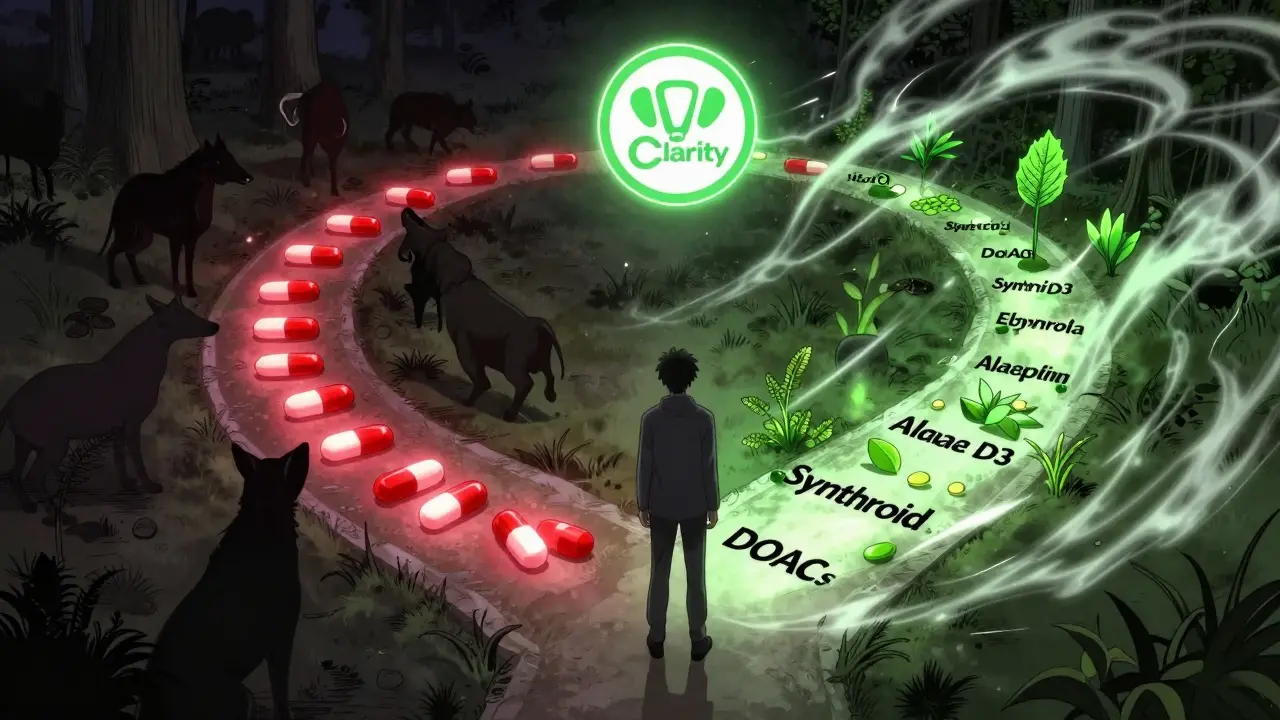
What You Should Do Right Now
1. Check your current medications. Look at your pills. Are they capsules? If yes, they’re likely gelatin. Check the label for stearic acid, glycerin, or magnesium stearate. 2. Call your pharmacy. Ask them to check the source of each ingredient. Most don’t know-but they can look it up. 3. Switch your Vitamin D3. It’s the easiest fix. Buy algae-based D3. It’s just as effective and doesn’t harm sheep. 4. Ask your doctor about alternatives. For thyroid, estrogen, or blood thinners, ask: “Is there a synthetic or plant-based option?” Don’t accept “no” as the final answer. 5. Use Pill Clarity’s database. Search your meds at pillclarity.com. They list verified animal-free options.Final Thought: Your Health and Your Values Don’t Have to Conflict
Being vegan doesn’t mean rejecting medicine. It means demanding better. You don’t have to sacrifice your ethics to stay healthy. But you do have to be proactive. Most doctors and pharmacists aren’t trained to talk about this. So you have to lead the conversation. You’re not asking for special treatment. You’re asking for basic transparency. And that’s not too much to ask.Are all capsules made from gelatin?
No. While about 90% of capsules use gelatin, many brands now offer vegetarian capsules made from hydroxypropyl methylcellulose (HPMC), a plant-based material. Look for labels that say "vegetarian capsule," "vegan capsule," or "HPMC." These are just as effective and don’t contain any animal products.
Can I get vegan Vitamin D3?
Yes. Most Vitamin D3 comes from lanolin (sheep wool), but plant-based D3 derived from lichen or green algae is widely available. Brands like Deva, Garden of Life, and Ovega-3 offer algae-based D3 that’s certified vegan and just as effective at raising blood levels. Always check the label-some "vegan" D3 supplements still use gelatin capsules, so look for both the ingredient and the capsule type.
Is there a vegan alternative to Armour Thyroid?
There’s no direct vegan equivalent to Armour Thyroid, which is made from pig thyroid glands. But synthetic levothyroxine (brand names like Synthroid or Levoxyl) is animal-free and contains only T4 hormone. Many patients switch successfully, though some report needing dose adjustments. Talk to your doctor about testing your thyroid levels after switching.
What should I say to my pharmacist to get vegan meds?
Don’t just say "I’m vegan." Say: "I need this medication without any animal-derived ingredients, including gelatin, magnesium stearate, lanolin, stearic acid, and glycerin from animal sources." Ask them to check the manufacturer’s ingredient sourcing. Pharmacists can often request alternative formulations or switch to compounded versions if needed.
Are there any apps or websites that list vegan medications?
Yes. Pill Clarity (formerly VeganMed) is the most reliable resource. It’s a pharmacist-run platform that verifies which medications are free from animal ingredients. You can search by drug name and see whether it’s certified vegan. Other resources include PETA’s list of animal-derived ingredients and Dr. Vegan’s database, but Pill Clarity is the only one that works directly with pharmacies to source alternatives.
Why do medications even contain animal products?
Animal-derived ingredients like gelatin, stearic acid, and glycerin have been used for over 100 years because they’re cheap, stable, and work well in manufacturing. They help bind pills, make capsules dissolve properly, or stabilize active ingredients. While plant-based alternatives exist for most, companies haven’t switched because regulations don’t require it and consumer demand has been low-until now. The tide is turning as more people demand transparency.
Can I request a compounded vegan version of my prescription?
Yes. Compounding pharmacies can make custom versions of most medications without animal ingredients. They can use plant-based capsules, avoid stearic acid, and substitute glycerin with vegetable-based versions. It’s more expensive and may not be covered by insurance, but it’s a legal and viable option for critical medications where no commercial vegan version exists.
Is heparin the only blood thinner made from pigs?
Heparin is the most common anticoagulant derived from pig intestines, but it’s not the only one. Low molecular weight heparins like enoxaparin (Lovenox) also come from pigs. There are no vegan alternatives yet. Direct oral anticoagulants (DOACs) like apixaban (Eliquis) and rivaroxaban (Xarelto) are synthetic and do not contain animal ingredients. If you’re on heparin, ask your doctor if switching to a DOAC is safe for your condition.
Do vegan supplements always mean vegan medications?
No. A supplement labeled "vegan" only means the active ingredients are plant-based. It doesn’t guarantee the capsule, coating, or fillers are animal-free. Many "vegan" supplements still use gelatin capsules or magnesium stearate from animal fat. Always check the full ingredient list and capsule material. Look for "vegetarian capsule" or "HPMC" to be sure.
What’s the best way to stay informed about vegan meds?
Bookmark Pill Clarity’s website and sign up for their updates. Follow the Transparent Label Campaign on social media. Join vegan health groups on Reddit or Facebook where people share verified medication swaps. Keep PETA’s animal-derived ingredients list handy. And always ask your pharmacist-because no one else will tell you unless you ask.




George Bridges
January 12, 2026 AT 10:05