
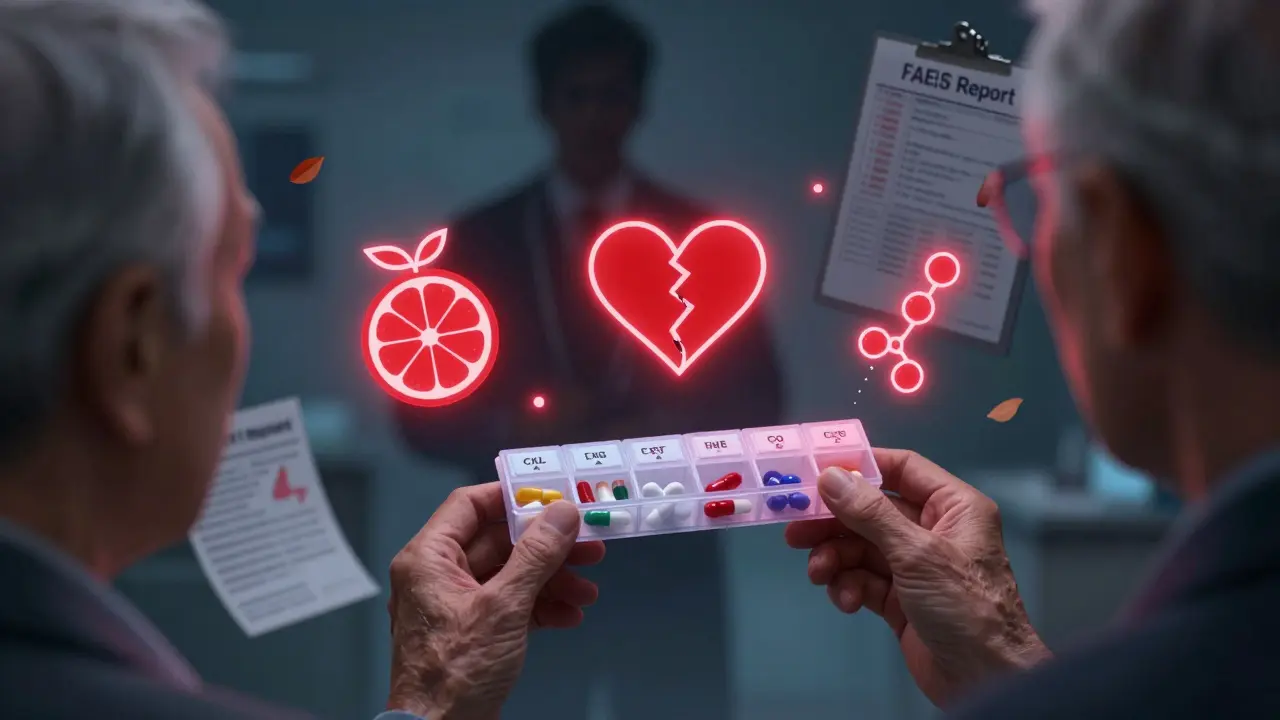
Most people assume that if a drug is approved by the FDA or similar agencies, it’s been thoroughly tested and is completely safe. But the truth is, some of the most dangerous drug interactions aren’t found until after millions of people have started taking the medicine. These are called post-market drug interactions - and they’re more common than you think.
Why Clinical Trials Miss Dangerous Interactions
Clinical trials are designed to test whether a drug works for its intended purpose. They’re not built to catch every possible side effect, especially when it comes to how drugs interact with each other. Most trials involve between 1,000 and 5,000 people, and they usually last only 6 to 12 months. Participants are often healthy, younger, and don’t take more than one or two other medications. That’s nothing like the real world. In reality, most patients on prescription drugs are older, have multiple chronic conditions, and take five or more medications. A 78-year-old with high blood pressure, diabetes, and arthritis might be on eight different pills. The chances of a dangerous interaction in that scenario? High. But clinical trials rarely capture that. Take simvastatin (Zocor), a common cholesterol-lowering drug. During trials, it looked fine. But after millions of people started taking it, doctors noticed something alarming: when combined with certain antifungal drugs like fluconazole (Diflucan), it could cause rhabdomyolysis - a life-threatening condition where muscle tissue breaks down and damages the kidneys. The reason? Fluconazole blocks the enzyme CYP3A4, which normally breaks down simvastatin. Without that breakdown, simvastatin builds up to toxic levels - sometimes 3 to 10 times higher than normal. Grapefruit juice is another silent culprit. It blocks the same enzyme. One glass of grapefruit juice can raise atorvastatin (Lipitor) levels by up to 15 times. That’s not a myth - it’s a documented risk backed by clinical data. And yet, many patients still don’t know about it.The Three Types of Post-Market Drug Interactions
Not all interactions are the same. They fall into three clear categories:- Drug-drug interactions: One medication changes how another works. Like the simvastatin-fluconazole combo, or warfarin and antibiotics like ciprofloxacin, which can spike bleeding risk.
- Drug-condition interactions: A health condition makes a drug dangerous. For example, someone with kidney disease taking metformin may face lactic acidosis if their kidneys can’t clear the drug properly.
- Drug-food interactions: What you eat or drink affects your medication. Grapefruit juice, alcohol, and even high-sodium foods can interfere with blood pressure meds, antidepressants, and blood thinners.
These aren’t theoretical risks. They’re real, documented, and often deadly.
How Dangerous Are These Interactions?
The numbers don’t lie. According to a 2020 study published in PMC, nearly 20% of new drugs received a black box warning - the strongest safety alert the FDA can issue - after they hit the market. Four percent were pulled entirely because of safety issues. One of the most infamous cases was terfenadine (Seldane), an antihistamine. It was sold for years before doctors realized that when taken with ketoconazole (an antifungal), it caused fatal heart rhythm disturbances. By the time it was pulled from shelves in 1998, thousands had already been exposed. Another example: benfluorex (Mediator), a weight-loss drug used in France for over 30 years. It wasn’t until 5 million people had taken it that researchers linked it to severe heart valve damage. It was withdrawn in 2009. The same pattern happened with pergolide, a Parkinson’s drug. After 1 million patient-years of use, it was tied to heart valve problems and pulled in 2007. Even newer drugs aren’t safe from this. Exalgo, an extended-release form of hydromorphone, was approved in 2010. Eighteen months later, reports surfaced of patients overdosing after drinking alcohol - the drug was designed to release slowly, but alcohol caused it to dump all its dose at once. That’s a post-market discovery that cost lives.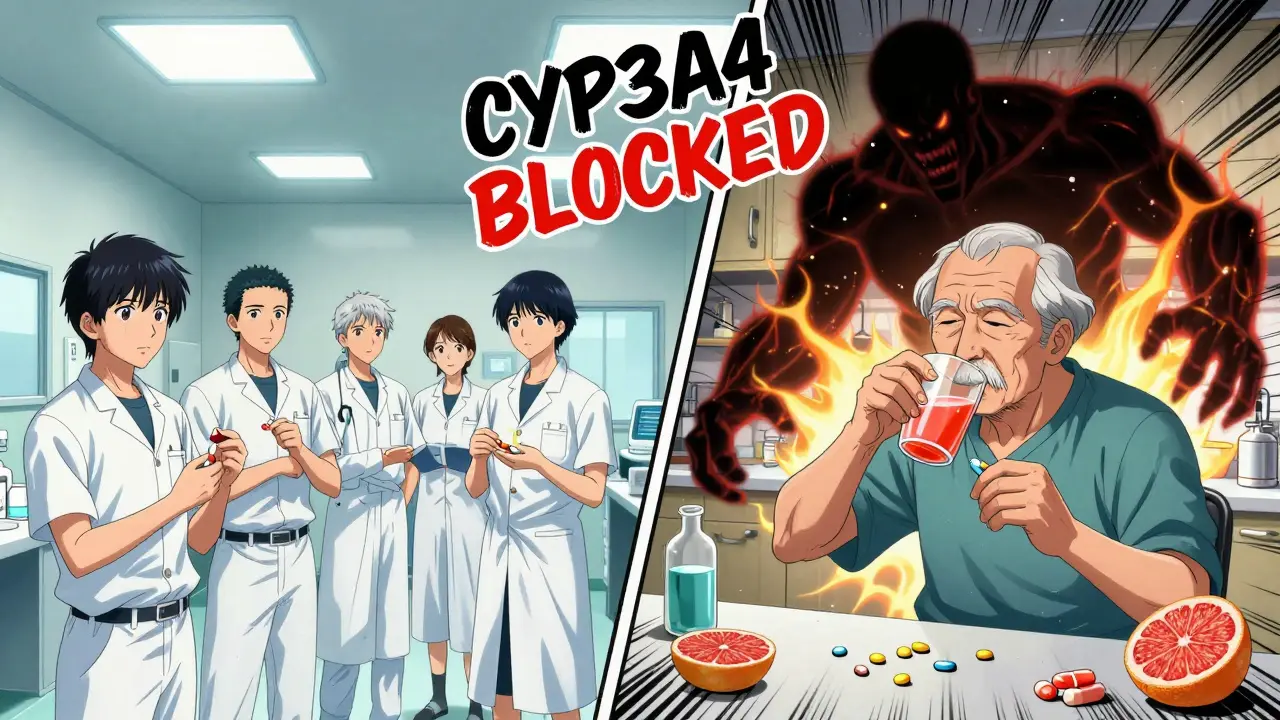
How Are These Interactions Found?
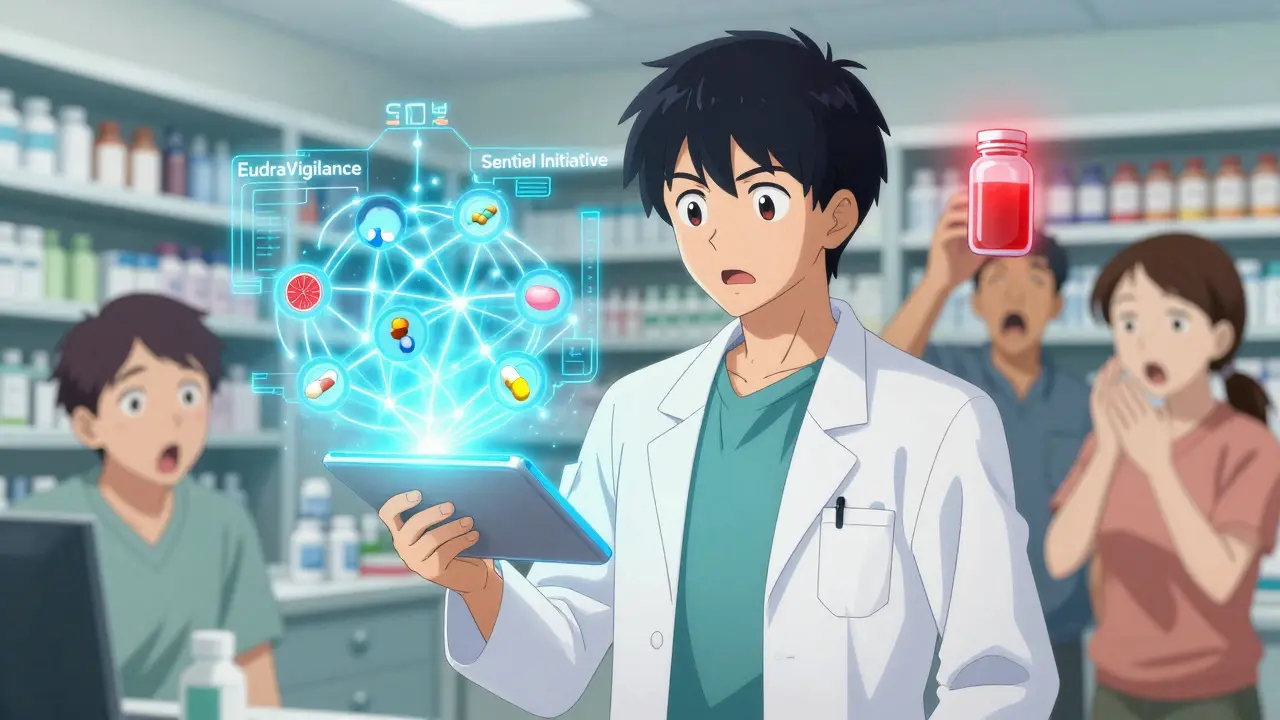
This is where post-market surveillance comes in. Systems like the FDA’s FAERS (FDA Adverse Event Reporting System) and the EU’s EudraVigilance collect millions of reports from doctors, pharmacists, and patients. In 2022 alone, EudraVigilance processed over 2.1 million reports. But here’s the catch: only about 5-10% of actual adverse events are reported. That means for every one case that makes it into the system, 9 to 19 go unnoticed. That’s why agencies now use AI to scan for patterns. Oracle Health Sciences’ AI platform, approved by the FDA in January 2023, can analyze 10,000 reports a day with 92.7% accuracy - something no human team could do. The FDA’s Sentinel Initiative, launched in 2008, now monitors over 300 million patient records across 18 U.S. healthcare systems. It doesn’t just wait for reports - it actively looks for spikes in hospital admissions, lab abnormalities, or deaths linked to specific drug combinations. Pharmacists also play a huge role. Many use tools like the Naranjo Algorithm, a scoring system that helps determine whether a reaction is likely caused by a drug interaction. It looks at timing, whether symptoms improved after stopping the drug, and whether other causes exist. But using it correctly takes over 9 hours of training - most doctors don’t have that time.What You Can Do to Protect Yourself
You don’t have to wait for a government warning. Here’s how to stay safe:- Keep a full list of everything you take - prescriptions, over-the-counter meds, supplements, even herbal teas. St. John’s Wort, for example, can make blood thinners like apixaban (Eliquis) useless - or worse, cause dangerous bleeding.
- Ask your pharmacist every time you get a new prescription. Pharmacists are trained to catch interactions. One Reddit user reported saving themselves from a dangerous QT prolongation by checking ciprofloxacin with their blood pressure meds - their pharmacist caught it before they even left the store.
- Use free tools. Apps like GoodRx and Medscape have interaction checkers. Trustpilot reviews show users calling these features “lifesaving.”
- Know your red flags. Unexplained muscle pain, dark urine, extreme fatigue, irregular heartbeat, or unusual bleeding could signal a dangerous interaction. Don’t ignore them.
The Bigger Picture: Costs and Future Changes
These interactions aren’t just a health risk - they’re a financial one. The Institute of Medicine estimated in 2006 that adverse drug events cost the U.S. $3.5 billion a year. About $1 billion of that came from drug interactions alone. Today, the global pharmacovigilance market is worth $7.3 billion - up from $5.8 billion in 2020. Companies are spending more on monitoring because regulators now require it. The FDA mandates post-approval studies for nearly half of all new drugs, and over 22% of those specifically require interaction monitoring. The future is getting smarter. The NIH’s Pharmacogenomics Research Network-2 (PGRN-2), launched in 2022, is analyzing how genetics affect drug responses. Someone with a certain gene variant might process a drug 10 times slower than average - a risk invisible in standard trials. By 2025, 68% of big pharma companies plan to use blockchain to track adverse events, reducing underreporting. But here’s the problem: drug labels still suck. Most still list interactions in tiny print, buried under dozens of other warnings. There’s no standard format. One label says “avoid grapefruit,” another says “may interact,” and another says nothing at all. Without better labeling, even the best tech won’t stop preventable harm.Bottom Line: Safety Isn’t Final - It’s Ongoing
A drug isn’t safe just because it’s approved. It’s safe only if we keep watching it. The system isn’t perfect - underreporting is massive, labeling is inconsistent, and many patients never get warned. But the tools are improving. The data is getting better. And awareness is growing. If you’re on more than one medication, don’t assume your doctor knows every interaction. Don’t assume your pharmacist will catch it unless you ask. Don’t assume your supplement is harmless. The most dangerous drug interactions aren’t found in labs - they’re found in living rooms, kitchens, and pharmacies, one patient at a time. Stay informed. Stay curious. And never stop asking questions.What does "post-market" mean for drugs?
"Post-market" means after a drug has been approved and is being sold to the public. While clinical trials test drugs before approval, post-market surveillance tracks what happens when millions of people use the drug in real life - including side effects and interactions that were too rare or too slow to show up in trials.
How common are drug interactions discovered after approval?
About one in three new drugs has at least one major safety event after approval, according to FDA data from a 10-year review. This includes black box warnings, withdrawals, or new safety alerts. Nearly 20% of new drugs get a black box warning after they’re on the market, and 4% are pulled entirely due to safety risks.
Can over-the-counter drugs and supplements cause dangerous interactions?
Yes. St. John’s Wort can make blood thinners like Eliquis ineffective or cause dangerous bleeding. Calcium supplements can interfere with thyroid meds. Even common painkillers like ibuprofen can raise blood pressure when taken with certain heart medications. Supplements aren’t regulated like drugs, so their risks are often unknown until after widespread use.
Why don’t drug labels warn about all interactions?
Because many interactions are only discovered after the drug is widely used. Trials are too small and short to catch rare or delayed effects. Also, labeling rules don’t require comprehensive interaction lists - only what’s proven and significant. Many warnings are added years later, and even then, they’re often buried in fine print.
What should I do if I suspect a drug interaction?
Stop taking the medication immediately and contact your doctor or pharmacist. Don’t wait for symptoms to get worse. If you’re experiencing muscle pain, dark urine, irregular heartbeat, or unusual bleeding, seek medical help right away. You can also report the reaction to the FDA’s MedWatch program - your report could help protect others.


Betty Bomber
January 26, 2026 AT 06:18