
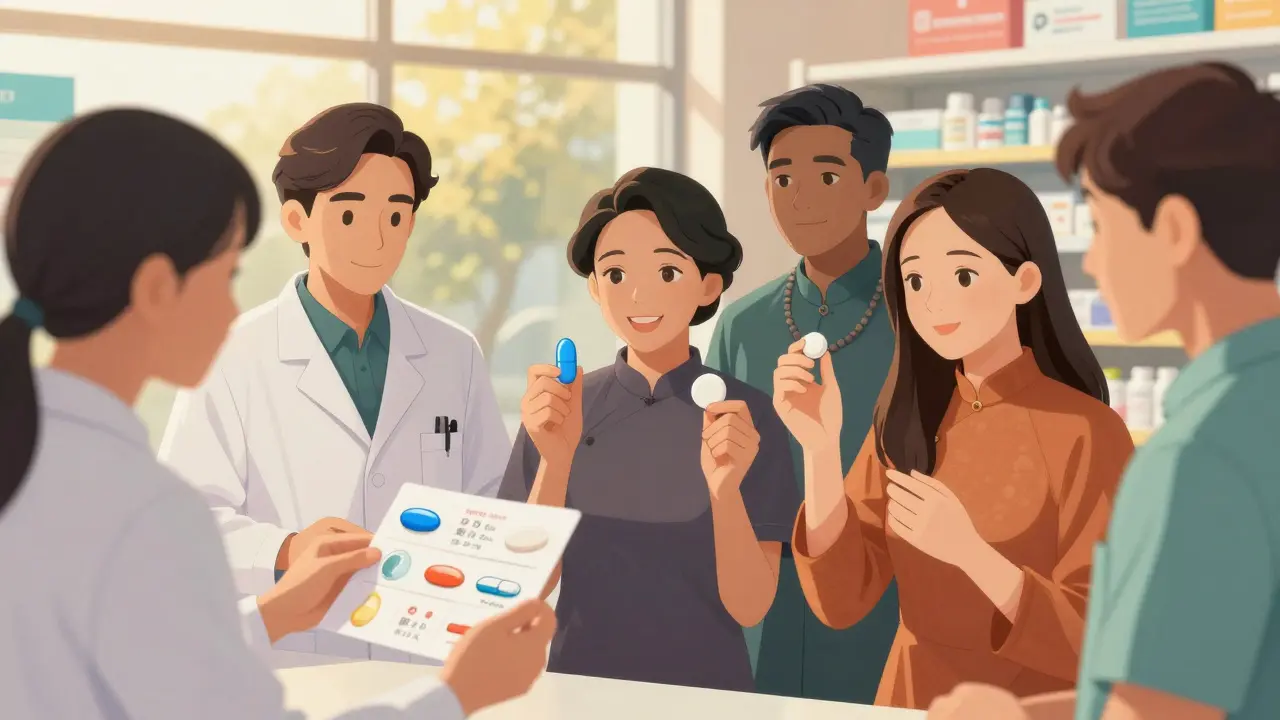
When a patient picks up a generic pill, they don’t just see a cheaper version of their usual medicine. They see a shape, a color, a size-and for many, those details carry meaning. In Brisbane, where over 40% of residents were born overseas, pharmacists regularly face questions like: "Is this the same?" or "Does this have pork in it?". These aren’t just about ingredients. They’re about trust, identity, and survival.
Why Generic Pills Feel Different
Generic medications contain the same active drug as brand-name versions. But their look? Often totally different. A blue oval pill might become a white capsule. A tablet with a logo might turn into a plain round one. For some patients, this change feels like a downgrade. In a 2022 FDA survey, 28% of African American patients said they believed generics were less effective than branded drugs. Only 15% of non-Hispanic White patients felt the same. Why the gap? It’s not just misinformation. It’s cultural context. In some West African communities, white pills are associated with poison or spiritual harm. In parts of Southeast Asia, bright red pills are seen as powerful and healing-while pale ones feel weak. In Latin American communities, pill size often signals strength: bigger pill = stronger medicine. When a patient’s usual 500mg tablet is replaced with a smaller generic, they may stop taking it-thinking it won’t work.Hidden Ingredients, Big Consequences
The real issue isn’t the active drug. It’s what’s inside the capsule: the fillers, coatings, and binders. These are called excipients. And they’re rarely listed clearly on labels. Take gelatin. It’s common in capsules. But for Muslims, gelatin made from pork is haram. For Jews, non-kosher gelatin breaks dietary law. For vegans, any animal product is unacceptable. Yet, a 2023 FDA review found only 37% of generic drug labels in the U.S. list excipients in detail. In the EU, it’s 68%. That gap leaves pharmacists scrambling. One pharmacist in Melbourne told of a Muslim patient who refused a generic antibiotic because the capsule contained porcine gelatin. She spent two hours calling manufacturers, checking databases, and finally found a liquid version without animal products. That’s not normal. It shouldn’t be this hard.Language Isn’t Just Words-It’s Trust
A Spanish-speaking patient might understand "take once daily" but not "take with food." A Vietnamese patient might confuse "morning" with "after lunch." Poorly translated instructions lead to missed doses, overdoses, or dangerous interactions. But it’s more than translation. It’s tone. In some cultures, direct commands from doctors feel disrespectful. In others, silence means agreement. A patient might nod and say "yes" to avoid offending, even if they don’t understand. That’s why simple visual aids-like icons showing when to take a pill, or a clock with sunrise and sunset-work better than text alone. In Brisbane’s multicultural clinics, pharmacists now use picture cards showing pill shapes and times of day. They’ve seen adherence jump by 30% in communities where language barriers were once a major issue.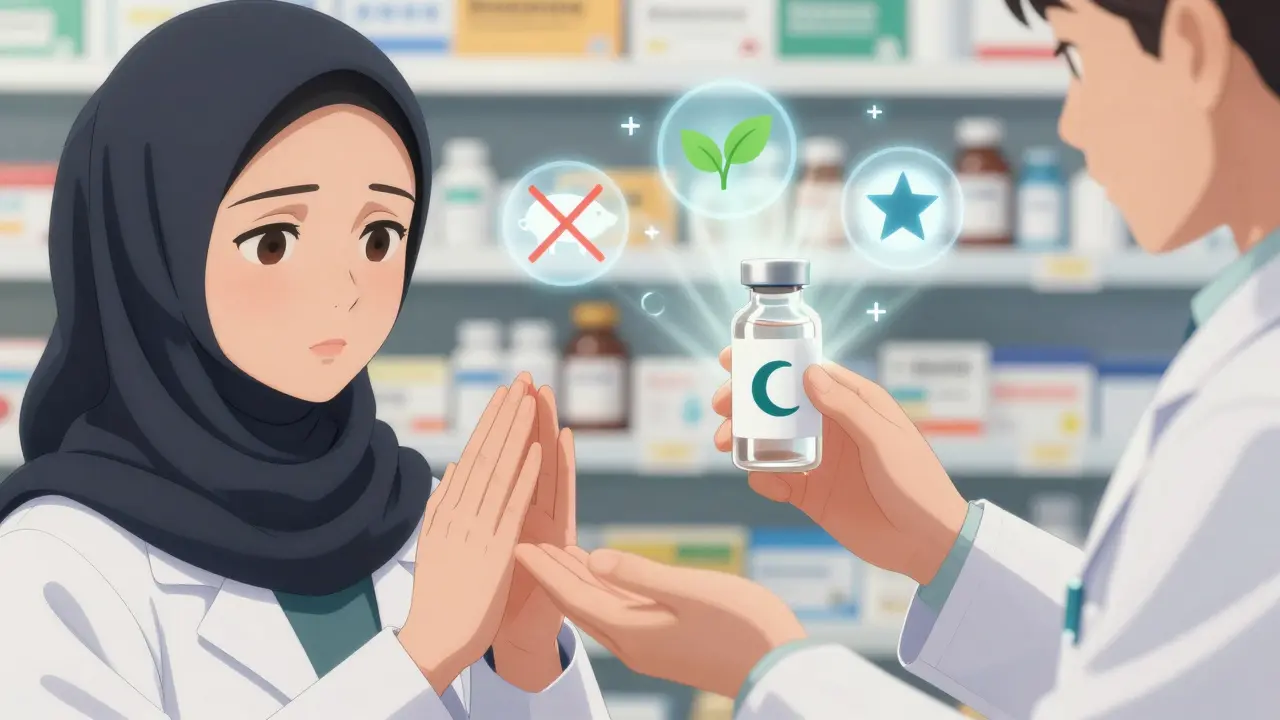
Religion, Culture, and the Pill
A 2023 study in the Journal of Clinical Pharmacy and Therapeutics found that 63% of urban pharmacists received at least one question per week about excipients tied to religious beliefs. The most common concerns:- Halal certification (Muslim patients)
- Kosher status (Jewish patients)
- Vegetarian/vegan compliance (Hindu, Buddhist, or ethical vegans)
- Alcohol content in liquid formulations (Muslim, Sikh, or abstinent patients)
Who’s Doing It Right?
Teva Pharmaceutical launched its "Cultural Formulation Initiative" in 2023. By late 2024, they’ll have documented excipient sources for all 15 major therapeutic areas-diabetes, hypertension, depression, asthma. Sandoz, spun off from Novartis in 2023, is building a global framework to standardize cultural labeling. These aren’t charity projects. They’re smart business. The U.S. alone has $12.4 billion in unmet generic medication needs among minority populations, mostly in chronic conditions like high blood pressure and Type 2 diabetes. When patients stop taking their meds because of cultural mistrust, hospitals pay. Insurance systems pay. Society pays. Meanwhile, community pharmacies are leading the way. In Toronto, a pilot program trained pharmacists in 12 hours of cultural competency modules-covering religious restrictions, color symbolism, and communication styles. After six months, refill rates for generics rose by 22% in immigrant-heavy neighborhoods.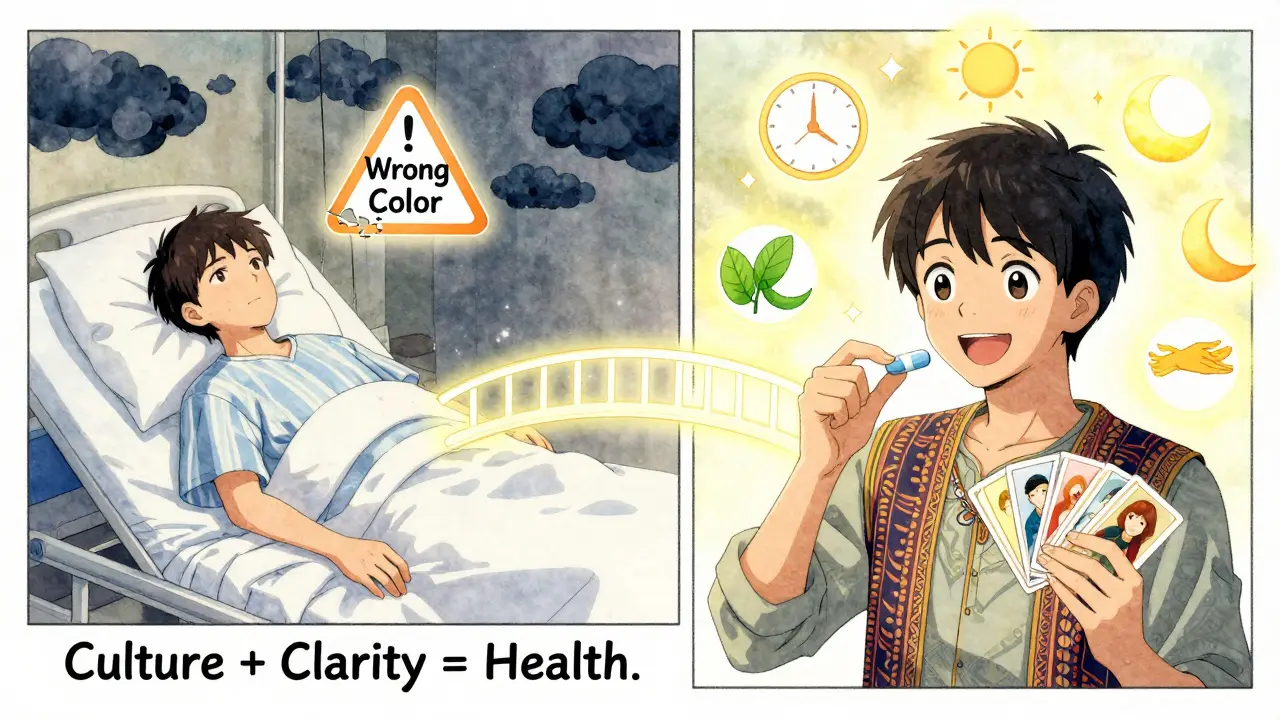
What Needs to Change
Right now, cultural competence in generics is optional. It’s left to individual pharmacists to dig through manufacturer data, call suppliers, or guess what’s safe. That’s not sustainable. Here’s what needs to happen:- Standardized labeling. All generic medications should list excipients clearly, with religious and dietary flags (e.g., "Contains pork gelatin," "Vegan-friendly," "Alcohol-free").
- Global databases. Pharmacies need free, real-time access to databases showing which generics meet halal, kosher, vegan, or low-lactose standards.
- Training requirements. All pharmacy staff should complete 8-12 hours of cultural competency training annually-not as a bonus, but as a requirement for licensure.
- Regulatory push. Agencies like the FDA and TGA (Therapeutic Goods Administration) should mandate excipient transparency, like the EU already does.
It’s Not About Politics-It’s About Health
This isn’t about political correctness. It’s about saving lives. A diabetic patient who skips insulin because the pill looks "wrong" risks kidney failure. A hypertensive patient who refuses their medication because of gelatin could have a stroke. These aren’t rare cases. They’re happening every day in clinics from Brisbane to Boston. The science is clear: generics work. But science doesn’t change perception. Culture does. And if we want patients to take their meds-truly take them-we need to meet them where they are. Not just with a prescription, but with respect.For the first time in history, more than half the world’s population lives outside their country of birth. Medicine can’t afford to speak one language anymore. The pill may be the same. But the meaning? It’s everything.
Why do some patients refuse generic medications even when they’re cheaper?
Patients may refuse generics because of differences in color, shape, or size compared to the brand-name version they’re used to. In some cultures, these physical traits signal strength or quality-so a smaller or differently colored pill may be seen as weaker or fake. Religious concerns about excipients like gelatin or alcohol, language barriers, and mistrust of the healthcare system due to past discrimination also play major roles.
What are excipients, and why do they matter in generic drugs?
Excipients are inactive ingredients in medications-like binders, fillers, coatings, and preservatives. While the active drug is the same in generics and brand-name pills, excipients can differ. These can include pork-derived gelatin, lactose, alcohol, or artificial colors. For people with religious, dietary, or health restrictions, even small amounts of certain excipients can make a medication unacceptable-even if it’s medically effective.
Are there generic medications that meet halal or kosher requirements?
Yes, but they’re not always easy to find. Some manufacturers produce halal-certified or kosher-approved generics using plant-based capsules or synthetic gelatin. However, this information is rarely listed on packaging. Pharmacists often need to contact manufacturers directly or use specialized databases to identify these options. Chains like CVS and Walgreens in the U.S. and Chemist Warehouse in Australia now maintain internal lists of compliant generics.
How can pharmacists better support patients from diverse cultural backgrounds?
Pharmacists can start by asking open-ended questions: "Have you taken this medicine before?" or "Are there any reasons you wouldn’t feel comfortable taking this pill?" They should use visual aids, offer alternative formulations (like liquids or tablets instead of capsules), and maintain access to databases that track excipient sources. Training in cultural humility-listening without judgment-is more important than memorizing religious rules.
Is there a global standard for labeling excipients in generic drugs?
No, not yet. The European Union requires detailed excipient listing on all drug labels, with 68% of generics fully disclosing ingredients. In the U.S., only 37% do. Australia follows a middle path, with partial disclosure. There’s no international standard for religious or dietary labeling. However, companies like Teva and Sandoz are moving toward global transparency, and pressure from patient advocacy groups is pushing regulators to act.
What role do regulatory agencies play in improving cultural competence in generics?
Regulatory agencies like the FDA and TGA have started to recognize cultural competence as part of patient safety. The 2022 Food and Drug Omnibus Reform Act (FDORA) in the U.S. emphasized social determinants of health and diversity in clinical trials. While these laws don’t yet mandate excipient labeling, they create the legal foundation for future rules. Agencies are now funding pilot programs to improve communication and access for minority populations, and some are working with manufacturers to standardize cultural labeling.



Jimmy Quilty
February 28, 2026 AT 07:08