
How HPV Vaccination and Pap Testing Are Ending Cervical Cancer
Cervical cancer used to be one of the leading causes of death for women worldwide. Today, it’s becoming rare-especially in places where girls get the HPV vaccine early and women get screened regularly. In Scotland, a group of women vaccinated as teenagers have seen zero cases of invasive cervical cancer. In Australia, doctors now believe cervical cancer could be eliminated as a public health threat by 2028. This isn’t science fiction. It’s happening right now because of two simple tools: the HPV vaccine and the Pap test.
Almost all cervical cancers are caused by the human papillomavirus, or HPV. Specifically, two strains-HPV 16 and 18-cause about 70% of cases. The rest are tied to other high-risk strains. The good news? We have vaccines that block these strains before they can cause harm. And we have tests that catch early cell changes before they turn into cancer. Together, they’re a powerful one-two punch.
Why the HPV Vaccine Works So Well
The HPV vaccine doesn’t just reduce risk-it can prevent cancer almost entirely-if given at the right time. Studies show that girls vaccinated before age 16 have an 86% lower chance of developing cervical cancer. Those vaccinated between 17 and 19 still see a 68% drop. And in Scotland, where nearly all girls got the vaccine at age 12-13, there hasn’t been a single case of invasive cervical cancer in the fully vaccinated group of over 138,000 women.
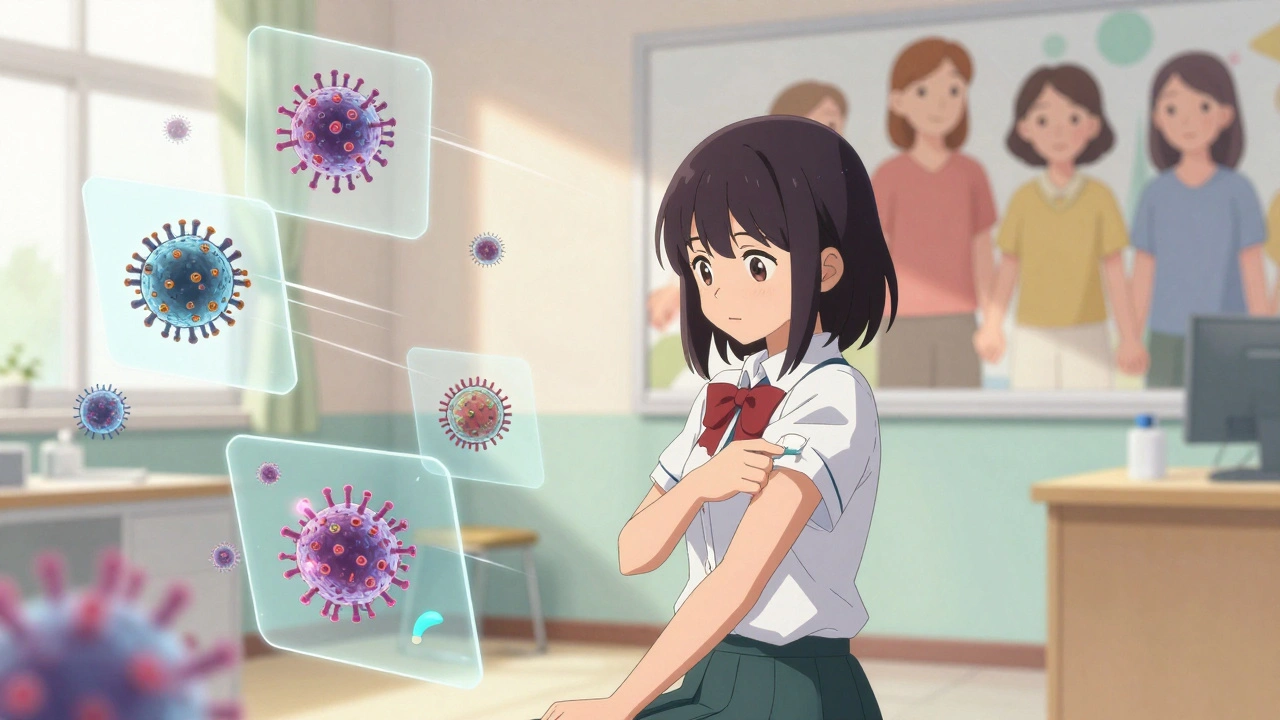
The vaccine works best when given before any sexual contact. That’s why health experts recommend starting at age 11 or 12. At that age, the immune system responds strongly, and most kids haven’t been exposed to HPV yet. The vaccine is given as a shot in the arm. For kids under 15, only two doses are needed, six to twelve months apart. If you start at 15 or older, you’ll need three doses.
There are different versions of the vaccine. The most common one today is Gardasil-9, which protects against nine strains of HPV-including the two that cause most cancers. Since 2016, it’s been the only HPV vaccine available in the U.S. And now, thanks to new research, even a single dose can offer strong protection. A 2022 trial in Kenya found that one shot of Gardasil-9 gave 98.8% protection against high-risk HPV strains three years later. That’s as good as three doses. This could be a game-changer in places where getting multiple shots is hard.
Who Should Get the Vaccine-and When
The CDC and the American College of Obstetricians and Gynecologists (ACOG) agree: routine HPV vaccination should start at age 11-12. But it’s not too late if you’re older. Catch-up vaccination is recommended through age 26. For adults 27-45, it’s a personal decision. Talk to your doctor if you’ve never been vaccinated and you’re at risk for new HPV exposure.
Boys and men should also get the vaccine. HPV causes cancers of the throat, anus, and penis-not just cervical cancer. Vaccinating boys helps protect future partners and reduces overall spread. In countries like Australia and the UK, both genders are vaccinated. That’s why their cervical cancer rates have dropped so sharply.
Even if you’ve had HPV before, the vaccine still helps. It protects against strains you haven’t been exposed to yet. And if you’re already sexually active, the vaccine can still prevent future infections. It’s not a cure-but it’s a shield.

What About Pap Tests? They Still Matter
Some people think the vaccine makes Pap tests unnecessary. That’s a dangerous myth. Vaccines prevent infection. Screening finds problems that slipped through. Even in countries with 90% vaccination rates, Pap tests are still part of the plan.
Here’s the current U.S. guidance:
- Start Pap testing at age 21-even if you’re vaccinated.
- Between ages 21 and 24, get a Pap test every 3 years.
- At age 25, switch to HPV testing alone every 5 years. This is now the preferred method.
- If HPV testing isn’t available, you can do co-testing (HPV + Pap) every 5 years.
- Stop screening at age 65 if you’ve had normal results for years.
HPV testing is more accurate than Pap alone. It finds the virus before cell changes happen. That means fewer false alarms and fewer unnecessary procedures. In vaccinated women, cervical cell changes are so rare that screening intervals can safely stretch to 5 years.
Global Progress-and the Gaps
The world is making progress, but unevenly. In high-income countries like Australia, the UK, and Canada, over 80% of teenage girls are vaccinated. Cervical cancer rates have dropped by 85% in vaccinated groups. Australia is on track to eliminate cervical cancer as a public health issue by 2028.
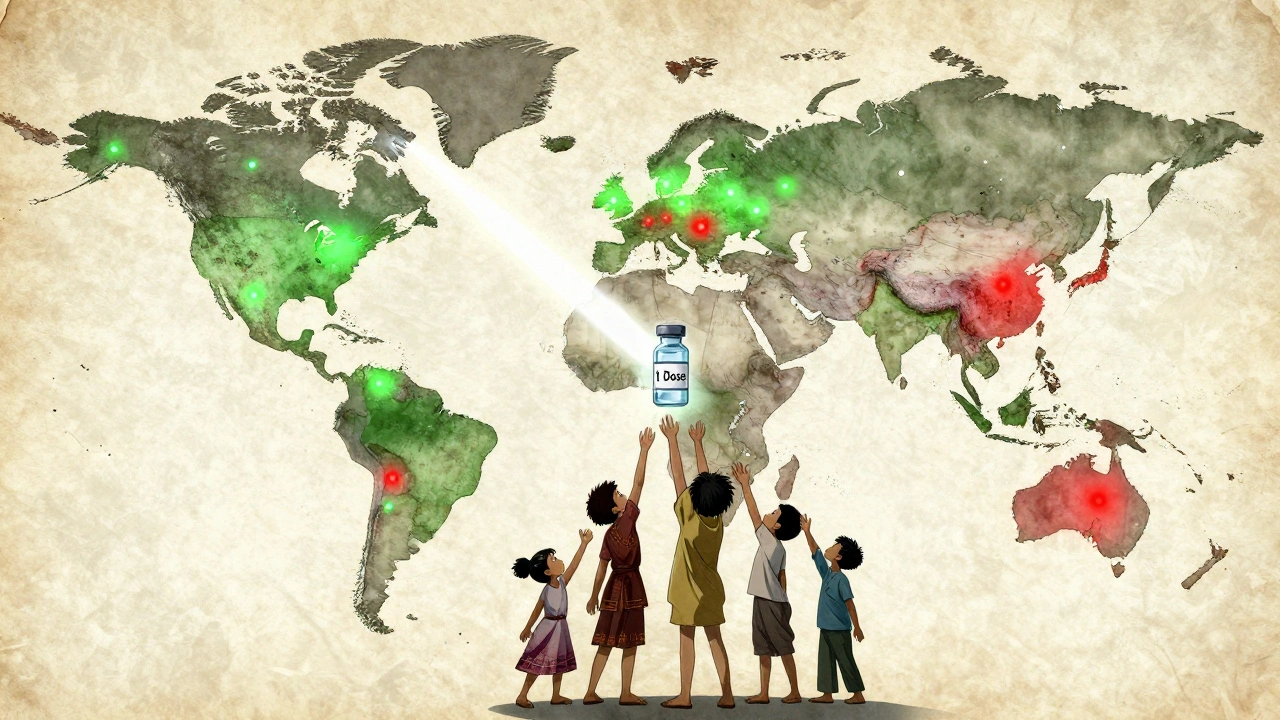
But globally, only 13% of eligible girls have received all recommended doses. Most cervical cancer deaths-85%-happen in low- and middle-income countries. Why? Lack of access, cost, and weak health systems. That’s why the WHO’s goal of 90% vaccination by age 15 is so critical.
Here’s the good part: single-dose vaccines are changing the game. The WHO just approved Cervarix and Gardasil-9 for single-dose use. Gavi, the Vaccine Alliance, is spending over $1 billion to bring these vaccines to 50+ low-income countries through 2025. This could save millions of lives.
What’s New in Screening
Screening is getting easier too. In January 2024, the FDA approved the first at-home HPV self-test: the QIAsure HPV Test. Women can collect their own sample with a simple swab-no doctor’s visit needed. Clinical trials showed it’s just as accurate as clinic-based tests. This could increase screening rates by 40%, especially in rural areas or places with few clinics.
Self-sampling removes two big barriers: shame and access. Many women avoid Pap tests because they’re uncomfortable or hard to schedule. A home test changes that. It’s not replacing clinics-it’s expanding reach.
Why Some People Still Don’t Get Vaccinated
In the U.S., only 60.4% of teens completed the HPV vaccine series in 2022. That’s far below the 90% target. Why? Misinformation. Some parents worry the vaccine encourages early sex. That’s not true. Studies show vaccinated teens don’t start sex earlier than others.
Others think it’s unnecessary if they’re not sexually active yet. But the vaccine works best before exposure. Waiting until after sexual debut cuts its effectiveness. The CDC found a 17% drop in vaccination rates during the pandemic-and they’ve only partially recovered.
Doctors need to talk about it like any other vaccine. Don’t say, “This is for sexually transmitted infections.” Say, “This protects your child from cancer.” That message sticks.
What You Can Do Today
If you’re a parent: Get your child vaccinated at age 11 or 12. Don’t wait. If they’re older, talk to their doctor about catch-up shots.
If you’re a woman over 25: Get your HPV test every 5 years. Don’t skip it just because you’re vaccinated.
If you’re in a country with limited access: Advocate for single-dose HPV vaccines and home testing. These tools are ready. They just need to be delivered.
Cervical cancer is one of the few cancers we can prevent entirely. We have the tools. We have the science. We just need to use them.
Is the HPV vaccine safe?
Yes. Over 150 million doses have been given worldwide. The most common side effects are mild: soreness at the injection site, dizziness, or a brief fever. Serious reactions are extremely rare. The CDC, WHO, and every major medical group confirm it’s safe. The risks of not vaccinating-cervical, throat, and other cancers-are far greater.
Do I still need a Pap test if I got the HPV vaccine?
Yes. The vaccine doesn’t protect against all cancer-causing HPV strains. It also doesn’t treat existing infections. Regular screening catches cell changes early-even in vaccinated women. Starting at age 25, HPV testing every 5 years is the best method. Don’t skip it.
Can men get the HPV vaccine?
Absolutely. HPV causes cancers in men too-especially throat and anal cancers. Vaccinating boys helps protect future partners and reduces overall spread. The CDC recommends the vaccine for boys at age 11-12, just like girls. It’s just as important for them.
Is one dose of the HPV vaccine enough?
New evidence says yes. Studies in Kenya and Costa Rica show a single dose of Gardasil-9 or Cervarix gives 97-98% protection against high-risk HPV strains for at least three years. The WHO now approves single-dose use. This is a breakthrough for countries with limited healthcare access. But if you’re in a country where three doses are still recommended, follow local guidelines until you can confirm single-dose availability.
Can I get the HPV vaccine if I’m over 26?
Yes, but it’s not routinely recommended. For adults 27-45, the vaccine may still help if you haven’t been exposed to all the HPV types it covers. Talk to your doctor. If you’re in a new relationship or have never been tested for HPV, vaccination could still be beneficial. It’s not a waste-but it’s less effective than getting it young.
What’s the difference between a Pap test and an HPV test?
A Pap test looks at cervical cells under a microscope to find abnormal changes. An HPV test checks for the virus itself-the cause of those changes. HPV testing is more sensitive. It can detect risk before cells look abnormal. That’s why it’s now the preferred method starting at age 25. Pap tests are still used in combination or if HPV testing isn’t available.
Are at-home HPV tests reliable?
Yes. The FDA-approved QIAsure HPV Test has been shown in clinical trials to be as accurate as tests done in clinics. It’s designed for self-collection and lab analysis. It’s not a diagnostic tool-it’s a screening tool. If the test is positive, you’ll need follow-up with a doctor. But for catching risk early, it’s highly effective and much more accessible.





Ernie Blevins
December 7, 2025 AT 08:52